Category Archives: Articles

Tune of the month – Walter Bulwer’s “Number 5”

Walter Bulwer was a fiddle player, born in Shipdham (Norfolk) in 1888; where he lived all his life. You can read Reg Hall’s profile of Walter and Daisy Bulwer on the EATMT website here.

There is more information on the Bulwers in Chris Holderness’ article here. Something to be aware of if you are relying on old website bookmarks is that the Mustrad website no longer exists. Its content is now available on the Mainly Norfolk website.

Probably the two most popular of Walter’s tunes today are simply know as “Walter Bulwer’s Polka No 2” and “Walter Bulwer’s Polka No 1” – but there are at least four other polka tunes we have from Walter which don’t have names, to say nothing of tunes for other dances. 

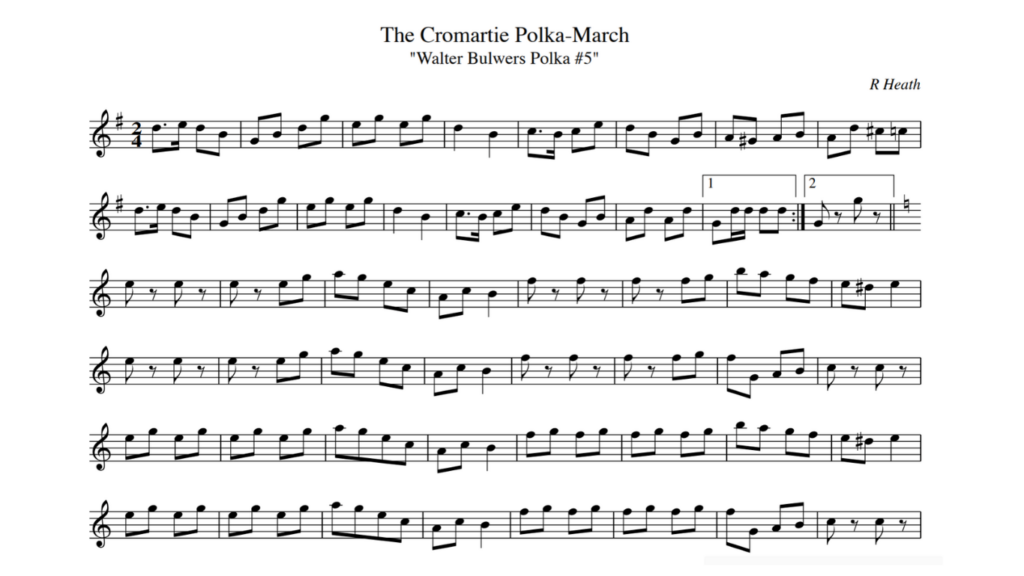
Walter was adept at picking up tunes by ear and adapting then as he played – but also owned a good collection of sheet music; sadly now lost. It is very plausible that these un-named polka tunes have origins in that collection of sheet music. Following a conversation between Adrian and Sue Carlton and Geoff Crabb the concertina maker, we are now able to put a name to the tune previously known as “Walter Bulwer’s Polka #5” – “The Cromartie Polka March”.

You can hear Walter, along with Daisy, dulcimer player Billy Cooper and banjo player Edna Wortley playing the tune in around 1960 as track 18 on the CD “Heel and Toe” – published by Veteran ( it’s VT150CD – which is available to buy through Veteran’s bandcamp page ).

EATMT’s “brown book” Before the night was out – by Katie Howson has a transcription of the 1960 recording.

The full score for the Cromartie Polka March composed by “R. Heath” can be found in “Turner’s March Album of Solos for the Banjo #1” – but in case you don’t have a copy of that to hand, then here’s the basic form of the melody – an interesting exercise to compare it with the 1960 recording and it’s transcription. Same tune do you think? I wonder how many of Walter’s other un-named tunes have an origin in a long forgotten piece of sheet music.

Andrew Collins, May 2026

Share:

Cohen Braithwaite-Kilcoyne on the evolution of traditional music

With the summer now truly acumin in, our thoughts are turning to our Summer Sessions event at Stowmarket’s John Peel Centre on June 5th. Headlining this year is Cohen Braithwaite-Kilcoyne, whose mastery of the Anglo concertina and melodeon – not to mention his commanding voice – put him at the forefront of the next generation keeping the traditional music of England very much alive. We managed to find time in his touring schedule for a quick virtual coffee to find out a little more about how and why his love of traditional music began…

Let’s start at the beginning, Cohen. What’s your first memory or experience of traditional music?

That’s a really good question. Probably the first encounter I remember was when I was about six at primary school, and a pair of musicians – a fiddle player and a guitarist – came in to play some folk tunes. I’d never heard folk tunes before. I didn’t really know what they were but I do remember them talking about their music and their instruments.

Do you remember any of the music?

Well, I don’t remember who the musicians were, which is of course a shame because I’d love to write them a note and say thank you so much. But the one song I remember them definitely singing was Cockles and Mussels – and I remember that because that’s got a ghost verse at the end. And that really captured me, because it’s a bit scary and I was really into Scooby Doo at the time…

Actually, a couple of weeks ago I was invited to a primary school – not my own, unfortunately! – to share my folk tunes and my instruments and tell them a bit about what I do. That was a nice full circle moment.

What do you think made folk music stick for you? 

Yeah, I mean, I didn’t go from that first exposure to folk music at six straight to folk clubs – there were lots of chance encounters along the way, all of which started getting me interested in folk music.

Take Brian Peters, for example. So in addition to being a great squeeze box player, one of his other claims to fame is that he’s done quite a bit of music library work – and some of his soundtrack library recordings had got picked up on various TV shows, including SpongeBob SquarePants, which was another thing I was obsessed with when I was about seven. And, as strange as that might sound, hearing those little folk tunes crop up in the background of shows like that helped introduce the melodies to the ear without me even making the immediate connection that I was hearing a folk tune, or a jig, or a hornpipe. Likewise, John Kirkpatrick played the concertina on a Phone4U advert so when I did become more into traditional music, I was already familiar with the sounds of these instruments and some of these tunes – as I suppose we all are, really.

How would you define traditional music? Or, to put another way: what is it – and why does it matter?

I think the definition that I like the best is the one Steve Roud offers in Folk Song in England. He says a folk song is a song that is sung by a folk singer, and a folk singer is someone that sings folk songs. And I just think that’s so beautifully put. It’s the fact that the song or the tune or whatever it is, has been absorbed by a community and has lost its sense of ownership and its sense of origin, and in doing so the community has shaped it and evolved it and changed it and filtered it. It might have originally been a composed piece. It might have had a known composer, but that origin becomes less relevant. It’s all about that journey. 

Are there any particular songs where you find this to be particularly true?

One example that maybe springs to mind is on my first solo album [Outway Songster]. There’s a song on there called the Country Carrier, which has a known writer. It was written by a man called Harry Clifton, who was a really, really prolific songwriter of the 19th century. What’s interesting is that although it was hugely popular with folk singers of the 19th and 20th centuries, they would all probably have been unconscious of the fact that they were singing a Music Hall song. The ways in which it was performed – particularly into the 20th century – were quite divorced from how it must have started off its life. Melodically of course, you can still see a thread that links it back to Harry Clifton’s original tune, but it’s quite distinct – and some of the verses have changed as well. There’s a nice natural track of evolution.

So the musical evolution is one thing – how about the influence of place? Does this change the song or tradition in any way?

Sure. I mean, that can be one of the really exciting things about working with traditional repertories: exploring repertoires that have a local connection. 

When I started getting interested in folk music, that was one of the things that really drew me in: on the one hand you had all the music being produced in America, singing about places that I’d never heard of – and then with folk music you had tunes that were named after places in Birmingham that I’d been to, roads I’d walked down, areas that I knew. 

And there was that real sense of immediacy and familiarity – and that was one of the things that really hooked me when I started really getting into traditional song was that sense of place and that sense of regionality. 

That’s a very special thing – and being a region where such a huge amount of material was collected, we see this too…

Absolutely. One of the things that I found interesting about the East Anglian repertoire is that – and this might be slightly romanticised – when Vaughan Williams was doing his collecting in East Anglia, he had this theory that, because it’s closer to the Eastern Sea and to Scandinavia, that there’s a link between the Nordic repertoire and some of the melodies that he was finding in the East, particularly around King’s Lynn. He reckoned that there was this sort of Scandinavian quality to a lot of the melodies that they were singing there – The Captain’s Apprentice is one example that he particularly drew out. That tune has such an incredible, otherworldly melody, which he likened to Scandinavian folk tunes. 

Final question Cohen: as we’re speaking close to May Day I wondered if you could share a seasonal song that you like?

One of my favourite May song recordings is one that the band Magpie Lane did on their first album, which was called the Oxford Ramble. Their last track is just called May Day Carol, and it’s got the most charming tune to it. Of course there are so many May tunes out there, but that’s probably my favourite.

Cohen will be headlining our Summer Sessions concert at the John Peel Centre, Stowmarket on Friday 5 June and tickets are available now. For more information about Cohen’s music and other upcoming concerts and tours, visit his website.

Share:

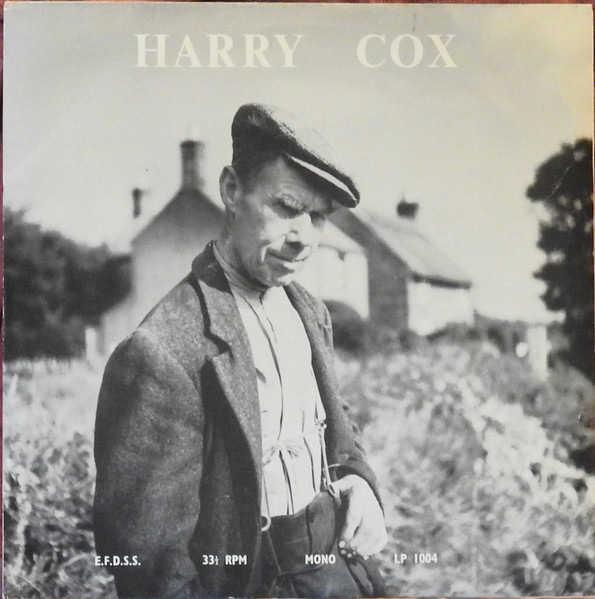
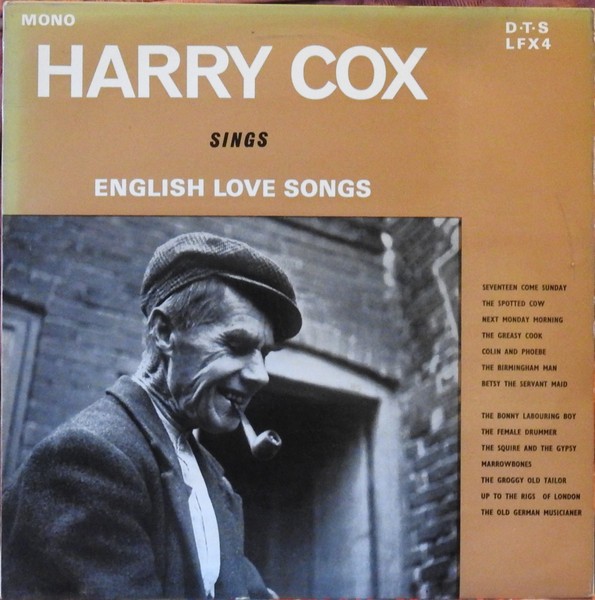
Review: Harry Cox: English Folk Singer and Sings English Love Songs

Harry Cox: English Folk Singer and Sings English Love Songs
(EFDSS LP1004 and DTS LFX 4)


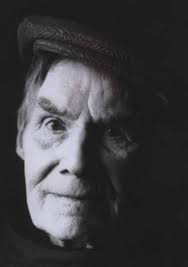
Two for the price of one this month, as up for scrutiny are a brace of Harry Cox albums, both released in 1965, and which cemented his reputation as one of England’s finest traditional singers. A great deal has been written about him and his singing community and I don’t propose to duplicate that here. The reader is referred to the booklet notes of the Topic Records double CD The Bonny Labouring Boy (1), Chris Heppa’s published research (2) and several articles produced for the East Anglian Traditional Music Trust (3) as a starting point. Rather, I’d like to put into the spotlight a pair of records which were released – in Britain – within a few months of each other and which gave a fair aural portrait of Harry’s repertoire, and something of the context, at a time when there were precious few LPs available of traditional English singers.


Prior to these releases there was little indeed. The first LP of a traditional English singer seems to be the American release of Sam Larner: Now is the Time for Fishing on the Folkways label (1961) (4). In Britain, Topic dipped their toe in the water with The Willett Family: The Roving Journeyman in 1962 (5) and the English Folk Dance and Song Society followed with Bob and Ron Copper: Traditional Songs from Rottingdean in 1964. (6) Harry’s singing had been heard across several volumes of the Caedmon series The Folk Songs of Britain (1961) (7) and on one track of an EP: The Barley Mow in 1960. (8) Then followed the two discs in question – quite an exposure for one singer, given the general paucity of such material at the time.

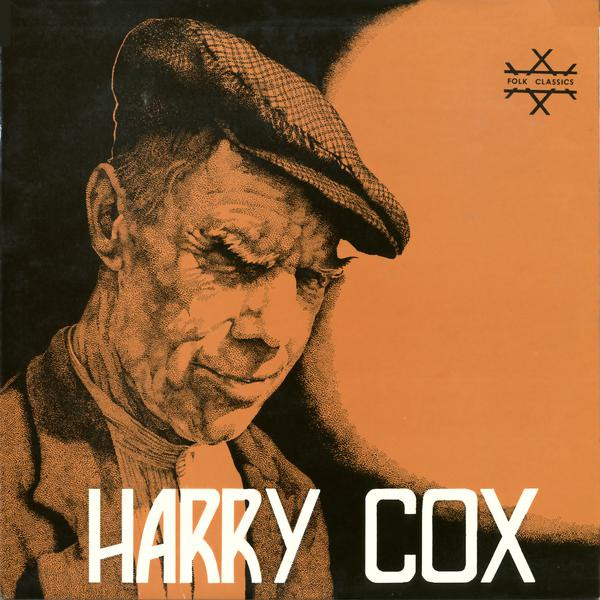
Peter Kennedy recorded Harry extensively for the BBC between 1953 and 1965. It is a selection of that material which appears on these LPs. Harry Cox: English Folk Singer was first released by EFDSS, to members only, in 1965, “as a tribute to a great English folk-singer in the year of his 80th birthday” (9) and was later released more generally as part of their “Folk Classics” series. (10) The first side kicks off with the local tale, the Barton Broad Ballad, in which local lads fell foul of a farmer whilst babbing (11) for eels, only to have the farmer get his comeuppance in court. What follows is a well-chosen programme: the murderous tale of The ‘Prentice Boy, with its wonderful irregular rhythm, the nautical old chestnut Windy Old Weather, a perennial favourite in East Anglia, the tale of highway robbery and a sticky end in Newlyn Town and the epic Napoleonic The Bonny Bunch of Roses. These last two in particular demonstrate well Harry’s consummate dispassionate delivery, allowing the story to take its course. A short hard-luck tale, Adieu to Old England and the story of thwarted lust and a supposedly happy ending, Blackberry Fold, end the side – a wonderful
collection of characters woven through these tales, with Harry’s delivery allowing it all to unfold each time.

Peter Kennedy evidently found it necessary to explain Harry’s style and delivery, to fellow EFDSS members, in the sleeve notes: “At first hearing of Harry Cox you may remark on the ‘dry’ impersonality and monotony of his style; for many of us in the Society it has taken five, ten or even twenty years to appreciate the subtleties of his performances. How impressed you may be, at first, with the tricks and dramatic effects of a concert singer of folk songs, but how soon tire of repeat performances! With a traditional singer of Harry Cox’s calibre the process is reversed. Each time you hear him the songs grow on you, for he presents them with complete selflessness and sincerity. To watch him, with his eyes closed or looking
into the distance beyond the company, you realise that he is living the story of each song. Contrary to what so many have said of traditional singers he is, in fact, giving an artistic performance into which he pours as much, if not more nervous energy than the best stage singers. Each song is imbued, however, with the same dry cynicism as when he tells a story or speaks about his family background and hard-working country life…” Well said! It is indeed the case and makes for rewarding repeated listening.

Which brings us to the second side. This is more varied. Rather in the style of the aforementioned ground-breaking LP Sam Larner: Now is the Time For Fishing, with its lengthy sections of talk, here we have songs mixed with Harry talking about himself, his father and also about singing and playing. There are also examples of his fiddle and melodeon playing, giving a rounded picture of the consummate rural entertainer. First there is the comic and cumulative Widdlecombe Fair, followed straight away by Harry playing the tune of The Ploughboy on the fiddle (a fairly rare example of an East Anglian musician playing an air on the fiddle, or any other instrument for that matter). The complaint of What Will Become of England? follows some talk, and then further talk is interspersed with instrumental tracks: a waltz on the melodeon, and then Yarmouth Hornpipe and Woodland
Flowers
, also on that instrument, the latter of which Harry described as being for a schottische. Later we have two hornpipes on the fiddle: Yarmouth Hornpipe again (and interesting to note how different it is from the version on the melodeon) and Meg Merrilees – a rarity in East Anglia. (12) The snippets of Harry’s speech give a fascinating evocation of his life and family, and also just how much music he got from his father Bob, a man with a great local reputation as both singer and fiddler. The last three tracks are back to Harry’s songs, all with a theme of love or lust: The Foggy Dew, Nancy and Johnny and Firelock Stile, the last with its warning of the possible medical consequences of such carnal behaviour.

Harry Cox Sings English Love Songs, also released in 1965, on DTS Records, (13) presents another selection of Peter Kennedy recordings. The album was also released in the United States – before Britain, in 1964, if discographical information is to be believed – on the Folk-Legacy label. (14) Here we have purely songs, fourteen of them, with the loose theme of love – although lust, infidelity and comeuppance would be better descriptors for several of them. All good, wholesome stuff, of course, being folk songs. Harry works his way through the breezy Seventeen Come Sunday, the bucolic love story of The Spotted Cow and on to Next Monday Morning, with a young girl’s longing for matrimony. Things move into the more comic with the bawdy tale of The Greasy Cook, often titled Butter and Cheese and All. (15) Then the mutual love of Colin and Phoebe, even if she mistrusts his intentions at first, followed by the tale of a cuckolded sailor taking it out violently on his unfaithful wife in The Birmingham Man. The side ends with the classic theme of forbidden love across the class divide, this time with tragic consequences, with Betsy the Serving Maid.

The second side continues this theme: Bonny Labouring Boy considers the impossibility of such attraction, when social status was so rigid. A feisty young female disguises herself as a man and runs off to join the army in The Female Drummer, seemingly with no motive other than serving her country, in this version, only to be ‘discovered’ at the end of the song. And so the theme of the tribulations of love continues with The Squire and the Gypsy, of which the title says it all, and the popular comic old tale of Marrowbones, where a man gets his own back on his unfaithful wife. Next up is The Groggy Old Tailor, who gets his comeuppance rather violently at the hands of the “bold drover”, who wasn’t happy about what he was up to with his wife. We then conclude with the bawdy Up to the Rigs of London Town, in which a countryman gets the better of a prostitute, and finally the sustained double entendre of The German Musicianer, to end the LP on an appropriately light-hearted note. Quite a romp through a series of larger-than-life characters and situations, and yet somehow completely ordinary and earthy. It is very easy to sit back and get lost in their tales, which is precisely as it should be, of course.

Norwich singer Peter Coleman, who knew Harry Cox well, described him as a ‘colossus’, standing head and shoulders over all others. This may be a fair assessment but it should not be forgotten that Harry was the product of his community, one which happened to be very rich in traditional singers, as Chris Heppa’s research (16) has pointed out. Also, just as there is far more to country blues than just Charlie Patton and Robert Johnson, there were a great many significant tradition-bearers of English folk song. None were recorded as extensively as Harry though, and judging by this pair of LPs, it is not difficult to see why. His command of the material, obvious relish in the tales and awareness of the importance of what he was custodian of, make him a supremely important figure in English folk song. When these two LPs hit the shelves in 1965 they must have been a revelation. It is easy to see why they served as such an inspiration for so many others for such a long time.

It ought to be a reviewer’s job to point out faults and failings as well as the positives, but in this instance I have to admit to being at a loss. What is tragic is that these two LPs have been so unavailable for so long. Peter Kennedy did reissue both, in expanded forms, as cassettes and then CDs, on his Folktrax label, but these have not been in print for quite some time.
(17) The American, Folk-Legacy, version of Sings English Love Songs is now available as a CD from Smithsonian Folkways (18) but the EFDSS LP remains long out of print. With the current rebranding of that institution’s commercial face as Folk England, nothing could be more fitting from its back catalogue to illustrate exactly what such a new name should represent than this collection from Harry Cox.

Chris Holderness April 2026


Notes:

  1. Harry Cox: The Bonny Labouring Boy Topic TSCD512D. Easily available and highly recommended as an extensive collection of Harry’s music.
  2. Particularly: Chris Heppa: Harry Cox and His Friends: Song Transmission in an East Norfolk Singing Community, c1896-1960 A Life in Song: EFDSS Journal, Oct. 2001
  3. Shirley Collins and Chris Heppa: Harry Cox in the ‘Portraits’ series; Chris Holderness: The Broads Brothers: Harry and Fred 2021
  4. Sam Larner: Now is the Time For Fishing Folkways FG 3507 1961
  5. The Willett Family: The Roving Journeyman Topic 12T84 1962
  6. Bob and Ron Copper: Traditional Songs From Rottingdean EFDSS LP1002 1964
  7. See the discography published on the EATMT site: Chris Holderness: When I Sing a Song, My Mind is On It: a Discography of Recordings of Harry Cox – Produced 50 Years After his Death. In retrospect, this could have given fuller details about the LPs in question, but
    otherwise is comprehensive
  8. The Barley Mow (Songs From the Village Inn) His Master’s Voice 7EG 8288 1960
  9. Harry Cox: English Folk Singer EFDSS LP1004 1965. The original release had a black and white photograph of Harry on the sleeve
  10. I haven’t been able to find out a date of reissue. The catalogue number remained the same but the original sleeve was replaced with a painting by John Crane
  11. The practice of fishing for eels without hooks – using a bundle of worms threaded on wool, attached to a line and pole.
  12. For a discussion of Harry’s fiddle playing, see: Phil HeathColeman: Harry Cox: Norfolk Fiddler Extraordinaire Musical Traditions MT284 2013. This can be found at mustrad.mainlynorfolk.info Since Rod Stradling’s passing, the site was unavailable. It is now temporarily so as above, although searc facilities don’t lead to it. The site should be found a more permanent home before long. Also relevant is: Chris Holderness: The Devil’s Box in the East: Traditional Fiddle Playing in Norfolk and Suffolk – published on the EATMT site in Oct. 2024
  13. DTS Records was an output of Davies Transcription Services, operated by recording engineer Sean Davies. He seems to have had connections with EFDSS and several recordings of folk music were issued on this small label
  14. Harry Cox Sings English Love Songs Folk-Legacy FSE20 / FSB20
  15. This has a different sleeve to the British release
  16. See Sam Larner’s version on Folkways FG 3507, as (4) above
  17. As (2) above
  18. Details in the discography, as (7) above
  19. It can be obtained from folkways.si.edu Incidentally, the service is impressive – upon ordering from them, the merchandise will be with you in about two working days, via FedEx, all the way from Washington DC!
Share:

Coddenham Revisited, March 2026

Coddenham Revisited – Sunday 1 March 2026
An Afternoon of Music, Song and Dance
Eamonn Andrews

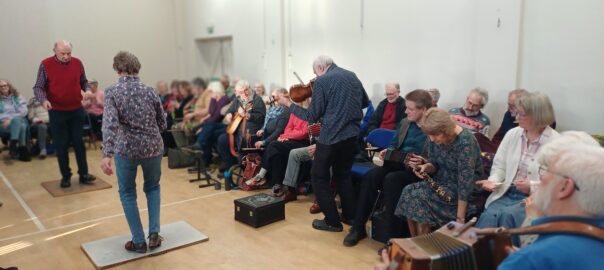
We had a very strong turnout for our most recent afternoon of music, song and dance, returning to Coddenham only a few months after a successful afternoon at the same venue back in October 2025.

The spacious and well equipped hall with good car park, and easy access from the A14 and A140 roads, attracted participants and audience from as far away as Ely, Thetford and Hethersett as well as more locally from Ipswich and surrounding area.

It was great to welcome several first time participants and first time visitors to one of these Sunday afternoon events alongside many regulars.

There was no rapper or Morris dance this time around, but dance was still featured, with traditional East Anglian stepping led by regulars Michael Czarnobaj and Dorren West O’Connor, and a distinctive broom dance in Fenland style from Michael. Jig dolls were active at times too.

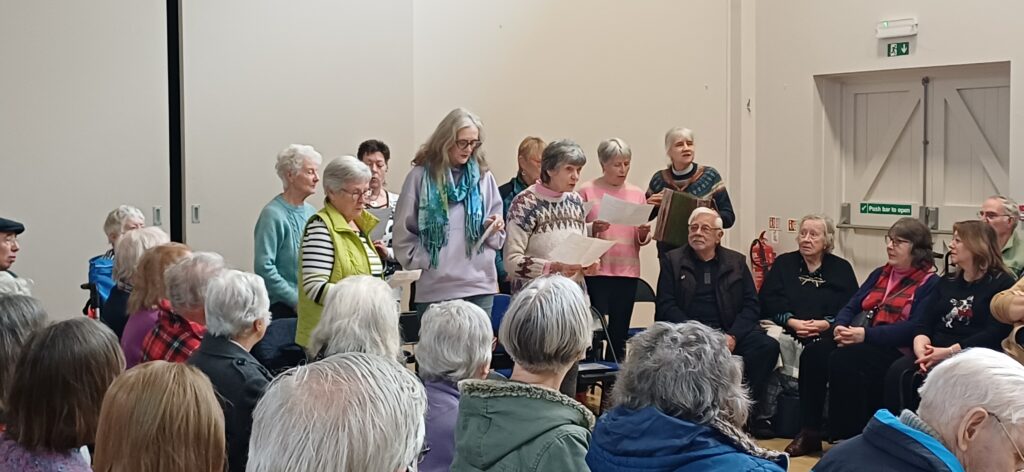
Musical and singing contributions were to the fore. In total we had about 30 “turns” from individual singers and musicians, duets and small groups, and some popular tunes where all those with instruments had an opportunity to join in. 

There were three songs from the Stowmarket U3A group led by Hilary, including “Windy Old Weather”, sometimes known as “Happisburgh Light” a well-known song across the region, with a good chorus which many joined in with.

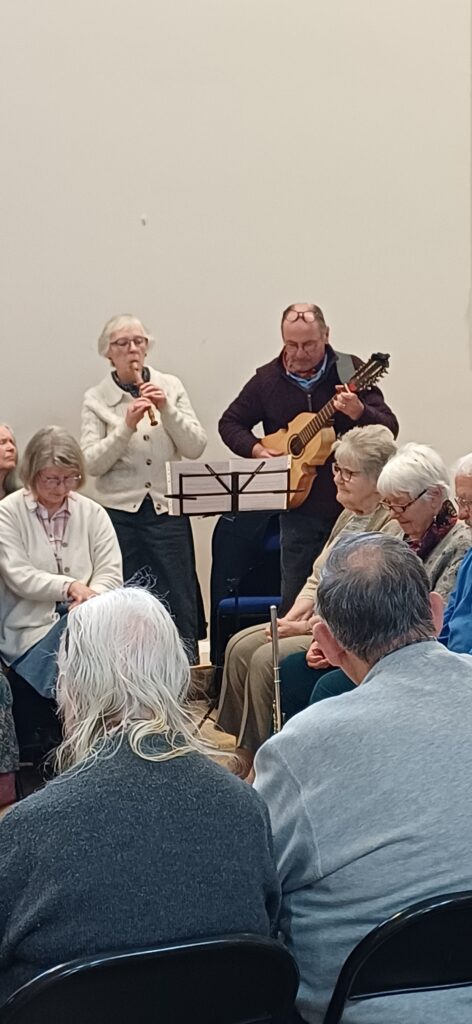
Whilst a lot of the songs sung and tunes played on the day have been local to East Anglia down the years, a variety from further afield, and some self-written songs, added to the overall entertainment and interest. There was “Jamaica Farewell” from Dave and Dimity Gosling; “Spanish Ladies” from Patricia and Jeremy Fox, and possibly a first time sighting and hearing of a Puerto Rican Quattro, a type of citterne, played by Des Hart accompanied by Ruth on recorder. The most “local” of songs was offered by Mick Hearn with “An Old Woman from Coddenham” which on closer hearing was Mick’s bespoke variation on the well know song “Marrowbones”. 

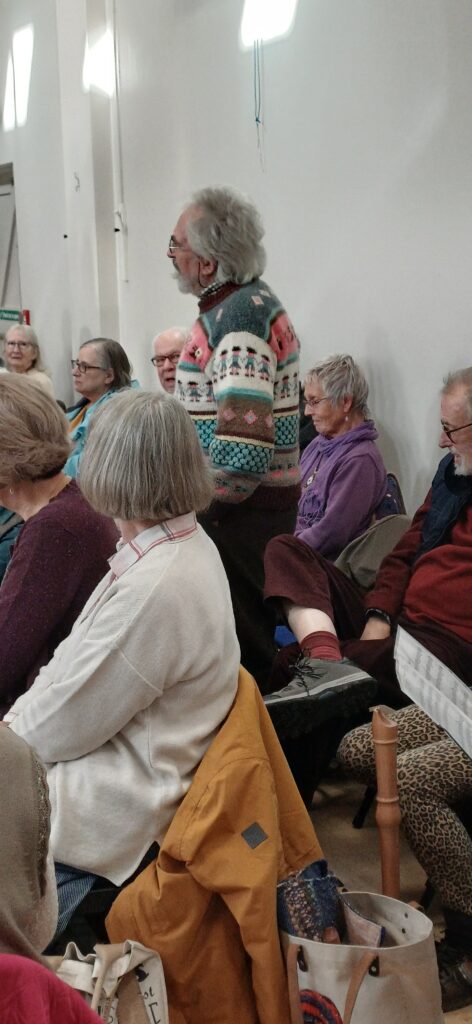
The afternoon was run in the now tried and tested format with seating around an informal arena; teas, coffees and cakes available before the start and during a social break mid-way through, a stall with EATMT books, jig dolls and other items for sale, and a raffle. Although the format is similar from one event to the next no two afternoons are alike, with the great variety of songs and tunes from the repertoires of those taking their turns.

Everyone is welcome to take part in these afternoons so if you haven’t sung, played music or danced with us before then we would be delighted to have you join in. Please arrive in good time and let the MC know. If you have taken part before then thanks for your songs, tunes and dances, and please do come again….!

Without our volunteers these events wouldn’t be possible. On this occasion thanks are due to Robin from Stowmarket U3A, Michael Czarnobaj, Doreen West O’Connor and Dimity Gosling; Jannine Parry and Judy Andrews for making cakes and sausage rolls, and especially Jan Robinson for co-ordinating things. Also, thanks to those who donated raffle prizes.

These afternoons are free to attend but wouldn’t be sustainable without your kind donations, purchases of raffle tickets, tea and cakes and so on. The Coddenham event was well attended, and EATMT was very pleased with the donations and level of support, thank you everyone.

Eammon Andrews – March 2026

Share:

A Celebration of Norfolk Traditional Music, Song and Dance

A Celebration of Norfolk Traditional Music, Song and Dance
Sunday 28 March
Briston Copeman Centre
Chris Holderness

We were blessed with the weather, as people descended upon the hall for an afternoon to celebrate the county’s rich musical heritage, and the event turned out to be worthy of the sunshine: a well-attended and vibrant afternoon in every respect. The hall filled up quickly, people stayed for the full programme and others drifted in across the afternoon.

The proceedings kicked off with a few tunes from the Unthank Irregulars, a selection of a few of the myriad collected in the county. This was followed by a succession of short films from the East Anglian Traditional Music Trust’s archive. As well as the general idea of the area’s traditional music, focus points were step dancing and dulcimer playing, in both of which the county was particularly rich. A short film of various of the Davies family step dancing in Cromer was followed by Dick Hewitt displaying his prowess and talking about his family’s involvement.

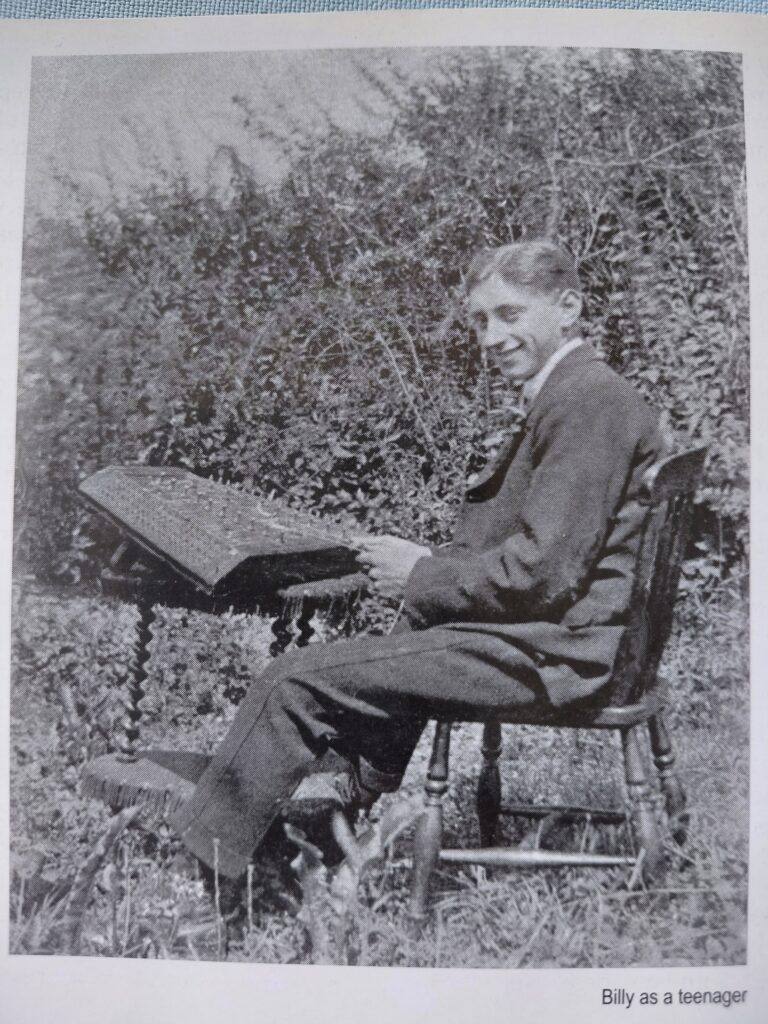
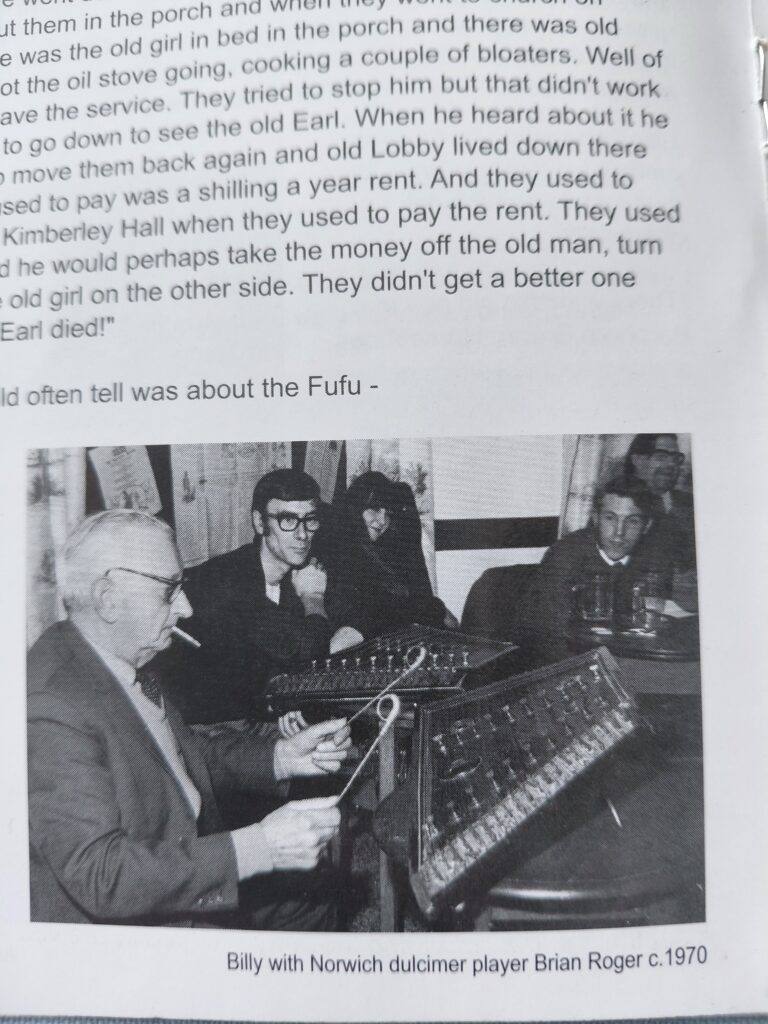
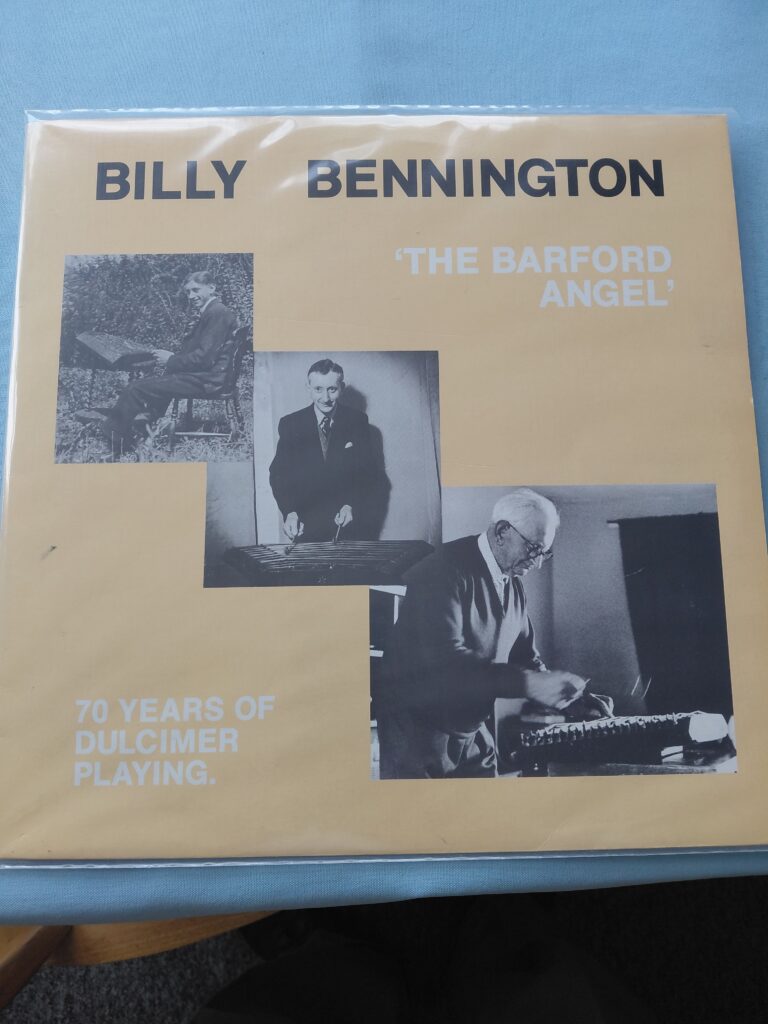
Finally, dulcimer virtuoso Billy Bennington showed his technique with various tunes. All wonderful material; it is a great shame that there is so little of such footage in existence. The Billy Bennington film led neatly into our own local dulcimer player and expert, Richard Blake, showcasing a few choice examples of instruments from his collection, with informative and occasionally humorous anecdotes about each, finishing off with a couple of tunes on Billy Bennington’s dulcimer. Next up was the more participatory step dancing slot: various practitioners of varying ages showed us what they could do and the session ended with quite a few people trying their hands with a dancing doll.

The finale was a “Tune-Up” style informal concert. Once again the Unthank Irregulars were on hand to lead through various tunes, augmented now by several other musicians. The dancers got up regularly and the instrumental stuff was interspersed with song from various people, despite the fact that the fairground had just started up on the green outside. Mercifully this intrusion constituted no more than a low hum of noise which we were able to ignore. The performers were too numerous to mention individually, but collectively they ensured a lively, varied and good-humoured finale.

And then it was over. It was gratifying to see so many local people turning out and much interest was shown in the musical traditions on display. Great too to have musical contributions from so many of them. Many thanks must go to Bec Jennings for her sterling work with the catering!

Next up is another event in Briston: a “Tune-Up” pub ‘do’ in The Three Horseshoes on Sunday 26th April, from 1.00 to 4.00 – the pub in which the aforementioned Dick Hewitt was landlord many years ago. We hope to see you there.

Chris Holderness – March 2026

Share: