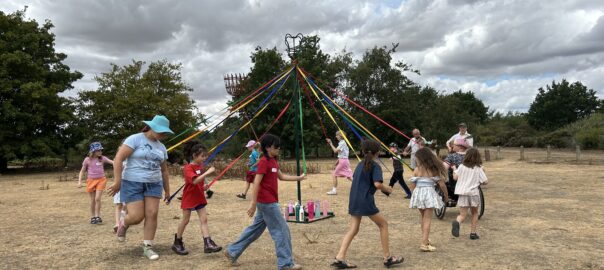
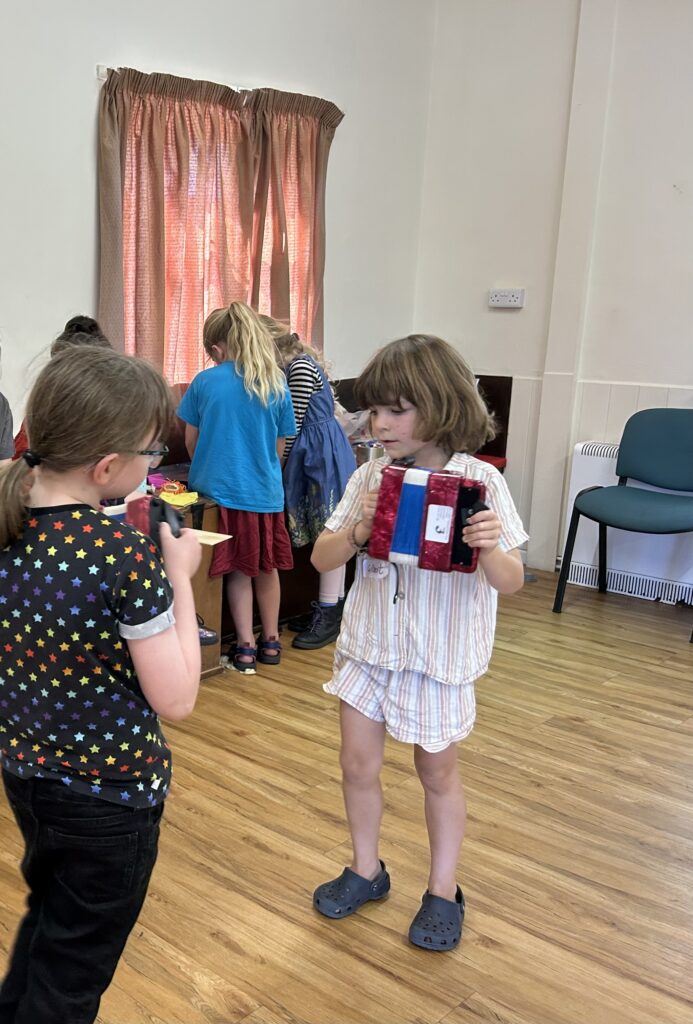
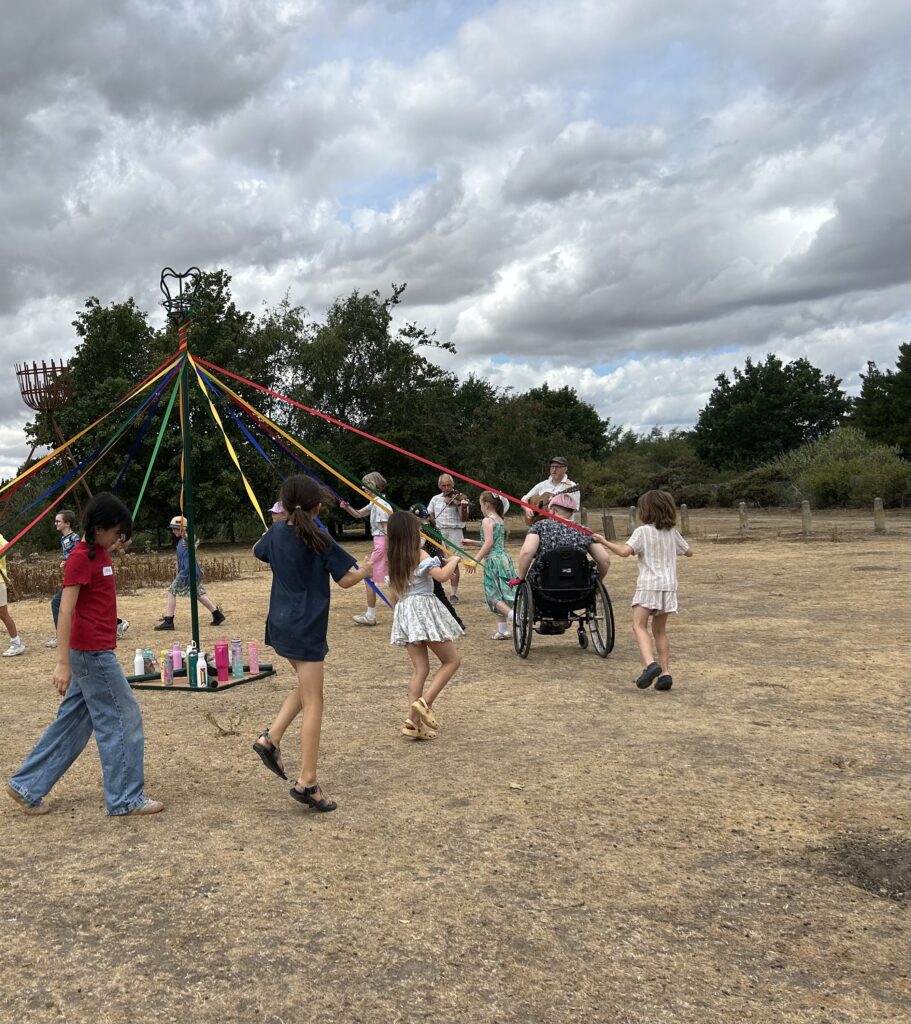
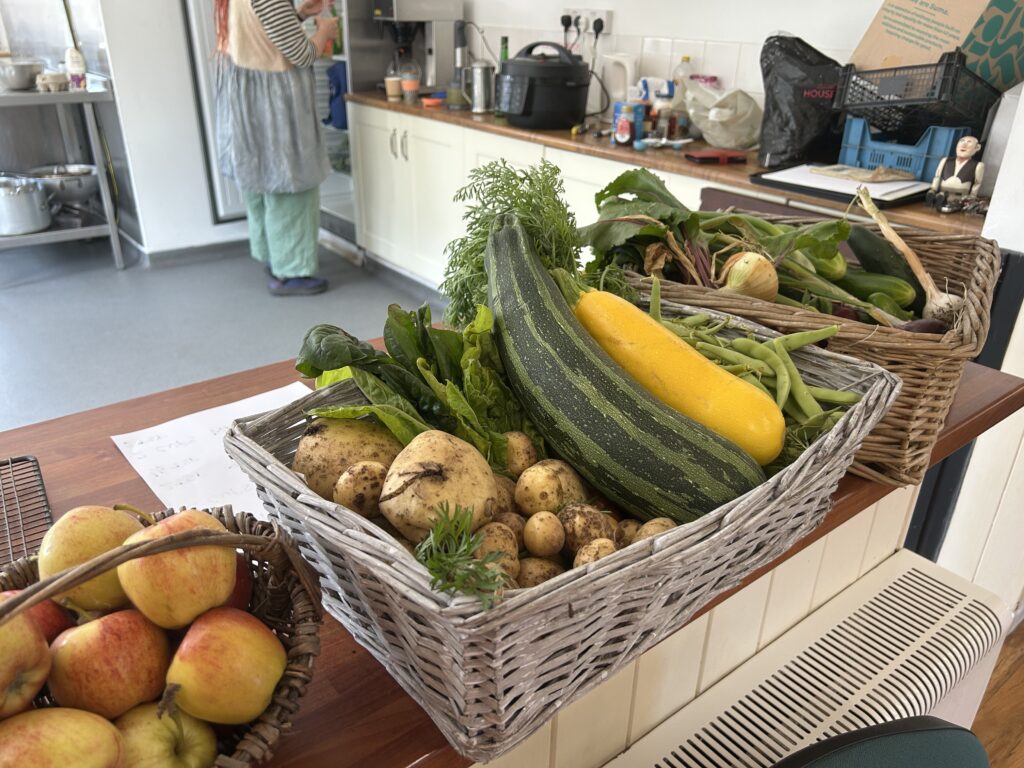
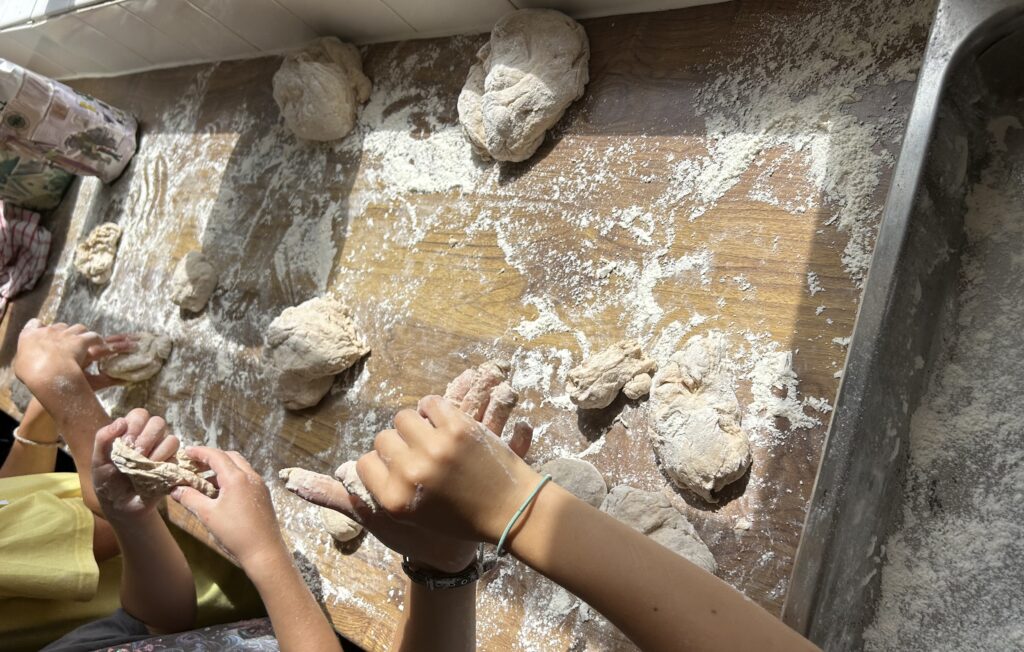
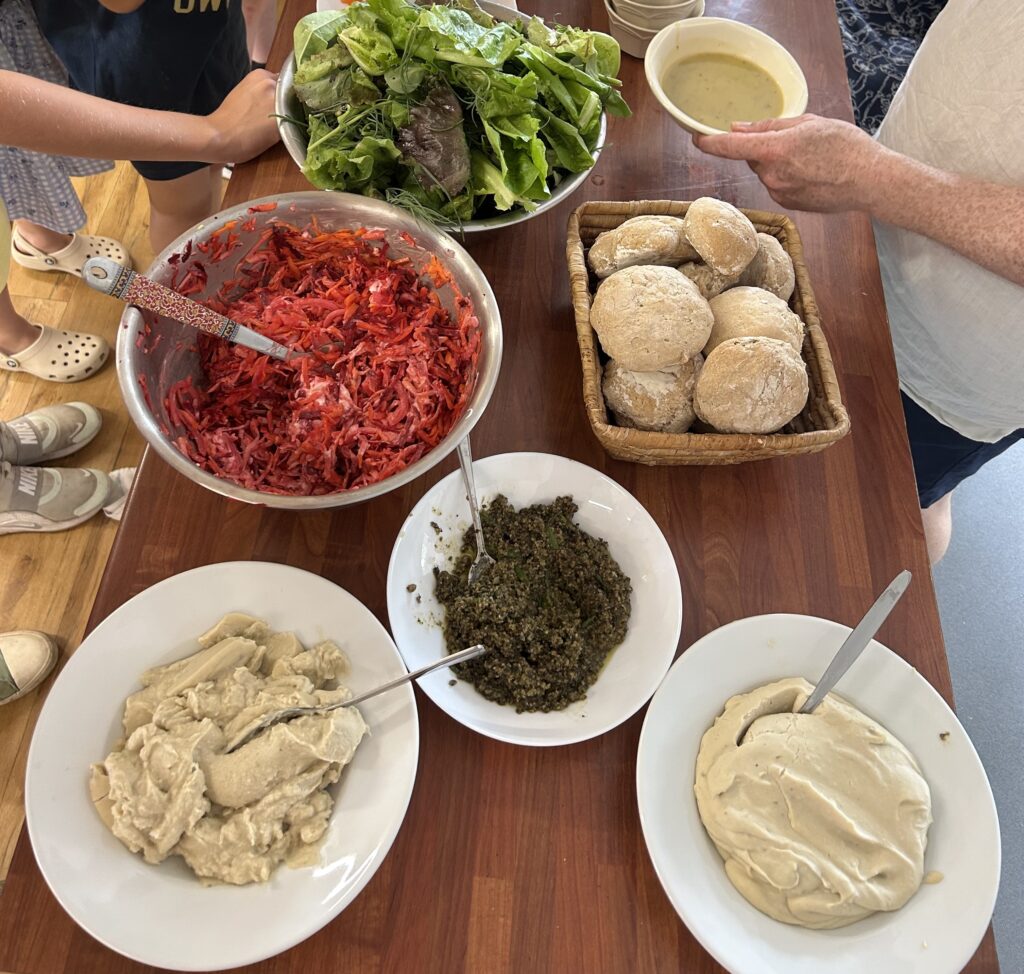
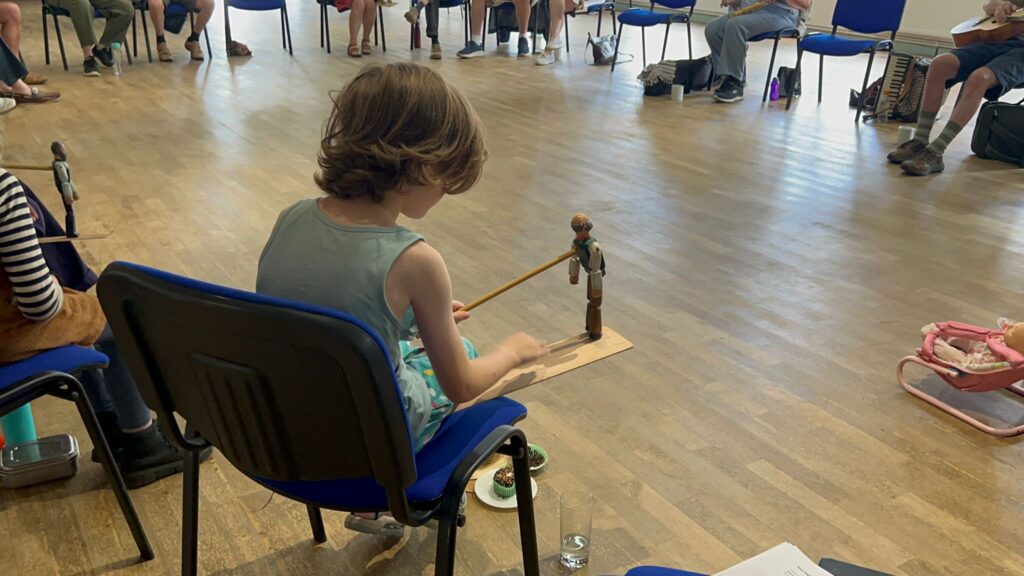
In July we ran our first ever one-day Folk Summer School, in Broome in Norfolk. We welcomed fifteen children for a day of East Anglian folk activities and we were absolutely blown away by their enthusiasm, energy, and creativity.
During the day they worked together to:
make bread and prepare a fabulous lunch using locally-grown produce
learn songs from Norfolk traditional singers, as well as put their own spin on Windy Old Weather by creating new verses, actions, and even art inspired by the song
learn some social dances
learn some maypole dancing
learn some morris dancing
try out jig dolls
try out playing our mini melodeons, a sturdy and child-friendly version of the instrument
try out a real dulcimer
We were lucky enough to be joined by Poppy Price-Dowhan who taught social dances and Maypole dances, drawing on her own history as a third (possibly fourth!) generation Maypole dancer, and by Adam Clark who played music and led the song session, including sharing archive recordings with the children of Sam Larner talking and singing. Adam will be appearing at FolkEast Festival on 22 August, and at Bungay Folk Festival on 4 September, as part of his band the Adam Clark Trio. Poppy is currently sharing educational resources over on YouTube as part of the Accessible Ceilidh Project, looking at how ceilidhs and social dance events can be more accessible for everyone.
We’ve received some great feedback from children and parents, so we’re hoping to run more events like this – please make sure you’re on our mailing list if you’d like to hear about the next one. A huge thank you to the National Lottery Heritage Fund and the Love Norfolk Fund (Norfolk Community Foundation) whose support made it possible to keep this incredibly affordable.
“We would have travelled further and paid far more happily for the quality of this wonderful day.”
“What a fantastic celebration of our local culture and heritage, wonderful to see people working with so much joy and enthusiasm to keep these traditions alive in the next generation.”
“My children absolutely loved this event and asked when they could go back! They’ve been singing and dancing what they learned since they got home. It’s been their favourite summer activity so far. Thank you!”
“It was one of the best things she has done this summer – so well organised and such wholesome activities and a wonderful pace. She had a fantastic time and enjoyed every minute.”
If you’re not already on the East Anglian Traditional Music Trust’s mailing list, sign up so we can keep you informed about future events – and our future Folk Schools programme!
A big thank you to everyone who joined our event in Long Melford on Sunday 28 June – and who made it so welcoming for some of the newer attendees! We had songs from Johnny, Nick, Pauline, Colin & Karen, plus tunes from Otis Luxton, Colin & Karen, Johnny, Pauline, and a few more musicians; a great range of tunes and songs with some true East Anglian classics in the mix (Redwing and Oh Joe The Boat Is Going Over, amongst others). Special thank you to Johnny for leading an impromptu country dancing session, teaching some of the younger attendees the Heel & Toe Polka – beautifully danced!
It was great to welcome plenty of people who were new to EATMT events, and to see so many people trying out jig dolls to accompany the music – and even better, at least one audience member is now keen to seek out other opportunities for folk and traditional song. We’ve obviously recommended Long Melford Folk Club (second Friday of the month, from 8pm, at Long Melford’s Cock & Bell pub) but if you know of any other nearby favourite folk clubs, singarounds, or other welcoming events, let us know!
An Afternoon of Music, Song and Dance – Sunday 31 May 2026 Shirley Harry
We were delighted to bring our ‘Afternoon of Traditional Music, Song & Dance’ to a completely new venue this month – the Fromus Centre, in Saxmundham. The centre has is very well equipped with lots of parking, even though it perhaps wasn’t the easiest to find!
There were lots of new faces alongside more familiar participants and things got off to a jolly start with an intro tune from the ensemble led by Tracey Wisdom, Michael Cherbanoj, and who were joined by Paul, Bill, Mike, Alan and Ann.
Eammon Andrews performed a stirring song, Doreen introduced stepdancing – and was joined by a enthusiastic beginner. We enjoyed performances by Alan on his recorder, both Ann, and Bill Johnston led tunes on the melodeon, followed by a fiddle tune from Paul.
Songs were performed by Eammon, Dave Pring, Marianne, Mike Acott, Tracey Wisdom and John gave us a sea shanty.
After a welcome break (the cakes were obviously delicious as we had absolutely no leftovers!), Michael Cherbanoj of Mepal Molly explained a little about Broom Dancing and demonstrated, accompanied by the musicians. Jill Pring, Alvar Smith and Noel all gave wonderful renditions of songs.
Our jigdolls were introduced by Doreen and while several of our number had a go with our demonstration jig dolls, Doreen, Michael and Eammon performed some more step dancing.
It is always a treat to find a new venue for these afternoons and, given the warm and enthusiastic welcome we received, we hope to return soon.
A Good Ole Norfolk Tune-Up at Erpingham Spread Eagle
Sunday 17th May
It has to be said that we were rather a select bunch on this late Sunday afternoon, as illness and clashing events had thinned our ranks somewhat. Despite this, we were collectively more than able to field a team and what ensued were several enjoyable hours of traditional music making into the early evening.
As ever, the band rolled out sets of jigs and hornpipes, polkas and schottisches, with the occasional waltz changing the tempo. Dancers danced – Barry Mobbs and Monica Rackham waltzed and glided through the polka; there was much step dancing too, the room’s wooden floor proving an ideal platform, and Monika Wiedemann showing that schottisches certainly are ideal step dancing tunes, as well as Josh Dart showing his prowess throughout. Not to be outdone, Sheila Park’s dancing doll, made for her by Harry Cox, also put in an appearance several times in the course of the event.
The two dulcimers of Richard Blake and Tom Knights were, as always, an instrumental highlight, with Tom reeling off tunes learned from grandfather Reg Reader and both players sparring off each other – duelling dulcimers perhaps – with such as the On the Green / Pony Trot Polka set.
Interspersed with this were a variety of songs from various of us in the company, a key – but unintended – theme of which seemed to be poaching, transportation and the press gang, not infrequent subjects in the songs of our forebears though. Mention must be made too of Rosa Dart’s lovely duet rendition of Little Cock Sparrow with her father, got from the recording of Suffolk singer Roy Last, and seemingly something of a family tradition.
In all, a satisfying time, despite the absence of several stalwarts, and therefore a more subdued atmosphere in some ways, although a rollicking good tune-up in the main. We next turn our attention to south Norfolk – Shotesham Globe on Sunday 14th June, from 4.00 to 7.00.
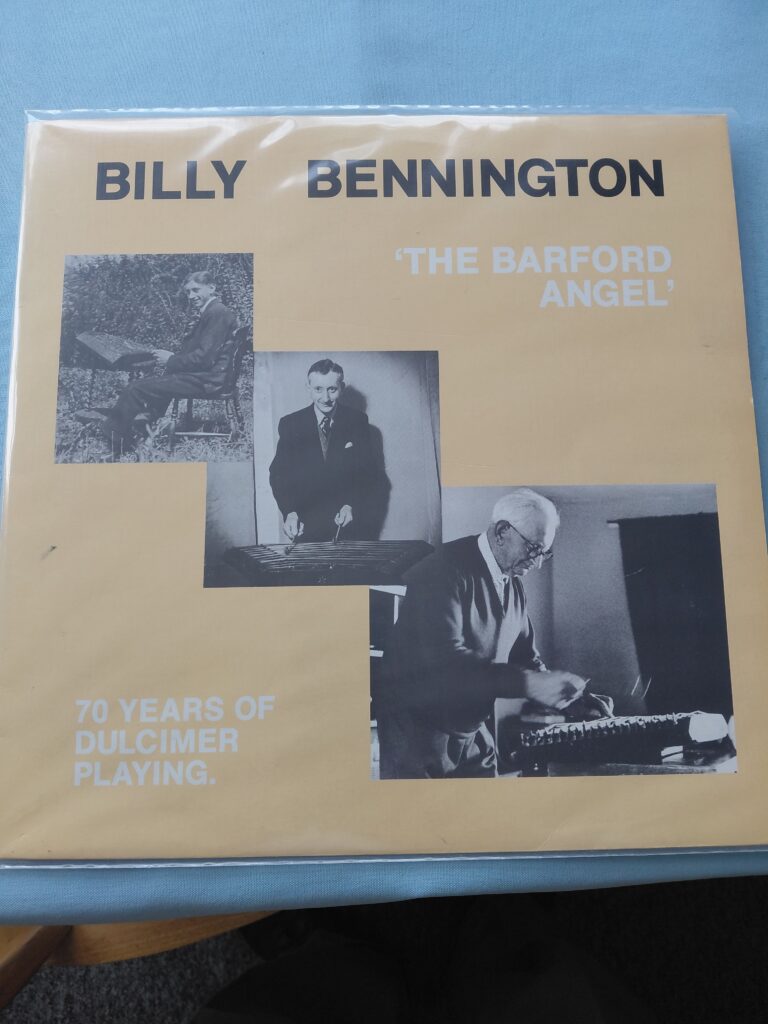
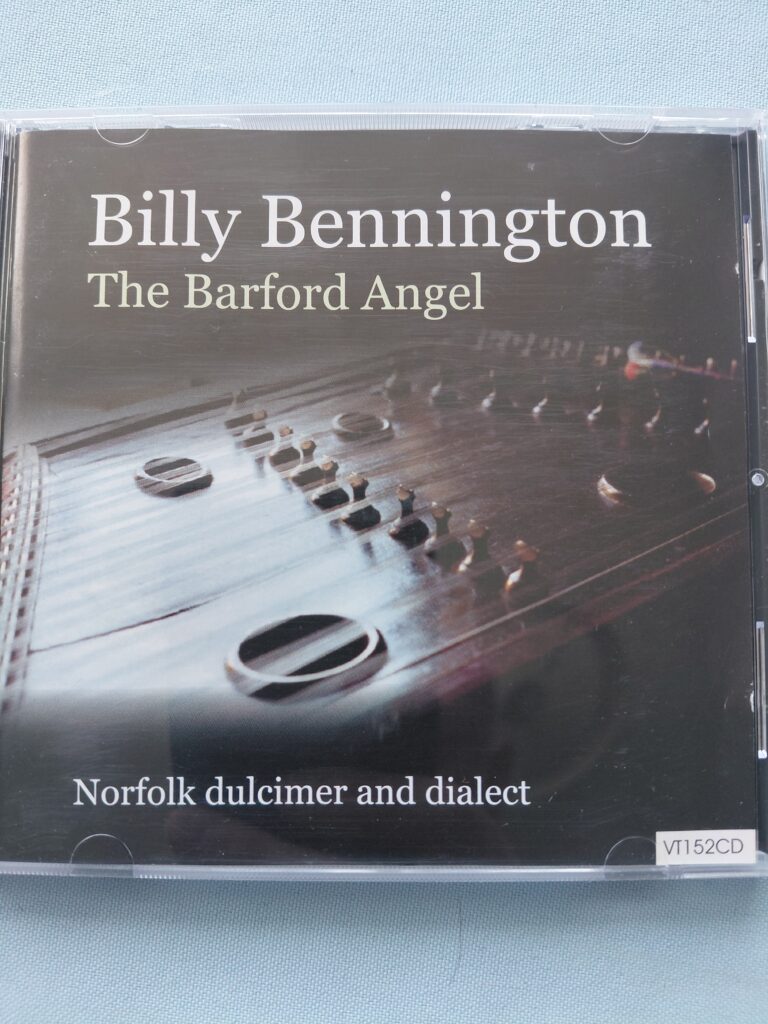
In 1973, Topic Records put out an LP of instrumental music from this region – English Country Music from East Anglia (1) – which proved to be highly influential for the burgeoning scene of musicians and enthusiasts dedicated to promoting the idea that England had a vibrant tradition of music-making, which could be celebrated in just the same way as it was in Scotland and Ireland. The LP comprised music from four performers, one of whom was Billy Bennington, dulcimer player from Barford. I have reviewed this album previously (2) and don’t propose to revisit that ground here. Suffice to say that the LP certainly showed that East Anglia was a place where, in the 1970s, a few traditional performers could still be found. In 1987, a full LP of Billy Bennington’s music – The Barford Angel – was released on the tiny East Anglian Life label (3), further demonstrating Billy’s virtuosity on the instrument. In 2005 Veteran reissued the LP on compact disc, adding the tracks from the Topic LP too, to create a vibrant musical portrait of this dulcimer virtuoso.
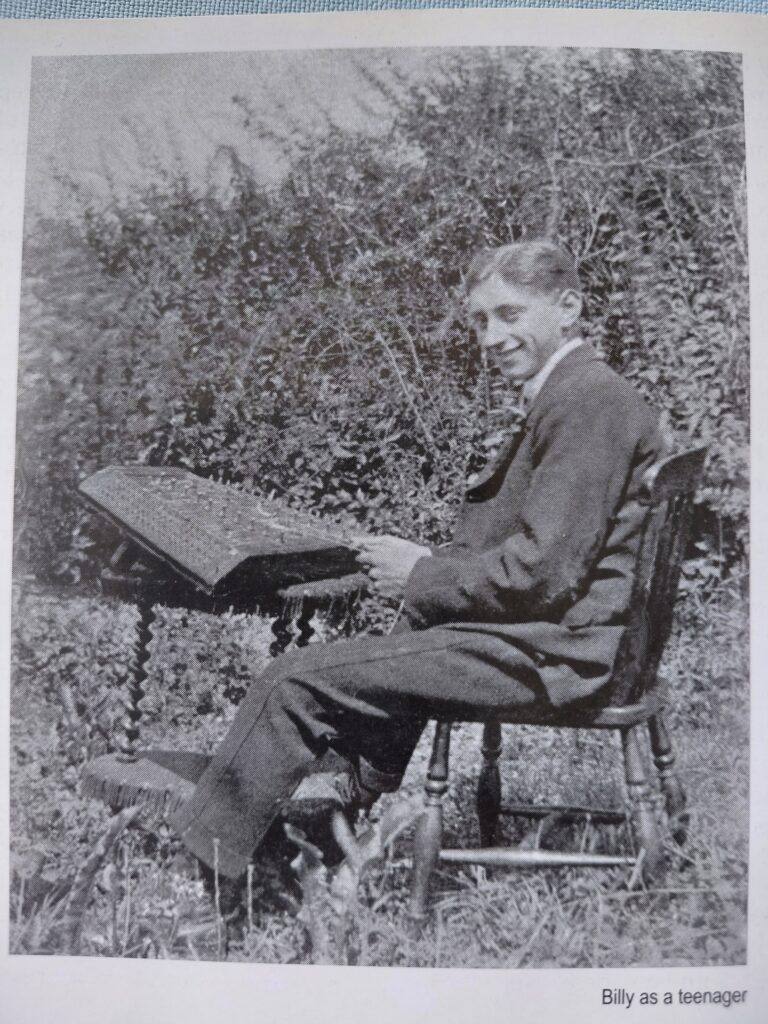
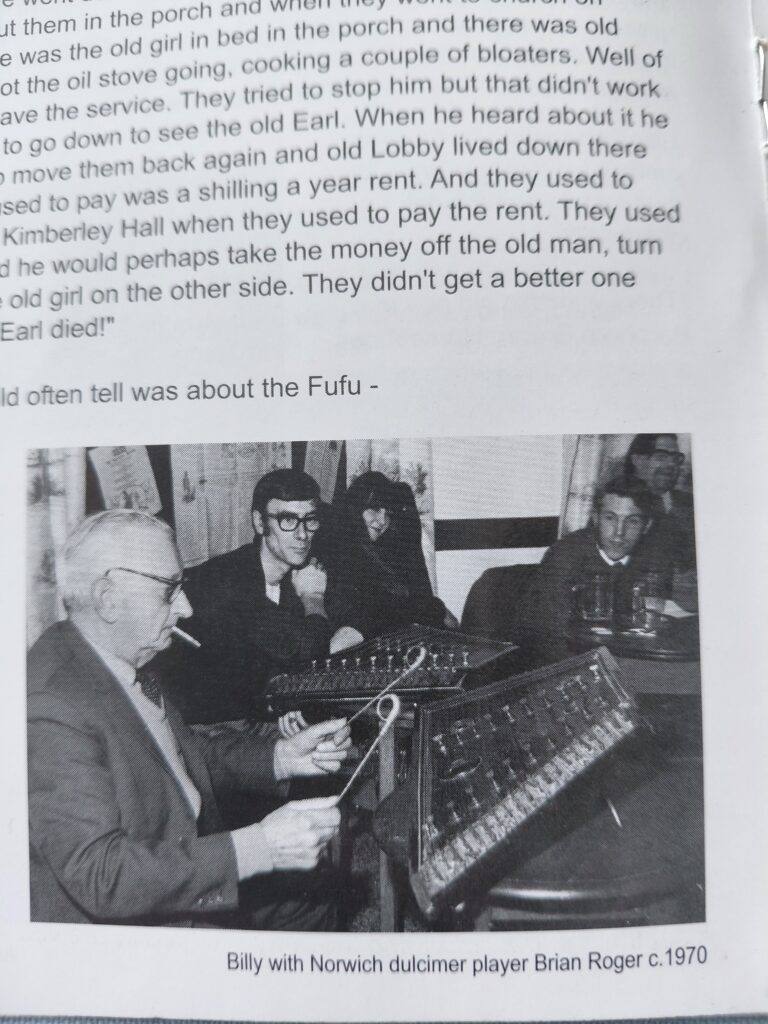
Billy Bennington was born in Barford in 1900, an area of several ‘dulcimore’ players, a tradition which seems to have emanated out of Norwich, which was also noteworthy for makers of the instrument. He took lessons from local musician and band leader Billy Cooper after 1912 – whose son, also Billy Cooper, was also a prominent player, (4) and in the years after the First World War Billy teamed up with Billy Cooper junior and fiddler Walter Baldwin (5) to play in pubs all over Norfolk. From then on Billy fulfilled the role of local musician, whilst working as a gardener, developing an ornate but precise style of playing. These recordings were made towards the end of his life – he died in October 1986, a year after the bulk of the recordings were made – but his talents seem to have been in no way diminished by his age.
What we have here is over an hour of Billy’s repertoire: the social dances – hornpipes, polkas, schottisches and waltzes – marches and a couple of popular song tunes from his younger years. Hornpipes are well represented: a slightly unusual, rolling version of the ubiquitous Flowers of Edinburgh, (mistitled Yarmouth Hornpipe on the Topic LP), a sprightly medley of the local perennial favourites Yarmouth Hornpipe and Sheringham Breakdown, as well as the equally well-known Sailor’s Hornpipe (containing a snippet of Flowers of Edinburgh along the way), all at a moderate, assured pace. Schottisches are also well represented, illustrating how commonplace this couple dance was in these rural communities: Herbert Sadd’s Schottische, a rather florid and complex version of the tune more commonly known as Mountain Belle Schottische, and which came from the highly-regarded local player of that name, followed by an untitled Schottische and yet another unnamed, which track then nicely changes tempo into a Step Dance.
Polkas are equally well represented, with the wonderful Gay Ladies Polka and also two others which have been taken up by musicians locally, and played as a set – Pony Trot Polka and On the Green, the latter with its improvised section. Here are the originals in all their glory. Likewise a slow and stately version of the somewhat hackneyed Redwing, starting on the second strain of the tune, and none the worse for that. Also the song Going to the Derby, making an effective polka, and which Katie’s Quartet reworked as ‘BB’s’ (6) It’s easy to see the extent to which Billy Bennington was such an influence on younger performers, and the worth of these recordings in that respect.
The solitary jig, Rose Cottage, was named by Billy for his cottage and he comments that it was used for the Norfolk Long Dance (one of many, often untitled, tunes that local musicians had for the purpose). Billy once again gives an unhurried, assured performance. Waltzes are evident in the form of two distinct tunes called Dulcie Bell. The first is the ‘usual’ tune of this name, also played by Billy Cooper (junior) and probably written by his father, ‘Old Cooper’. (7) It certainly lives up to its name, with its Edwardian elegance and charm. Much the same could be said of the other, Dulcie Bell 2, which appeared on the Topic LP as ‘Dulcie Belle’ and for which Billy didn’t have a name. There are also two marches – a favourite type of tune – the Sousa-composed On Parade and The Gunner’s March, used, as Billy describes, for the Military Two-Step.
An unusual item is the tour de force performance of the American string band favourite The Chicken Reel. Where Billy got it from is unknown, but here is proof that the cross-Atlantic exchange of tunes was not a one-way flow in the early Twentieth Century (as exemplified also by the popularity of such tunes as Redwing and Whistling Rufus). There is also the dulcimer party-piece The Bells of St Mary’s, and the rest of the running time comprises popular songs of the earlier Twentieth Century, When Johnny Comes to Town, Lovely Lucerne, Obidiah, I Like to Say Good Morning and the sublime My Beloved Cornelia, with its effective mandolin mimicry.
In all, here we have a wonderful musical portrait of an extraordinary rural musician, a man who operated within the loose borders of tradition, but whose virtuosity took this music to a high level indeed. The CD is subtitled ‘Norfolk dulcimer and dialect’, and what we also get are several spoken passages as introductions to tunes, with wonderful – and sometimes hilarious – anecdotes about Billy’s life and experiences as a musician, all adding to the richness of the listening experience. This is, possibly unsurprisingly, the only full album dedicated to an East Anglian dulcimer player. (8) For that reason alone it is essential for anyone’s music collection, but it is much more than just a historical document: it is a vibrant aural portrait of a wonderful musician.
The sound quality is excellent and the CD booklet contains much information and several photographs, as is usual with Veteran releases. There really isn’t anything lacking; it’s a highly recommended album, available at the time of writing as both CD and download from Veteran.
Chris Holderness May 2026
Notes:
1. English Country Music from East Anglia Topic 12TS229, 1973
2. Reviewed in the January 2026 newsletter
3. Billy Bennington The Barford Angel East Anglian Life EAL-1, 1987
4. Billy Cooper (junior) can be heard on English Country Music Topic TSCD607, 2000, Heel and Toe: Veteran VT150CD, 2005, and ‘I Thought I Was the Only One!’ Dulcimer Playing in East Anglia Veteran VTDC12CD, 2015. The LP version of the first was reviewed in the newsletter for December 2025, the second was reviewed recently in another newsletter; a review from 2015 of the latter can be found at mustrad.mainlynorfolk.info
5. Not to be confused with Shipdham fiddler Walter Bulwer, as sometimes happens due to the similarity of the name. Walter Baldwin was a blacksmith in Hingham who was regarded as a fine fiddler. He was never recorded. His image can be seen in the photo of the ‘Hingham Minstrels’: see Chris Holderness: The Devil’s Box in the East: Traditional Fiddle Playing in Norfolk and Suffolk, 2024, at eatmt.org.uk
6. Recorded on Katie’s Quartet Old Hat Music OH3CD, 1996
7. Billy Cooper’s version of Dulcie Bell can be heard on TSCD607 and VT150CD, as above 8. More players, and more material by Billy Bennington, can be heard on VTDC12CD, as above.