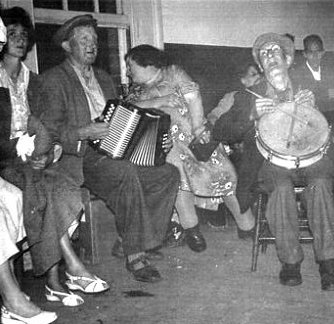
Review: Alvar Smith: A Sailor and his True Love: Traditional Singing from the Blaxhall Ship Veteran VT164CD

Review
Alvar Smith: A Sailor and his True Love: Traditional Singing from the Blaxhall Ship Veteran VT164CD
Now, this really is a delight! A full-length survey of Alvar Smith’s singing of “old songs and comic songs learnt from his grandfather Arthur Smith, his uncle Bob Scarce, Cyril Poacher, Bob Hart and others”, as the notes explain. This singing was centred around Blaxhall Ship pub, which is of course well documented as a place with a long-standing tradition of such activity, about which the CD booklet gives some information, although there were certainly also several other pubs in the vicinity which hosted regular singing nights too. (1) The album was recorded live at Sheffield’s New Musical Traditions Club in November 2025, where Veteran director Mossy Christian writes that “it was a pleasure to hear Alvar in such good voice.” (2)
He certainly is. What we have here is a good selection of songs, comic and serious, which Alvar has picked up from family and community over the years, and the track list reads as a veritable catalogue of material that is familiar to anyone with an interest in traditional singing in the area. Most have been recorded by other singers, some by several, but Alvar does bring his distinctive stamp to them in every way, despite this familiarity. Of the singers mentioned previously, many recordings were made of Bob Scarce, Bob Hart and Cyril Poacher, and Alvar’s grandfather Arthur can be heard singing A Sailor and his True Love and Health to the Barley Mow on the Folktrax CD Saturday Night in a Suffolk Pub, with recordings made by Peter Kennedy, (3) and seen singing the latter on Kennedy’s film The Barley Mow. (4) Alvar’s version of the former is included here; there is certainly a true continuity of tradition in this respect. Alvar was exposed to the music from an early age, having spent much of his childhood with his grandparents in Blaxhall. However, he didn’t actually take up active singing on a regular basis until he retired from being a gamekeeper at the age of 65. The story of a young man exposed to music, and often being actively involved with it, at an age free from responsibility, and then giving it up to start and support a family, to return to it later, is a common enough one. However, Alvar’s profession made it more imperative that he followed this course of action, as he relates in the booklet notes: “I didn’t go in there at all when I was working. I was gamekeeping you see, and you didn’t wanna go in to pubs, then poachers knew where you were – they’d only gotta look through the window! I didn’t go in again until I retired”. (5) Be that as it may, since retirement Alvar has taken up singing with a vengeance and sings regularly in The Ship and elsewhere. It is therefore wonderful to have a full album of his material.
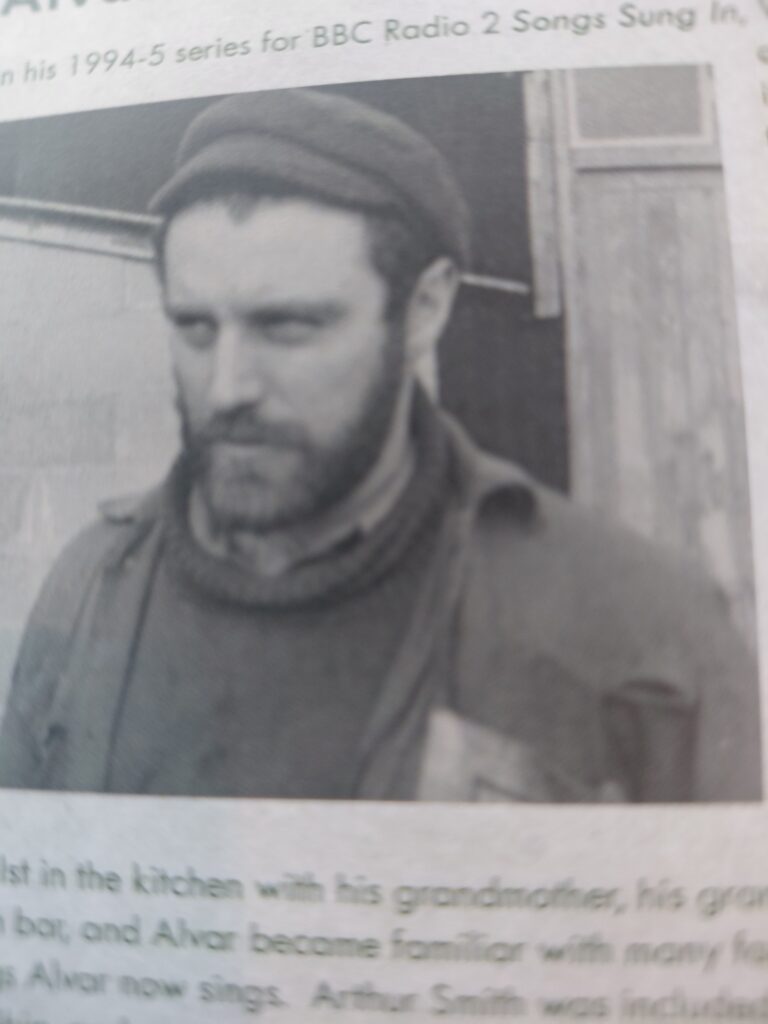
The CD starts off with Katie Howson giving us the step dance tune Pigeon on the Gate whilst Alvar narrates about his childhood, music and gamekeeping – a nod perhaps to the opening of the CD Good Order! Ladies and Gentlemen Please? (6) – where the BBC announcer sets out the proceedings over step dancing by Louisa Howard, accompanied by a melodeon player. Whether or not, it’s an effective introduction, setting the scene for what follows: eighteen songs, nearly all unaccompanied, but with occasional backing from Katie Howson’s melodeon or Mossy Christian’s concertina, this being unobtrusive and appropriately supporting Alvar’s vocal lines.
The singing starts appropriately with The Nutting Girl, forever associated with Cyril Poacher, from whom Alvar learned it. (7) It’s an auspicious start: sure and engaging with this old local classic. This is followed by the jocular music hall Slap Dab, also associated with Cyril Poacher, a nice change of pace and ambience. It has to be said that this is the case throughout the CD programming – a good intermixing of the ballads and serious stuff with the more light-hearted material. It reflects what would probably comprise a night’s singing from a company and works very well. The magnificent Bold General Wolfe follows, a version from Bob Hart, as the notes attest, but also sung regularly by Bob Scarce, including his wonderful version on Neil Lanham’s Blaxhall Ship recordings. (8) Alvar treats it with suitable gravitas; he certainly holds his own compared with the other singers. The pace and mood changes again with the bouncy, concertina-accompanied Underneath Her Apron, another much-loved song locally. Then we have Wheel Your Perambulator, John, seemingly a music hall number if ever there was one, although its origins are rather uncertain, and Alvar’s version rolls along nicely, accompanied by Katie Howson’s melodeon. The CD tune notes give the caveat that “the humour in the final verse is in bad taste by the standards of today”, with its comic depiction of – ludicrous – spouse ill-treatment, but all I can say is that Alvar had no problem delivering it at the album launch in Stowmarket very recently where, with his self-deprecating grin, it only engendered smiles and laughter. (9)
More comic fare follows with Running Up and Down Our Stairs, light and with outdated humour (as the notes maintain), but still with Alvar showing good command of the material, and then Chickens in the Garden, in much the same way – a light and easy-going song that would fit into almost any rural environment anywhere, actually written by the African-American composer James A Bland, and published in 1883. (10) Quite a testament to how far these composed songs, disseminated by sheet music before the age of recorded sound, could go. A more sober mood is then invoked by the sentimental May I Come Home Again and A Boy’s Best Friend Is His Mother, both from Bob Scarce. Folklorist A L Lloyd was famously very disparaging about Norfolk singer Walter Pardon’s love of such sentimental and ‘lightweight’ material, even though he greatly appreciated him as a singer, and to modern ears the sentiments expressed in such songs are perhaps difficult to find resonance with, but they were beloved of many traditional singers and formed a core part of their repertoires. Alvar’s assured delivery breathes life into both songs and provides an interesting window into what was popular in times past, whilst still managing to entertain contemporary audiences.
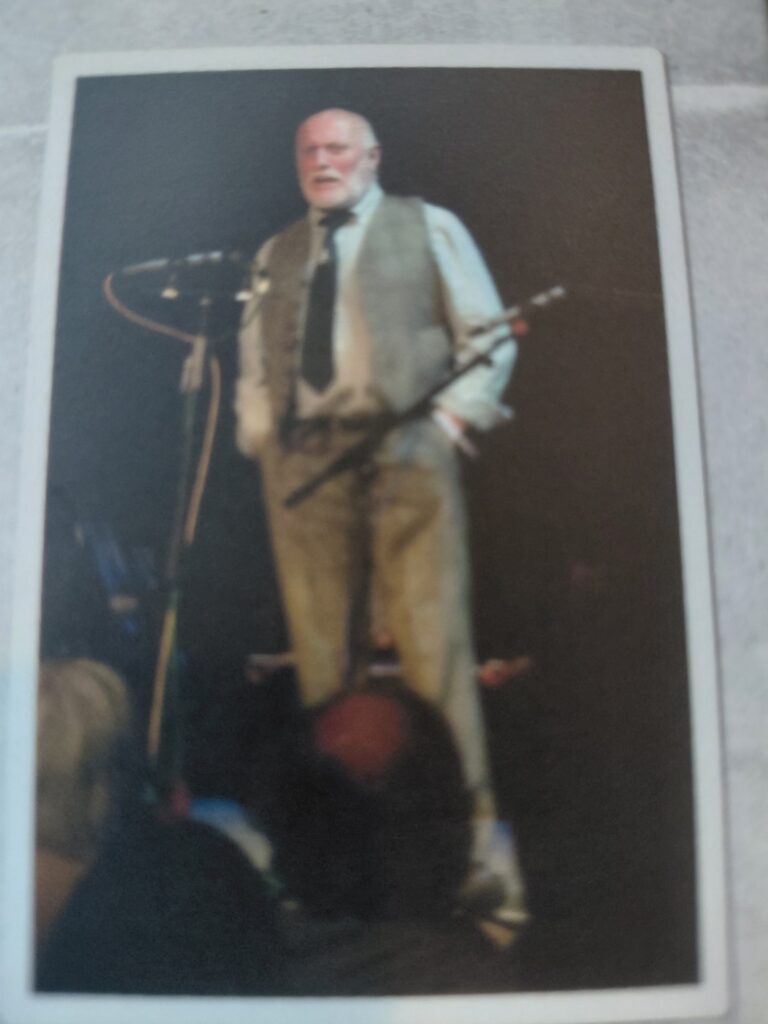
Solid traditional fare makes up the rest of the album. Faithful Sailor Boy – in this instance from Cyril Poacher again – is very popular in this region and elsewhere, although not actually of any great antiquity. Alvar follows the fine tradition, with a robust performance. Probably even more popular is A Sailor and His True Love – more commonly Pleasant and Delightful or sometimes The Larks They Sang Melodious. (11) As mentioned, this – the title track of the CD – was recorded from Alvar’s grandfather Arthur, by Peter Kennedy in 1953. It’s quite a tour-de-force in Alvar’s hands, or rather with his voice, his dialect-rich delivery bringing out the story in fine style. Further local and national favourites Flash Company and The Handsome Cabin Boy continue to showcase the local preferences in song and Alvar yet again shows himself master of the material. The wistful I Wish I Was Single Again changes the mood and again Alvar’s delivery does it full justice. The bawdy Little Ball Of Yarn provides yet another change of tone: a cheerful piece of erotic jocularity, long popular with country singers on both sides of the Atlantic. The album ends with the lightweight compendium of comic verses of To Ra Loo, very popular, usually with a title something similar to this one or from one of the lines, such as Hold Yer Row, taken from Norfolk singer, dulcimer player and step dancer Walter Jeary, to give another local version. (12) It’s a fitting end – with a smile – to a fine set of songs from this superlative singer.
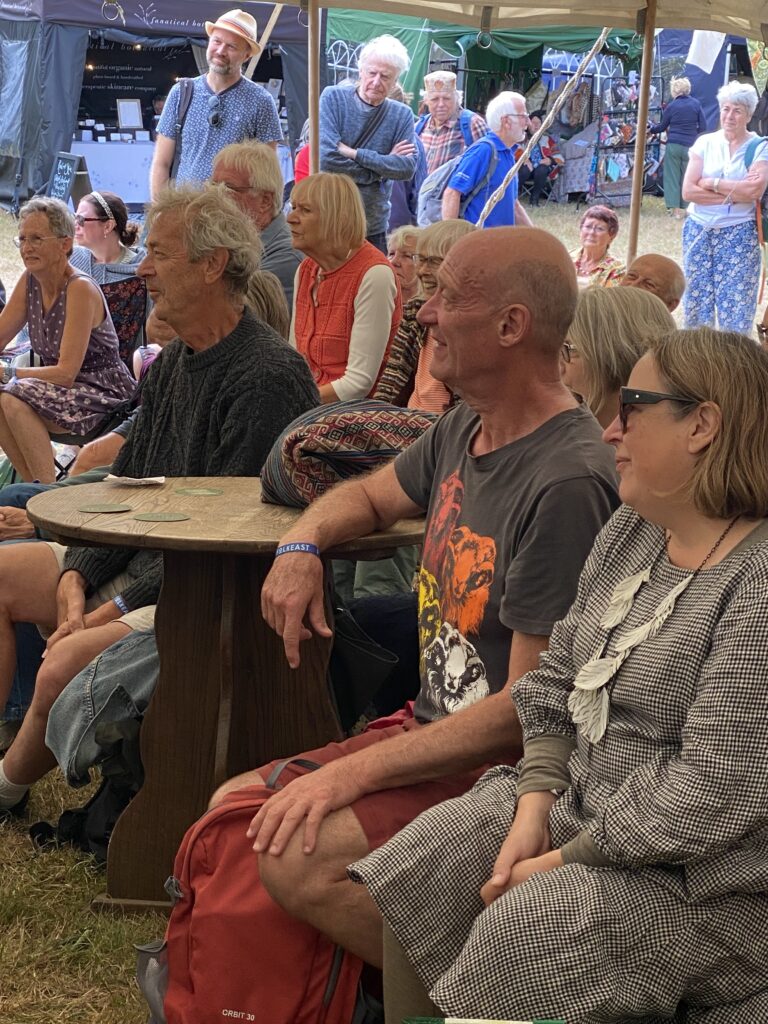
Alvar Smith has a fine, powerful dialect-inflected voice. He sounds like those he learned from, particularly Cyril Poacher, but he is also very much his own man. Only very occasionally is there the hint of strain in his performance due to age. This is certainly not the product of an old boy in his dotage running through uncertain versions of material from a moribund, unappreciated tradition. There is real life and vigour here, also the consummate skill in handling an audience of the seasoned performer – whether it be on concert stage or in local pub. His recent performance in Stowmarket, alluded to earlier, to launch the CD, demonstrated a man totally at ease with his audience, a mixed group of people and ages who were thoroughly enjoying the experience. It was probably a very wise choice to record Alvar in front of an audience. The immediacy comes across and it works very well.
This must be the first full-length album devoted to a traditional singer from East Anglia since Veteran released Ray Hubbard’s Norfolk Bred (VT155CD) in 2007. (13) There have, to the best of my knowledge, been very few released in this vein from anywhere else in Britain in the last few decades either – aside from private releases – with Topic’s last effort being Sheila Stewart’s From the Heart of the Tradition (TSCD515) of 2000 and Veteran’s Will Noble: It’s Gritstone for Me (VT161CD) of 2017: albums reflecting a vibrant and active performer with a considerable repertoire. On that basis alone, this Alvar Smith album is very important. One consideration I had before embarking upon this review is that it is difficult to evaluate a disc by someone you know – someone with whom you had a lengthy conversation not many days ago – with the risk of compromising objectivity but, leaving such qualms aside, I have to state that I wholeheartedly recommend it: to anyone with any interest in traditional singing from East Anglia, with a closer interest in the singing tradition of Blaxhall Ship and its environs, but also in a much broader sense, because it is a wonderful example – and an increasingly rare one – of a superb English traditional singer at the height of his powers with a fantastic and varied, but also largely familiar, repertoire. It can be obtained from Veteran veteran.co.uk
Chris Holderness September 2026 Notes:
01: See, for example, Ginette Dunn’s survey: The Fellowship of Song: Popular Singing Traditions in East Suffolk Croom Helm (1980)
02: CD booklet, p.1
03: Folktrax Ftx 036. There are several recordings featuring these singers, and details are given in the CD booklet, but one of particular relevance is: Songs from the Idiom of the People of
Blaxhall (no cat. no.), a 2 CD set featuring Neil Lanham’s 1960s recordings from the pub, on his Helions Bumpstead Gramophone Company label.
04: The film is part of the Topic CD/DVD package: The Barley Mow TSCD676D (2014). 05: From the biography section of the booklet notes: p.3.
06: Veteran VT140CD Good Order! (2000). The presenter is probably the composer E J Moeran. For information about Moeran collecting traditional songs in Norfolk and Suffolk, see: Chris Holderness: E J Moeran: Collecting folk songs in East Norfolk – in his own words MT219 (18/01/09) mustrad.mainlynorfolk.info
07: Cyril Poacher can be heard singing the song on The Broomfield Wager Topic 12TS252 (1975), Plenty of Thyme Musical Traditions MTCD303 (1999) and Neil Lanham’s Blaxhall Ship 2CD set, as no 03, above.
08: Bob Hart’s version can be heard on Songs from Suffolk Topic 12TS225 (1973) and A Broadside Musical Traditions MTCD301-2 (1998). Bob Scarce’s version can be heard on A Soldier’s Life for Me Caedmon TC 1164 (1961) and Topic 12T196 (1971) as well as on Neil Lanham’s Baxhall Ship 2CD set, as no 03, above.
09: Although domestic spouse ill-treatment is no laughing matter, it does seem to have been the subject of much rough, ludicrous humour over the years, as witness the antics of Mr Punch in the ‘Punch and Judy’ shows, where it manifests itself very violently. Certainly what’s on offer in the song here is comic rather than ugly.
10: A prolific composer, James Bland is probably most remembered today for Oh, Dem Golden Slippers, which is rarely sung but played very frequently as an instrumental tune. Another local recording of Chickens in the Garden is Harry Green’s, Treat My Daughter Kindly, released on Veteran CD The Fox and the Hare VT135CD (2010) – reviewed in a previous newsletter.
11: For another version from Blaxhall Ship, see the XTRA LP The Larks They Sang Melodious XTRA 1141 (1974), where it is sung by Bob Scarce (recorded very shortly before he passed away). This LP has been reviewed in a previous newsletter.
12: Recorded by Peter Clifton and Ann-Marie Hulme in Northrepps, Norfolk, in 1977. A version based on this can be heard on the CD Rig-a-Jig-Jig and Friends All Ashore Sounds of East Anglia SEA003. Another Suffolk version is Percy Ling’s on Topic LP The Ling Family 12TS292 (1977), as The Man all Tattered and Torn. This LP has been reviewed in a previous newsletter.
13: Reviewed in a previous newsletter.