A Celebration of Norfolk Traditional Music, Song and Dance Sunday 28 March Briston Copeman Centre Chris Holderness
We were blessed with the weather, as people descended upon the hall for an afternoon to celebrate the county’s rich musical heritage, and the event turned out to be worthy of the sunshine: a well-attended and vibrant afternoon in every respect. The hall filled up quickly, people stayed for the full programme and others drifted in across the afternoon.
The proceedings kicked off with a few tunes from the Unthank Irregulars, a selection of a few of the myriad collected in the county. This was followed by a succession of short films from the East Anglian Traditional Music Trust’s archive. As well as the general idea of the area’s traditional music, focus points were step dancing and dulcimer playing, in both of which the county was particularly rich. A short film of various of the Davies family step dancing in Cromer was followed by Dick Hewitt displaying his prowess and talking about his family’s involvement.
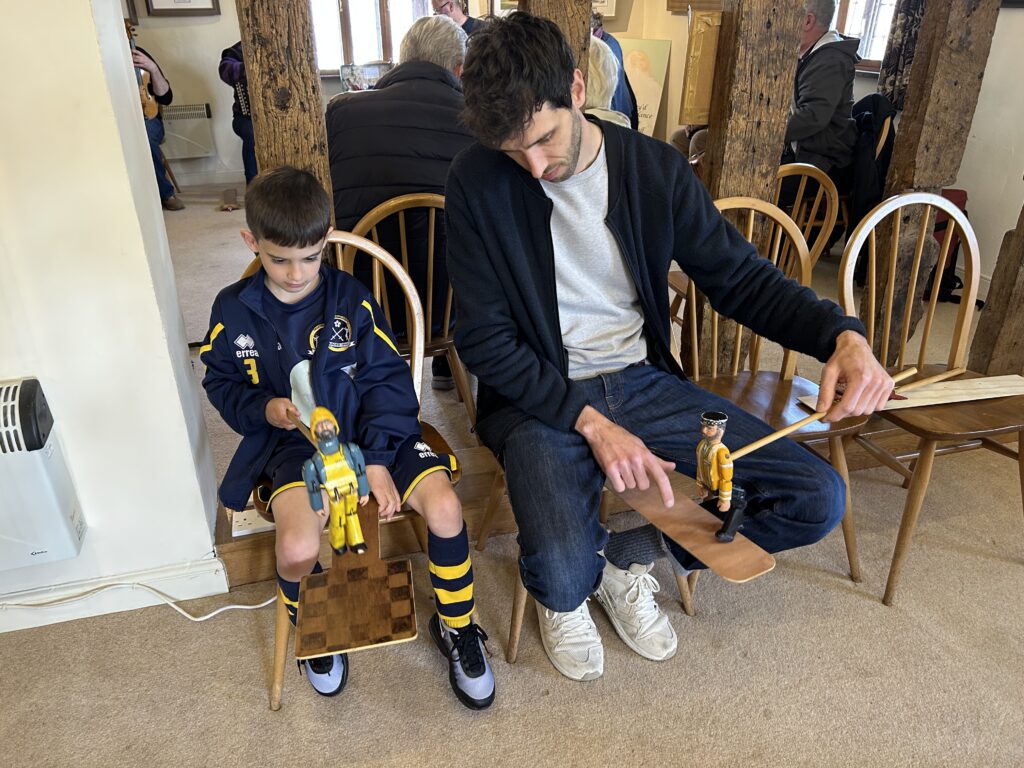
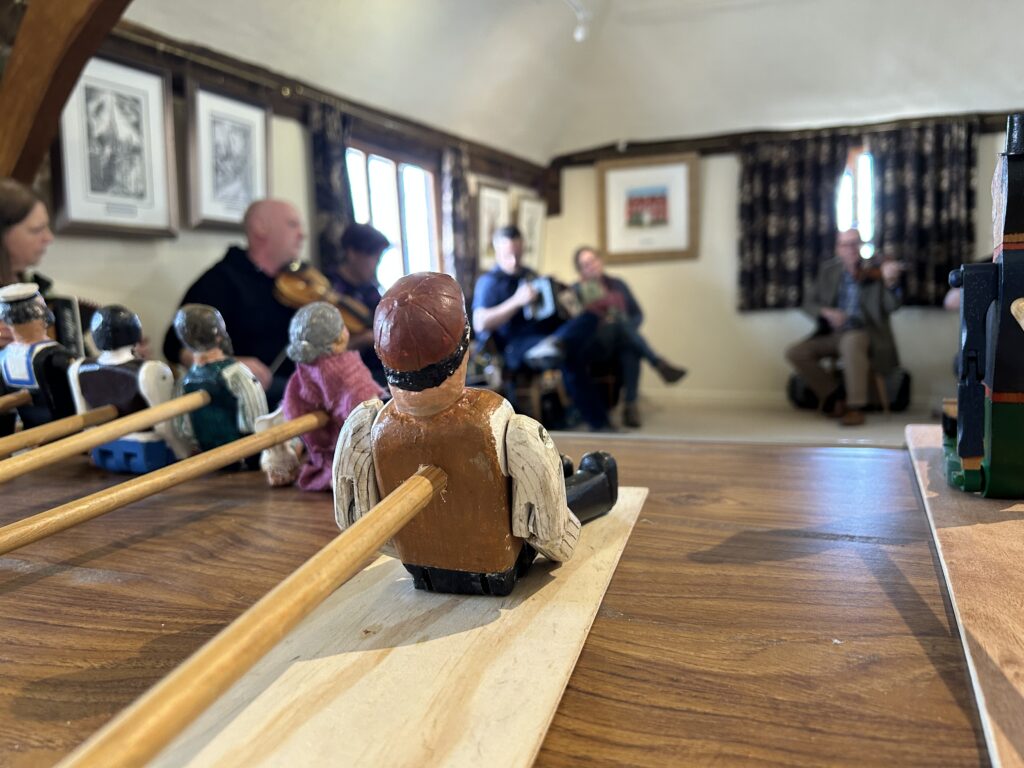
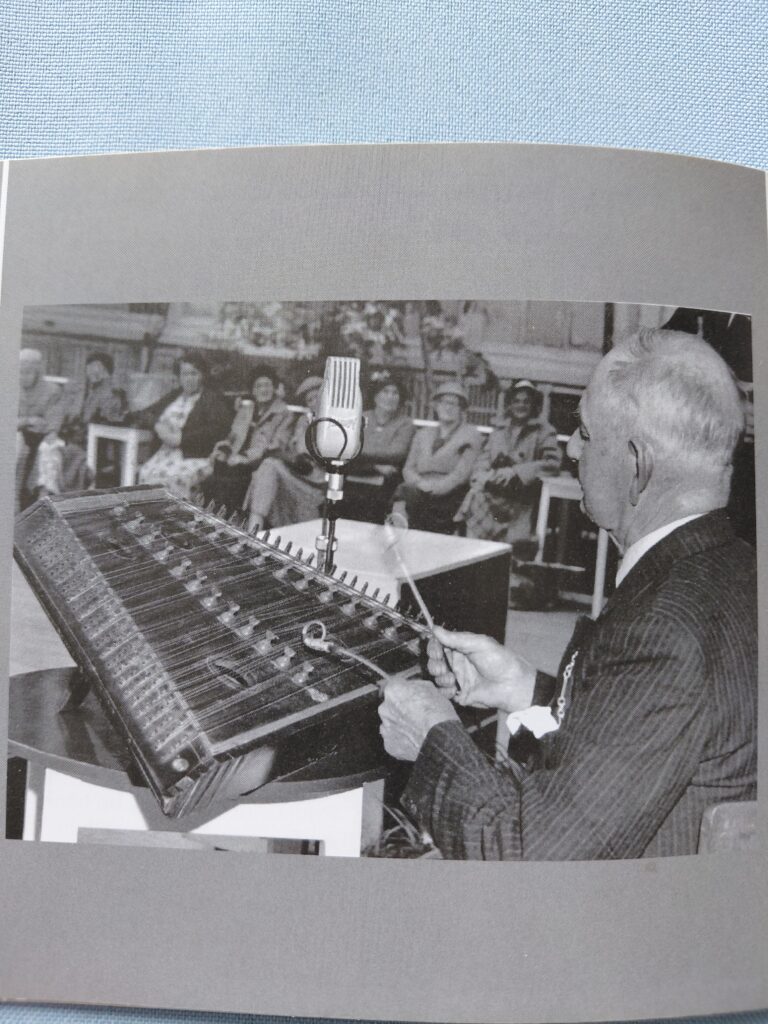
Finally, dulcimer virtuoso Billy Bennington showed his technique with various tunes. All wonderful material; it is a great shame that there is so little of such footage in existence. The Billy Bennington film led neatly into our own local dulcimer player and expert, Richard Blake, showcasing a few choice examples of instruments from his collection, with informative and occasionally humorous anecdotes about each, finishing off with a couple of tunes on Billy Bennington’s dulcimer. Next up was the more participatory step dancing slot: various practitioners of varying ages showed us what they could do and the session ended with quite a few people trying their hands with a dancing doll.
The finale was a “Tune-Up” style informal concert. Once again the Unthank Irregulars were on hand to lead through various tunes, augmented now by several other musicians. The dancers got up regularly and the instrumental stuff was interspersed with song from various people, despite the fact that the fairground had just started up on the green outside. Mercifully this intrusion constituted no more than a low hum of noise which we were able to ignore. The performers were too numerous to mention individually, but collectively they ensured a lively, varied and good-humoured finale.
And then it was over. It was gratifying to see so many local people turning out and much interest was shown in the musical traditions on display. Great too to have musical contributions from so many of them. Many thanks must go to Bec Jennings for her sterling work with the catering!
Next up is another event in Briston: a “Tune-Up” pub ‘do’ in The Three Horseshoes on Sunday 26th April, from 1.00 to 4.00 – the pub in which the aforementioned Dick Hewitt was landlord many years ago. We hope to see you there.
12 April 2026 Thaxted Guildhall Jo Breeze, EATMT team
The East Anglian Traditional Music Trust is incredibly proud of the work we’ve done and are doing across Norfolk and Suffolk, but we know that East Anglian traditions reach further than just those two counties.
So we were very pleased to run an event in Thaxted’s beautiful Guildhall in north Essex. Thaxted has a wealth of thriving music and dance traditions of its own – and we’re especially grateful to the local musicians and dancers who made it such a special day.
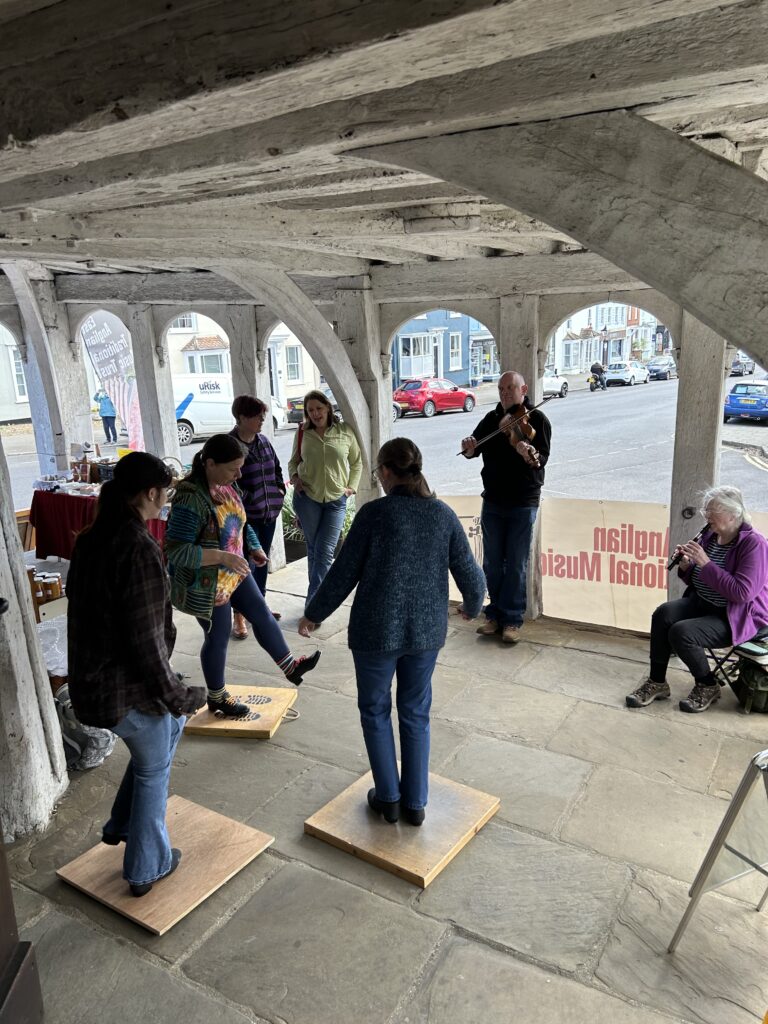
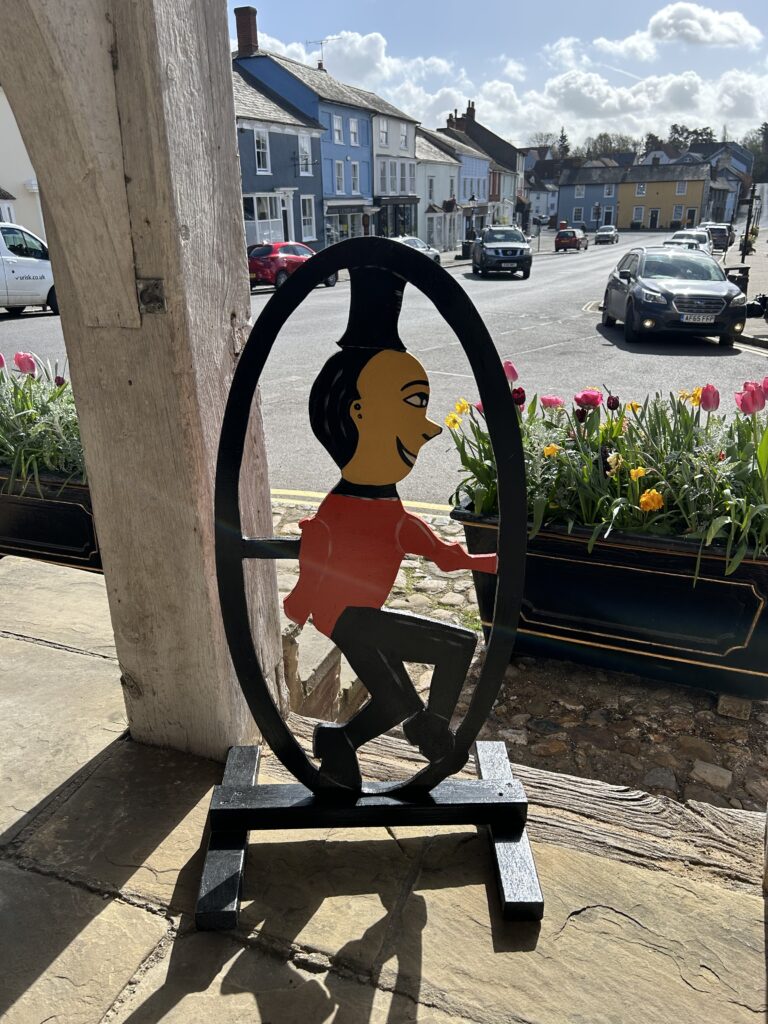
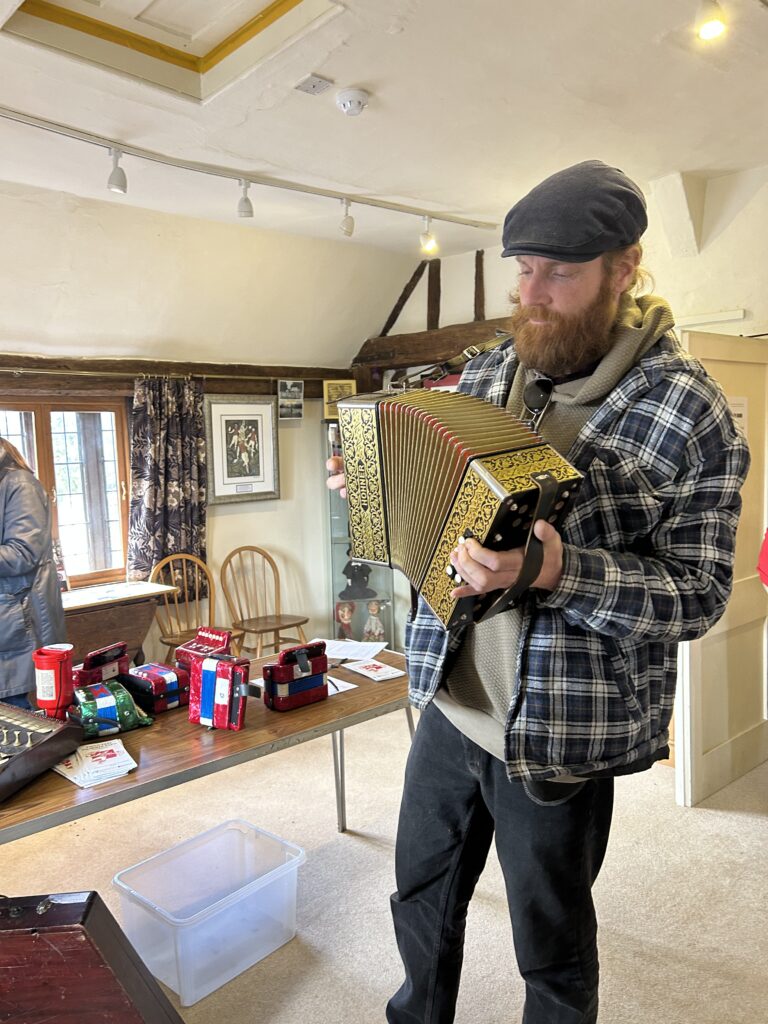
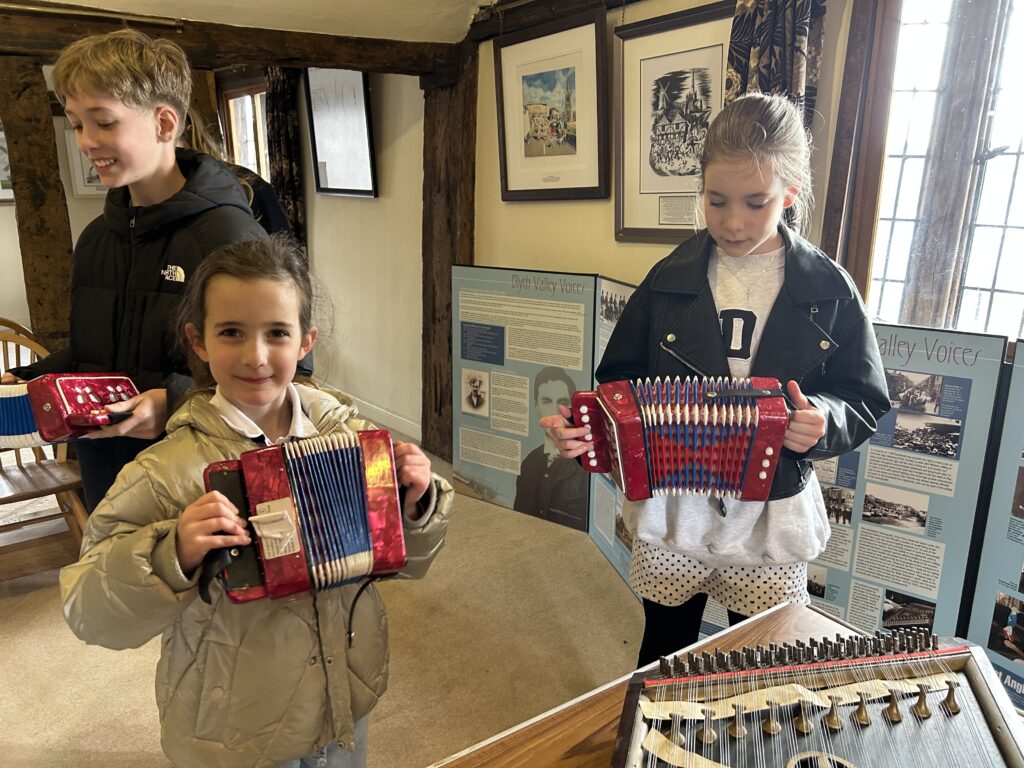
In the morning, we ran activities specifically targeted at families, which meant we saw children trying out mini melodeons for the first time (and it’s a testament to Thaxted Morris Men’s presence in the town that more than one parent was overheard saying “you could be a morris musician when you’re older!”), exploring a real dulcimer, playing with jig dolls, and cutting and sticking their own Green Man depictions. We even got a set of six trying their first morris steps outside – thanks to Thaxted Morris Men representatives Tom Bassett, Harry Anderson, and Ian Pease. Attendees also explored an exhibition upstairs of local music and dance history and how those traditions are being carried forward into the future, courtesy of local historian Mike Goatcher.
In the afternoon, we were joined by stepdancers including Angela Watson, Sue Beecroft, Eamonn Andrews, and Tony Hodkin on fiddle, who gave regular demonstrations outside (and helped a few brand-new stepdancers have a go). We ran a busy jig doll session upstairs – an opportunity to use jig dolls with live music – welcoming attendees who’d brought their own as well as opening the big box of EATMT jig dolls for people to try out. That led beautifully into a tune session which filled the Guildhall with music for the afternoon, while a few other attendees tried out lantern-making downstairs. And as the Trust team packed up at the Guildhall, the musicians moved on to the Swan Hotel up the road, who welcomed them for another round of tunes and songs.
For those who attended: thanks also for your feedback (particularly your feedback forms, which help us make the case for how important free community events like this are!), your tea and coffee purchases, and your wonderful music-making. What a great way to spend a sunny Sunday – and an especial thank you to the welcoming team at the Guildhall, including Rob Evans, who made it possible for us to use such a historic building.
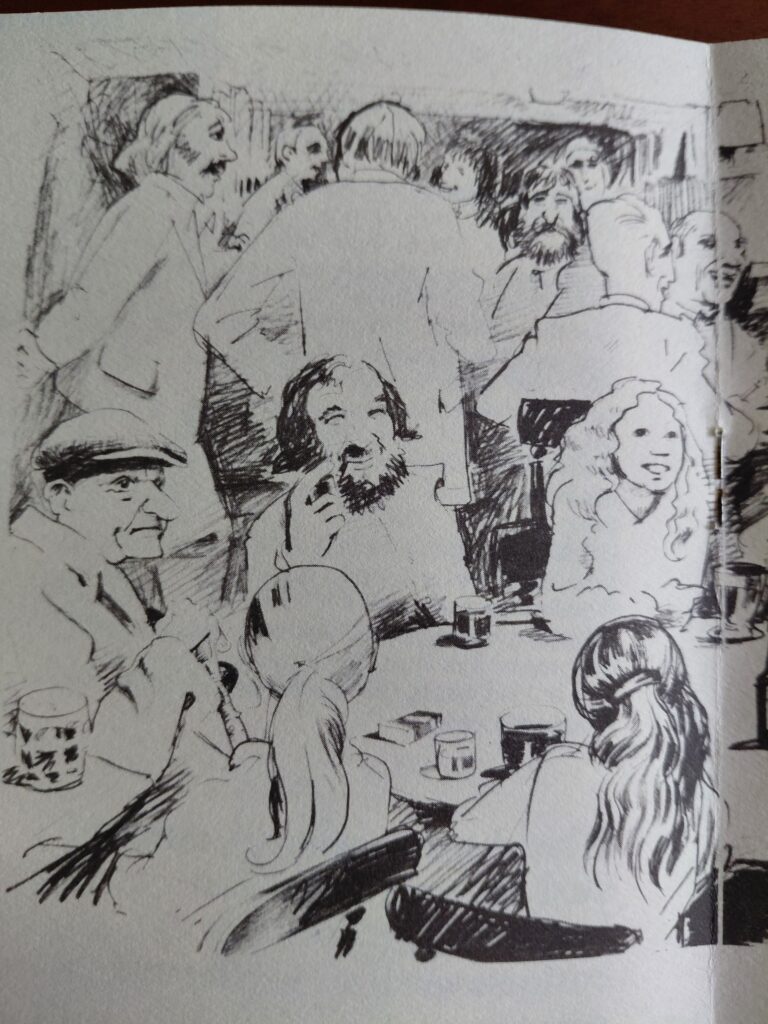
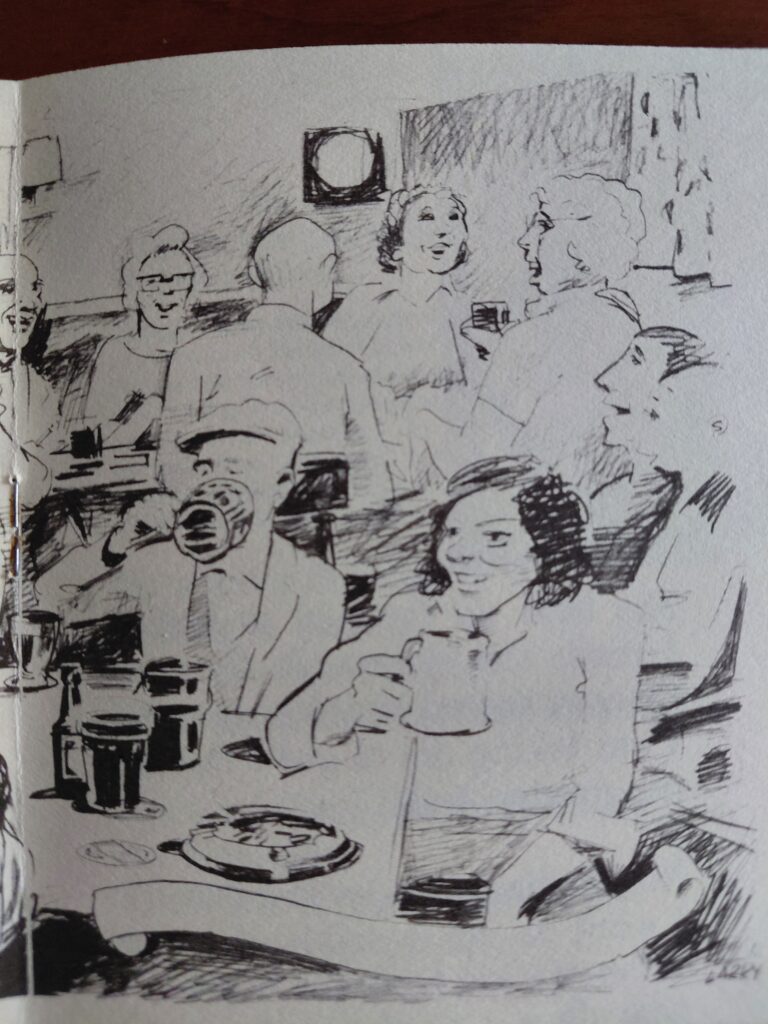
Blaxhall Ship has a long association with traditional music, one that continues to this day. As such it has gained iconic status in this region, and deservedly so. In truth, though, in the early and middle years of last century it was probably no busier in this respect than many other Suffolk hostelries such as Butley Oyster, Snape Crown and Eastbridge Eel’s Foot, to name a few where recordings were made (1), or for that matter Sutton Windmill in Norfolk.(2) A great many East Anglian pubs are remembered as ‘singing pubs’, and presumably this was the case all over rural and urban Britain in the days when such activity was commonplace. Be that as it may, The Ship has received much attention from collectors over the decades (3), giving us a vivid picture of what went on in the place.
From the booklet, by Karl Dallas
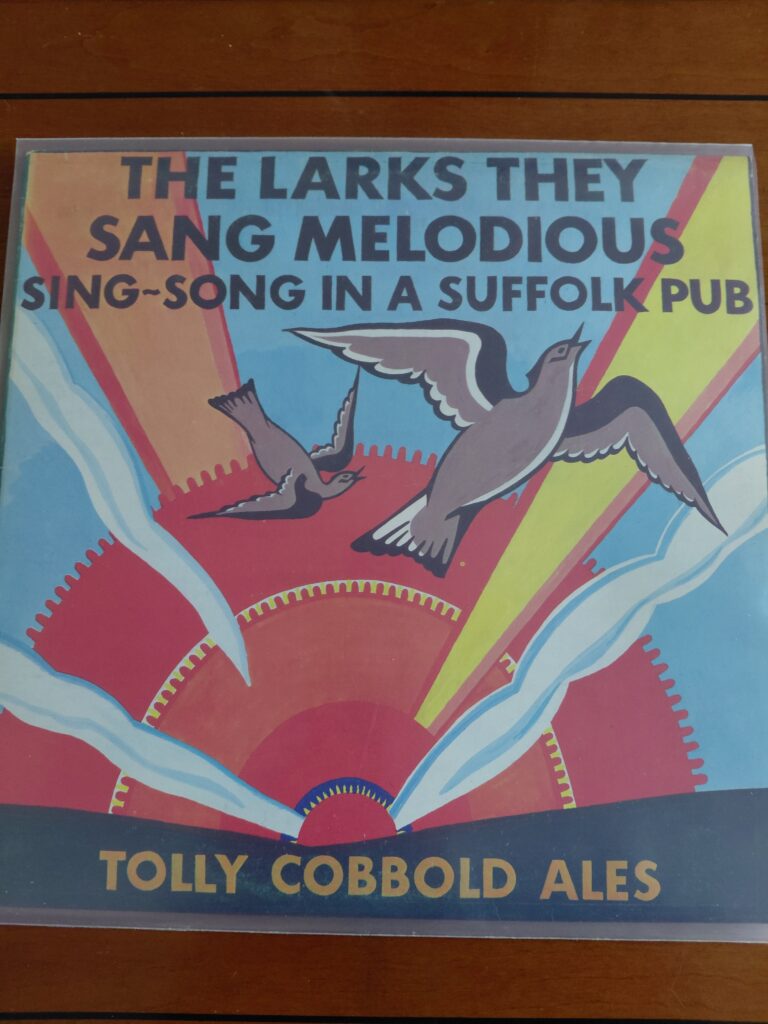
The record under review brings us to 1973, a time when the company in the pub had become somewhat different from previous decades. The Folk Revival flourishing at this time, there was much interest in the older traditional music and many such recordings were being issued, including of several singers included here. (4). Not all of these would have been released by the time this session was recorded, but some performers were becoming well-known as tradition bearers. What we have here then, in The Larks They Sang Melodious, is a recording of a night – Friday, 16th November, 1973 – when the older locals were rubbing shoulders with denizens of nearby Leiston Folk Club and other interested ‘revivalists’. A period of transition perhaps, and very different from the recordings made by Peter Kennedy in the 1950s and Neil Lanham in the early 1960s. (5) The recording was made by Karl Dallas and Adam Skeaping, with all but one track the only ‘take’ (the exception being when the tape ran out). I don’t propose to compare this disc with the recent recording made for the 50th anniversary, which I have to admit I haven’t yet heard – another time perhaps! – but rather just to have a look at what was on offer in 1973, at the time of a musical situation in transition.
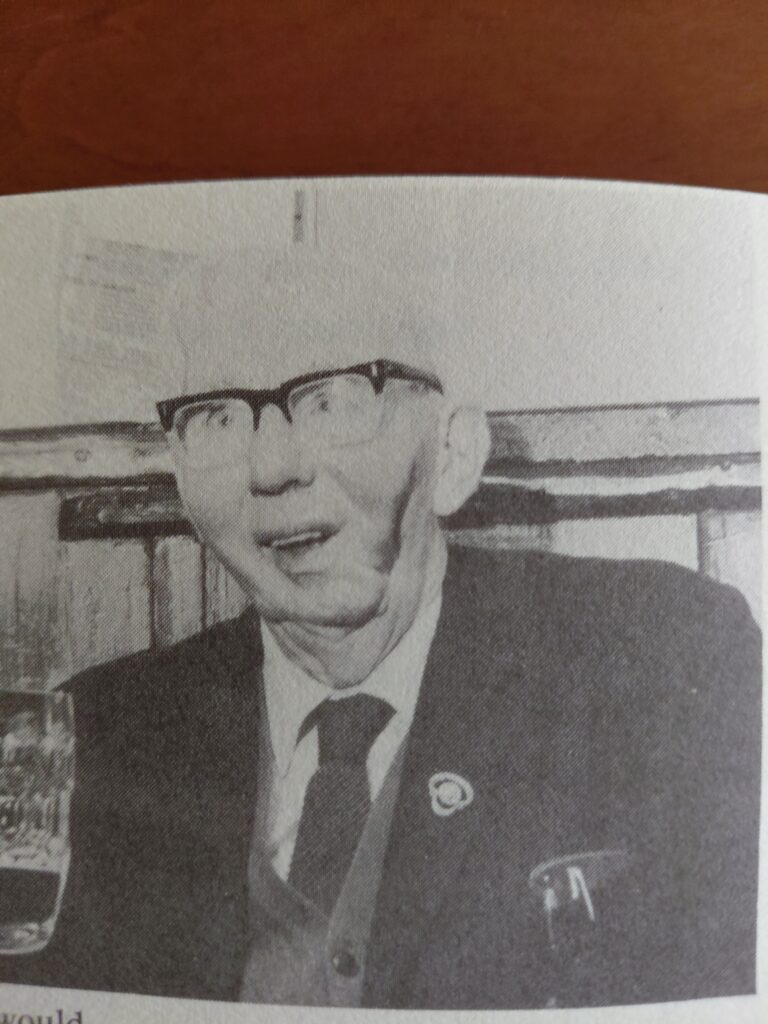
The record kicks off with a faded-in track of Tony Hall singing Donkey Riding. I’m not sure this was the wisest choice – it’s a rather underwhelming start, although the track does get going eventually, and this is not to denigrate Tony’s performance, lively as it is. What follows is a selection from the old boys – Cyril Poacher, Bob Hart, Percy Webb, Percy Ling, Geoff Ling and Bob Scarce – interspersed with the younger singers Tony Hall, Bill Horne, Rosemary Bisset, Vic Harrup and Linda Walker. It’s interesting to note that all of the material by the younger singers is staunchly traditional, whereas that by the older ones varies from traditional to more recent music hall, sentimental and popular (of sometime ago) songs, a fair reflection of the mix of material they chose to perform. The subtitle of the LP is accurate enough: there are only two brief instrumental tracks, Fred List’s Pigeon on the Gate and Steve Pallant’s The Foggy Dew, and sadly no step dancing, despite the former tune being a stalwart to accompany it.
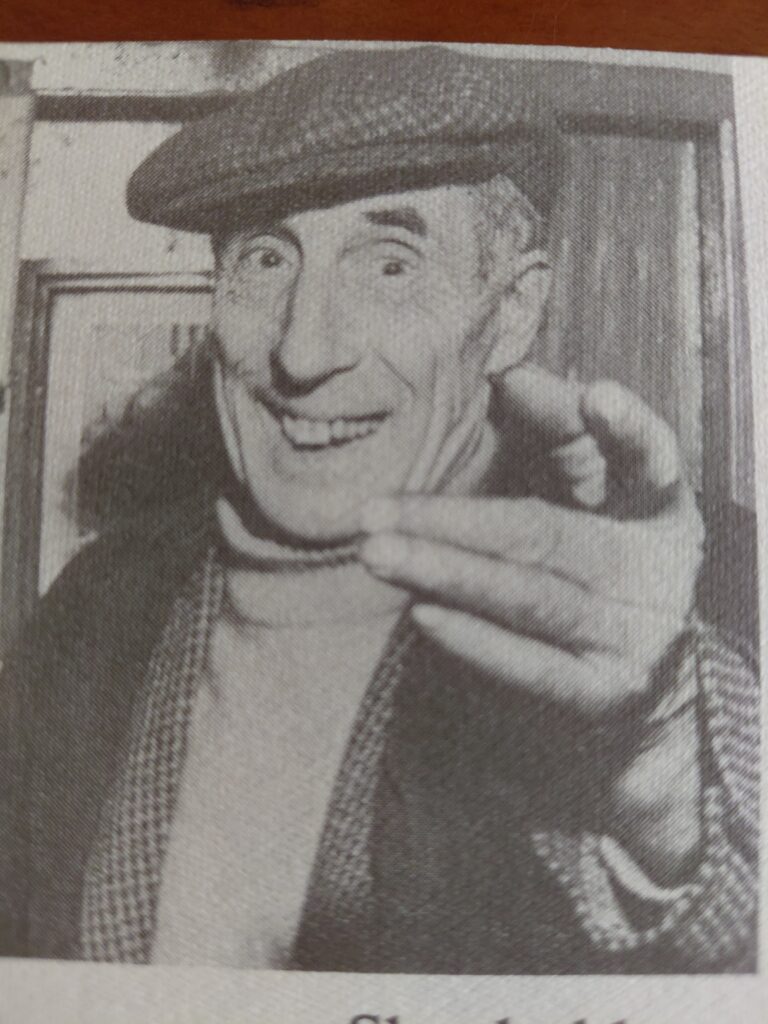
Cyril Poacher
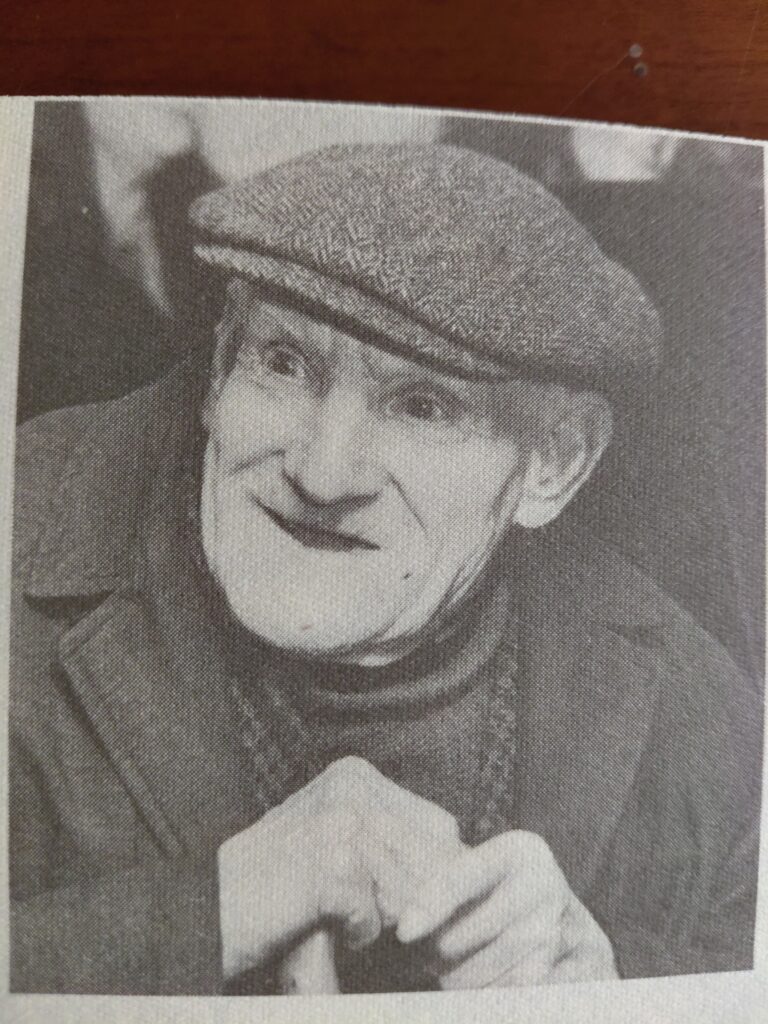
Cyril Poacher gives us his favourite The Nutting Girl and later Slap-Dab, from the music hall, in his usual confident and somewhat droll delivery. Bob Hart is featured with the sentimental White Wings, and Percy Ling with I’ll Come Back My Little Sweetheart, of similar sentiment. Both are assured performances, as are Geoff Ling’s very declamatory Maggie May and Among My Souvenirs. He also gives us a fine Green Bushes. Men comfortable with material they have performed countless times in such surroundings. The same could be said for Percy Webb’s chuckle-raiser The Master’s Servant, a much-loved ribald piece that crops up a lot in East Anglia. Finally from amongst the old boys there are two performances from Bob Scarce, born in 1885, the last ones from him, as he died shortly after the recordings were made, and before the record was released. He gives us the title song (which had to be recorded twice, as the tape ran out) and the sentimental A Boy’s Best Friend is His Mother. Of Bob Scarce’s style, Karl Dallas in the booklet notes, comments: “Though his breath was clearly failing, he was a fine singer nevertheless…Bob’s tonality is unconventional by modern standards…but it is consistent. We ran out of tape the first time he sang the song and when he recorded it again later the same evening I found he was singing it in exactly the same key as before: his pitching was that accurate.” In all, a solid and representative selection from these seasoned old gents, as might be expected, given their experience and the familiarity of the surroundings.
Bob HartBob Scarce
So, what of “the folkies, traddies, clubbies, call ‘em what you will”, of Karl Dallas’ description, who make up the rest? Just about all were local and many were regulars at the Everyman Folk Club in Leiston. Bill Horne gives us an assured, guitar-accompanied All For Me Grog, pretty much as The Dubliners recorded it, and Vic Harrap The Rigs of the Time, a version of which, as the booklet notes point out, was collected in Norfolk, from ‘Charger’ Salmons in Sutton Windmill. 6) The aforementioned Tony Hall gives us Donkey Riding and Bungay Roger, in his inimitable way and to his own melodeon accompaniment, which in itself is very different from the styles of the older players, such as Fred List, included here. (The same could be said of Steve Pallant and his The Foggy Dew). Finally there are two very effective performances from female singers, Rosemary Bisset with The Bold Dragoon and Linda Walker with Sweet Primroses. Solid fare all round from a typical folk club evening, from some talented performers.
Percy Webb
All seems to have run along smoothly, the old and the newer, held together by chairman Clive Woolnough, a “27-year-old bricklayer who lives in a council house in nearby Chillesford.” As a listening experience, I am not fully convinced that it all sits completely comfortably together, although the different styles are not really that jarring. On first listening I was inclined to dismiss it as evidence of a decaying tradition, diluted to an extent, and perhaps only really noteworthy for including the last recordings of Bob Scarce, but subsequent listenings have induced me to revise that opinion somewhat. There have been fewer and fewer occasions when the ‘tradition’ has been continuing – with whatever loose definition serves that term – but it carried on, and endures still to an extent. Undoubtedly the old boys appreciated the attention bestowed on them by the younger performers and enthusiasts, in what appear to be very good-natured evenings. Karl Dallas makes the interesting point in the LP notes: “An interesting thing about The Ship, however, is the way in which a new generation of ‘revival’ singers (are) more consciously aware of their traditions than the ‘old boys’ of the pub” and that the younger singers are “more deliberately using folk music as a means of striking down new roots.” Much of the material on this disc supports that observation.
Space precludes a discussion about the extent to which folk clubs have veered away from the ‘tradition’ in general, as the music becomes divorced from its original roots, community and purpose. Suffice to say that what we have with The Larks They Sang Melodious is an interesting aural ‘snapshot’ of a time when there were still enough older generation traditional singers in the environs of Blaxhall Ship to constitute singing company enough to produce such a recording, as well as a number of enthusiastic and talented ‘revivalists’, embracing the tradition from ‘outside’, who were very keen to perform alongside the old boys in an evening of conviviality.
Chris Holderness, March 2026
NOTES
Neil Lanham’s recordings: Songs From the Company of the Butley Oyster (NLCD3) and Songs From the Singing Tradition of Snape Crown (no number) – both: The Helions Bumpstead Gramophone Company. Also Good Order! Traditional Singing and Music from The Eel’s Foot (Veteran VT140CD) – 1930s/40s recordings
East Anglia Sings (Snatch’d From Oblivion SFO 005) – BBC recordings from Eastbridge Eel’s Foot and Sutton Windmill, 1947
Saturday Night in a Suffolk Pub (Folktrax 036) – Peter Kennedy’s recordings, 1953; The Barley Mow (Topic TSCD676D) – includes Peter Kennedy’s film of The Ship; Songs From the Idiom of the People of Blaxhall – Neil Lanham’s 1960s recordings; The Helions Bumpstead Gramophone Company (no number)
Bob Hart: Songs from Suffolk (Topic 12TS252) 1973; Various: Flash Company (Topic 12TS243) 1974 – includes Bob Hart and Percy Webb; Cyril Poacher: The Broomfield Wager (Topic 12TS252); The Ling Family: The Singing Tradition of a Suffolk Family (Topic 12TS292) 1977 – slightly later recordings by Keith Summers
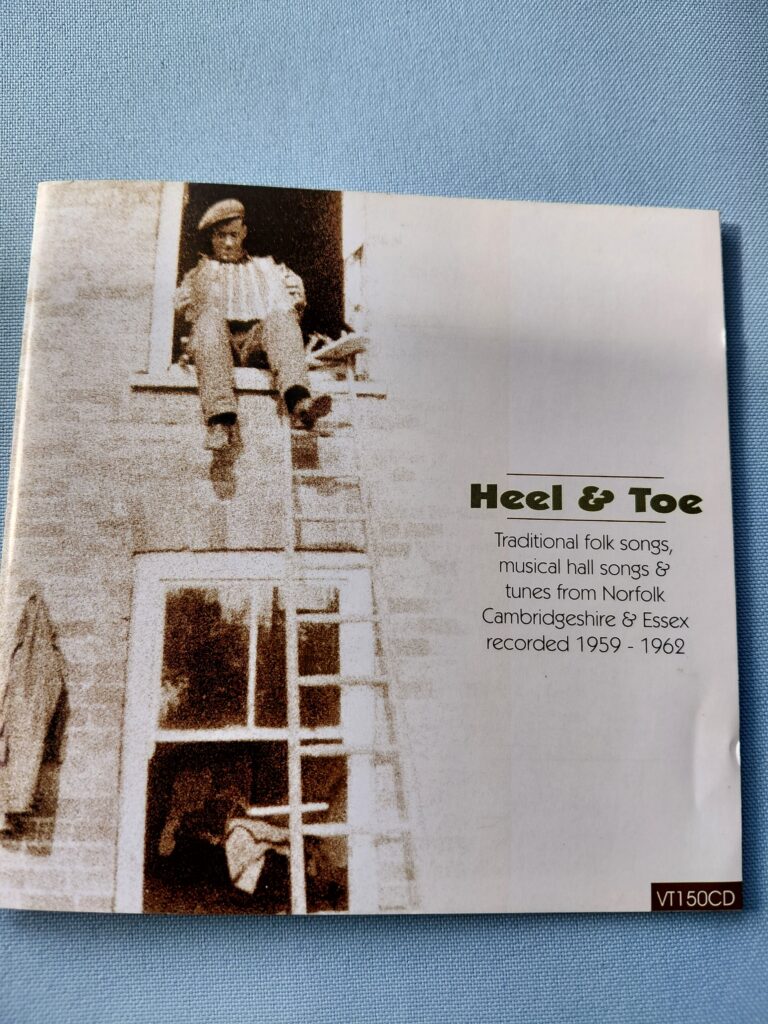
Heel and Toe: Songs, tunes and stepdances from the collection of Sam Steele Veteran VT150CD
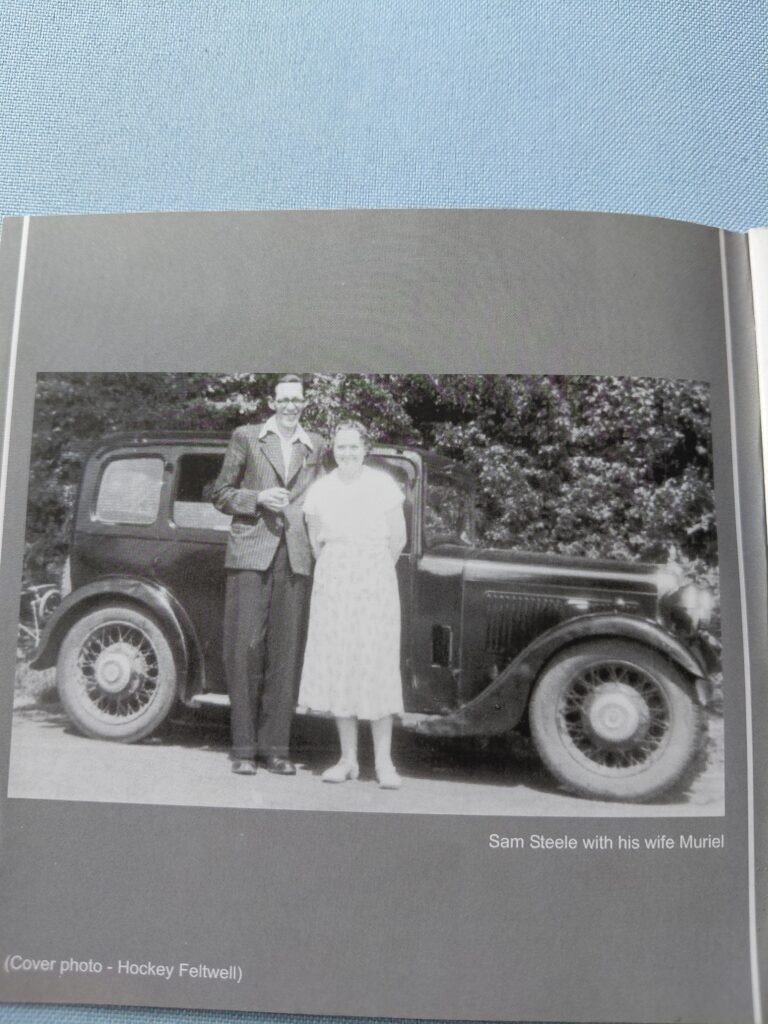
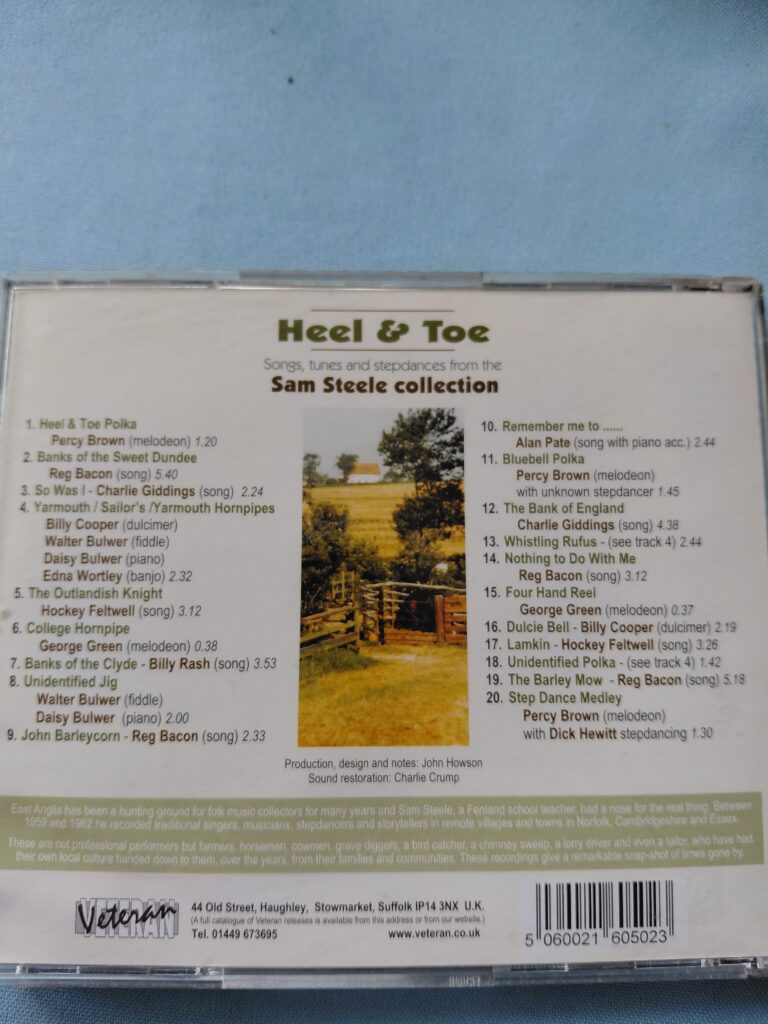
This Veteran release from 2005 is another of the label’s periodic releases of archive material, in this instance by Cambridgeshire teacher Sam Steele, an enthusiast who collected and recorded songs and tunes, in his fenland Cambridgeshire area, but also ranging further afield into Norfolk and Essex. The CD comprises a selection of this material, gathered between 1959 and 1962, and includes material, particularly instrumental, by performers who were to be more widely recorded later, as well as others for whom these are the only recordings available. Sam was a good friend of another collector from his area, Russell Wortley, and they seem to have teamed up for many field trips. What the CD presents is a vibrant selection of the songs and tunes which made up the musical activity of the working people of the area.
The disc kicks off with Norfolk’s Percy Brown rattling through the Heel and Toe Polka on the melodeon and ends with him doing the same with a Step Dance Medley, this time with Dick Hewitt stepdancing. In between we have a varied programme of songs serious and comic, and a mixture of solo and ensemble instrumental playing, with a bit of stepdancing thrown in for good measure.
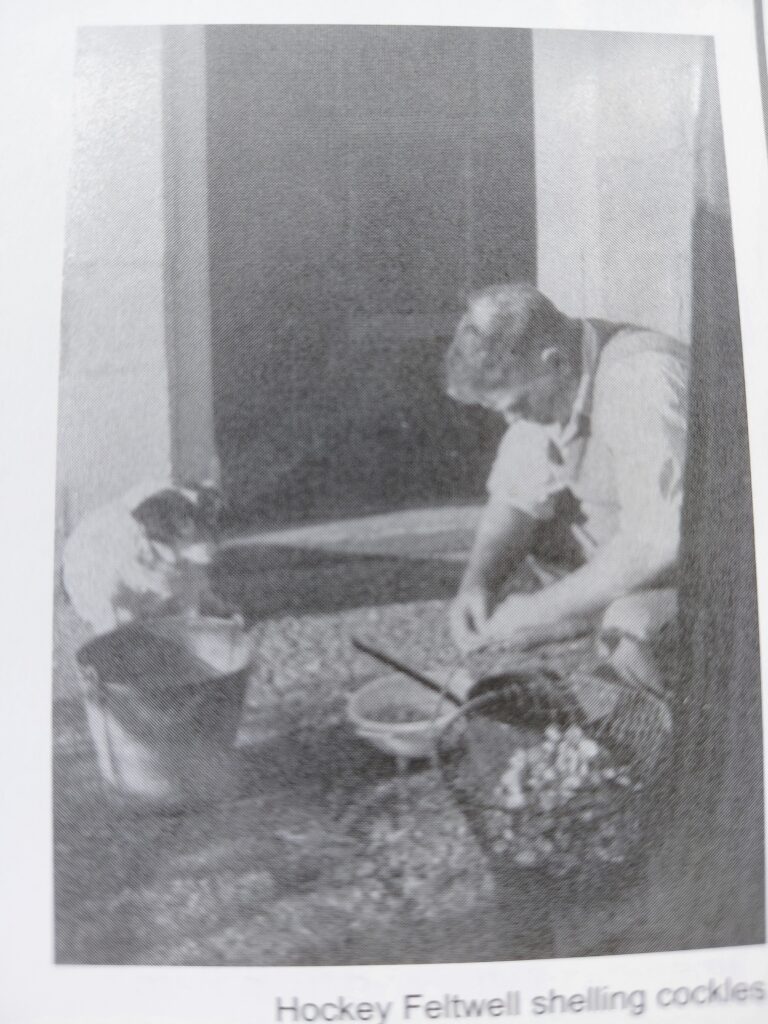
Of the ten songs, there is a good – and typical – selection of the old ballads such as The Outlandish Knight, sung by Hockey Feltwell and Reg Bacon’s Banks of the Sweet Dundee, and lighter, comic material such as Charlie Giddings’ So Was I and Reg Bacon’s Nothing to Do With Me, the latter recorded live before an audience, as are several others, giving a great ambience to the proceedings. Most of the singers are fenlanders: Charlie Giddings, Alan Pate and Billy Rash from Cambridgeshire and Arthur ‘Hockey’ Feltwell from Southery in Norfolk, just on the county border.(1) All seem seasoned performers and give assured performances. Most were regular pub performers; of Charlie Giddings, the booklet notes (by John Howson) state that “Charlie sang mainly in the village local, The Three Tuns. He had his own seat which nobody else was allowed to sit in. He would visit the pub most nights for a couple of beers and that’s where he did his singing” and Billy Rash “sang songs and played melodeon in The Chestnut Tree, West Wratting…Russell Wortley recorded him playing and his repertoire seems to have been mainly song tunes.” Alan Pate’s Remember Me To… is unusual in that he accompanies himself on piano. He “also played fiddle for local dances in the 1940s, along with Mildred Harrison on piano.” The last song on the CD is the old pub chestnut The Barley Mow, given by Reg Bacon, from Saffron Waldon, Essex – in itself indicative of the selection of songs and their social purpose.
Reg Bacon
With the tunes, there are two melodeon players, George Green from Little Downham, Cambridgeshire, and the aforementioned Percy Brown, who lived in several places around the Aylsham area in Norfolk. The latter was recorded quite extensively (2) and was a regular player, often to accompany stepdancing, in that area of the county. (3) George Green was the melodeon player for Little Downham Molly Dancers. Both perform straightforward dance tunes in a driving, rhythmic way – such as Brown’s Bluebell Polka and Green’s Four Hand Reel – very much indicative of the social purpose of the music, underlined by two of Percy Brown’s tracks where he accompanies stepdancing. (4)
Billy Cooper
The remaining five instrumental tracks comprise performances by the various musicians that were brought together for the seminal English Country Music recordings. (5) There is some crossover here, as Russell Wortley was present at those sessions and appears on some of the tracks. Dulcimer player Billy Cooper, from Hingham in Norfolk, gives us the sublime waltz Dulcie Bell and Walter and Daisy Bulwer, of Shipdham, an Unidentified Jig (as given here) on fiddle and piano. The tune is really more of a march in 6/8 time and is actually the Warbler’s Serenade, recorded on 78s several times early in the century. They are unusual and sophisticated in both cases, and reflect the wider musical influences on these performers, particularly in the case of the Bulwers, who were both musically literate and would spend evenings playing through tunes from a huge stack of sheet music. (6) The three get together with Edna Wortley, on banjo, for three more tracks: a medley of hornpipes, a bouncy Whistling Rufus and an Unidentified Polka (which is actually the Cromarty Polka March), for some sparkling ensemble playing. It is unclear just how frequently the Bulwers had played together with Billy Cooper prior to the English Country Music sessions, but they certainly seem very comfortable with the situation here.
In all, here we have twenty tracks – a little under an hour – of a varied programme of music and song from East Anglia, collected by Sam Steele, who “had a nose for the real thing,” as the notes on the back of the CD case would have it. Those notes continue: “These are not professional performers but farmers, horsemen, cowmen, grave diggers, a bird catcher, a chimney sweep, a lorry driver and even a tailor, who have had their own local culture handed down to them, over the years, from their families and communities. These recordings give a remarkable snap-shot of times gone by.” A talented bunch they were too. The sound is as clear and bright as can be expected, given the age of the recordings. This is a fascinating and wonderfully entertaining collection and yet another example of the richness of traditional music which has been collected over the years in East Anglia. At the time of writing the recording is available as a CD and download from Veteran.
Chris Holderness March 2026
Notes:
Hockey Feltwell can also be heard singing Four Horses on Come all My Lads That Follow the Plough; Topic TSCD655 (1998)
Percy Brown features on the English Country Music from East Anglia LP: Topic 12TS229 (1973) – see review in a previous newsletter – and The Pigeon on the Gate: Melodeon Players from East Anglia: Veteran VTDC11CD (2008) – which also has George Green’s College Hornpipe. Percy Brown is also featured on Father Went to Yarmouth: Traditional Songs and Dance Tunes from Norfolk; Helions Bumpstead Gramophone Company (no number)
For details of Percy Brown’s life and music see: Chris Holderness: Percy Brown: Aylsham Melodeon Player MT211(2007) www.mustrad.org.uk
A video was produced by the English Folk Dance and Song Society of Dick Hewitt of Briston, Norfolk, stepdancing to Percy Brown’s playing, in the late 1970s: EFDSS Video 01
The CD reissue of this is English Country Music; Topic TSCD607 (2000) – see review in a previous newsletter.
For details of Walter and Daisy Bulwer’s life and music see: Chris Holderness: Walter and Daisy Bulwer: Recollections of the Shipdham Musicians by members of their community MT185 (2006) and for Billy Cooper: Billy Cooper: the Hingham dulcimer player remembered by his family MT208 (2007) by the same author.
A short history of the rural concert party in East Anglia
As I have recently described the “Norfolk Tune-Up” events as a cross between a concert party and a ‘led session’, it is perhaps time to investigate the history of concert parties in the region, and to see how it fits in with what’s happening today.
The idea of a ‘concert party’ in rural England seems to have evolved from localised music gatherings in the eighteenth century, with various organising bodies presiding over them. Originally they were probably heavily dependent on the patronage, and possible involvement, of the local gentry – such as music clubs run by the more well-heeled members of the community – but there also seem to have been a plethora of more informal gatherings, utilising local working people, with the fiddle to the fore. These probably existed at the same time as travelling troupes brought music and theatre to remote areas, and performances seem to have blended traditional material with social, cultural or political expression, as was deemed necessary or noteworthy at the time. As well as what went on in villages, towns acted as social and musical hubs, with frequent music and dance assemblies, although presumably largely intended for those a little way up the social scale. There is much evidence of varied types of music making and other entertainment, put together in programmes, as “concert parties”, very often tied to calendar festivals and to raise money for local institutions. Unsurprisingly, central to these occasions were the contributions of those who sang in the pubs and played music for the local dancing.
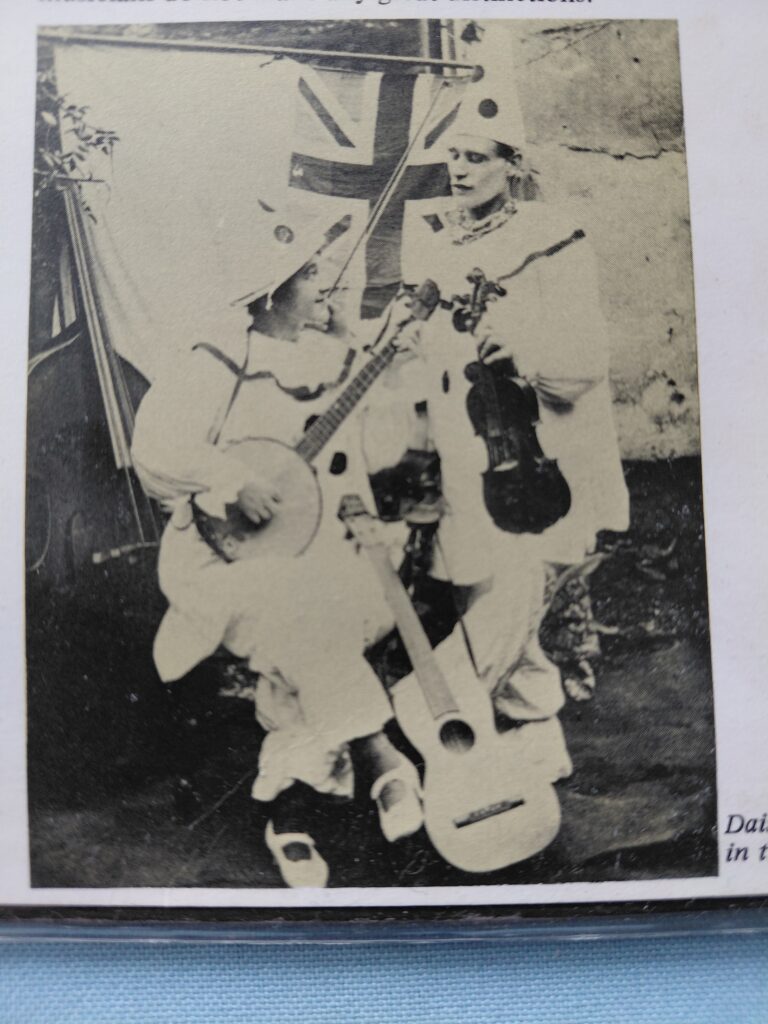
An example of this is Charlie Stringer, of Wickham Skeith, Suffolk, whose singing appears on the Who Owns the Game? album (1). The LP notes comment that “Apart from pub singing, he also used to sing in a concert party, and has a photograph of himself and a friend wearing dresses and singing Two Little Girls in Blue!” Many concert parties seem to have been purely village affairs, although some did travel to neighbouring places to put on shows. The emphasis was on variety of material – music, song and dance, coupled with humour, monologues and presumably whatever local people had to offer. In the early twentieth century there was quite a craze for “Pierrot shows”. These took their inspiration from the Italian Commedia dell’arte, which flourished across Europe between the sixteenth and eighteenth centuries. The emphasis here was on sentimental or melancholic songs about love, or lighthearted skits of comic song or dance, the performers having whitened faces and distinctive, oversized clothes, often as a ‘pierrot’ costume. There is a wonderful photograph of musicians Walter and Daisy Bulwer of Shipdham in Norfolk wearing such costumes, sometime in the 1930s. (2)
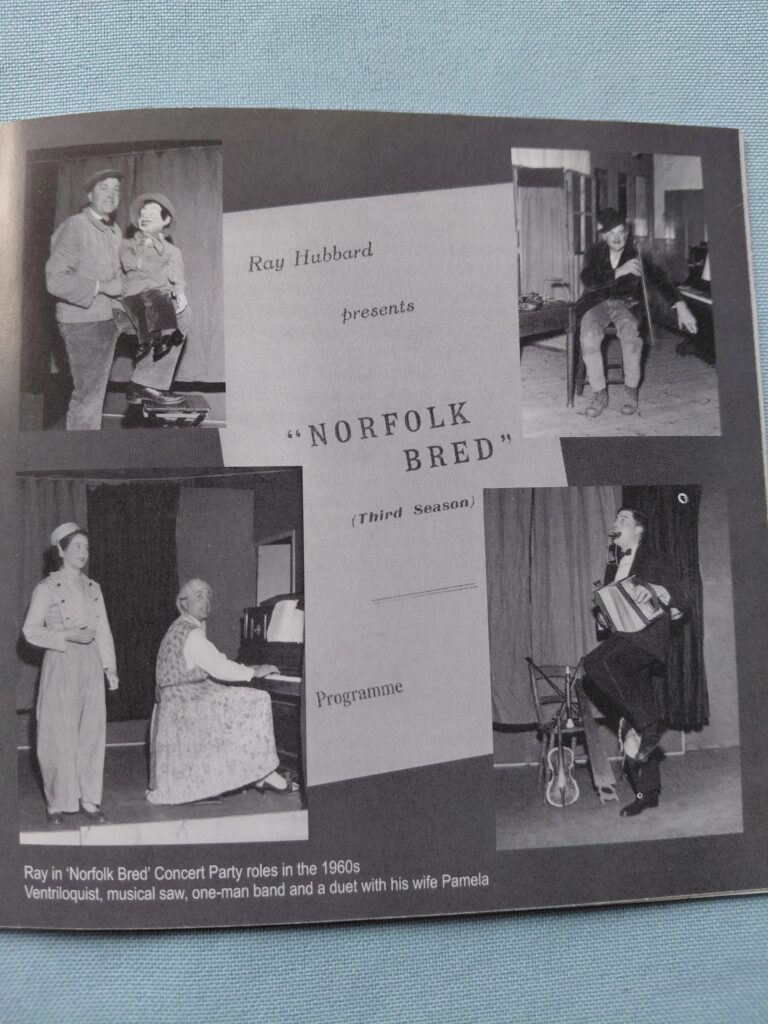
Norfolk musician and horseman Ray Hubbard, who lived for much of his life in Dickleburgh, organised concert parties with his wife Pamela, in the late 1950s onwards, which seem to have been very successful – as mentioned in the notes to his Norfolk Bred CD: “Ray and Pamela started the Concert Party that was known as “Norfolk Bred”…Ray came up with the idea of a concert party (to raise money for bell renovation in the church), with choir members performing. The news of the concert party spread and soon they were being asked to perform in other villages, sometimes going out two or three times a week. The Concert Party was a variety show with a changing cast, depending on where they were travelling to, but regulars included Ray Leader on accordion and Revis Leader on drums. There would be anything from a skiffle group to a lady who did monologues. Ray wrote sketches and performed in a number of roles, including ventriloquist, one-man band and soloist on the musical saw – not forgetting his accordeon playing, which often knitted the proceedings together.” (3)
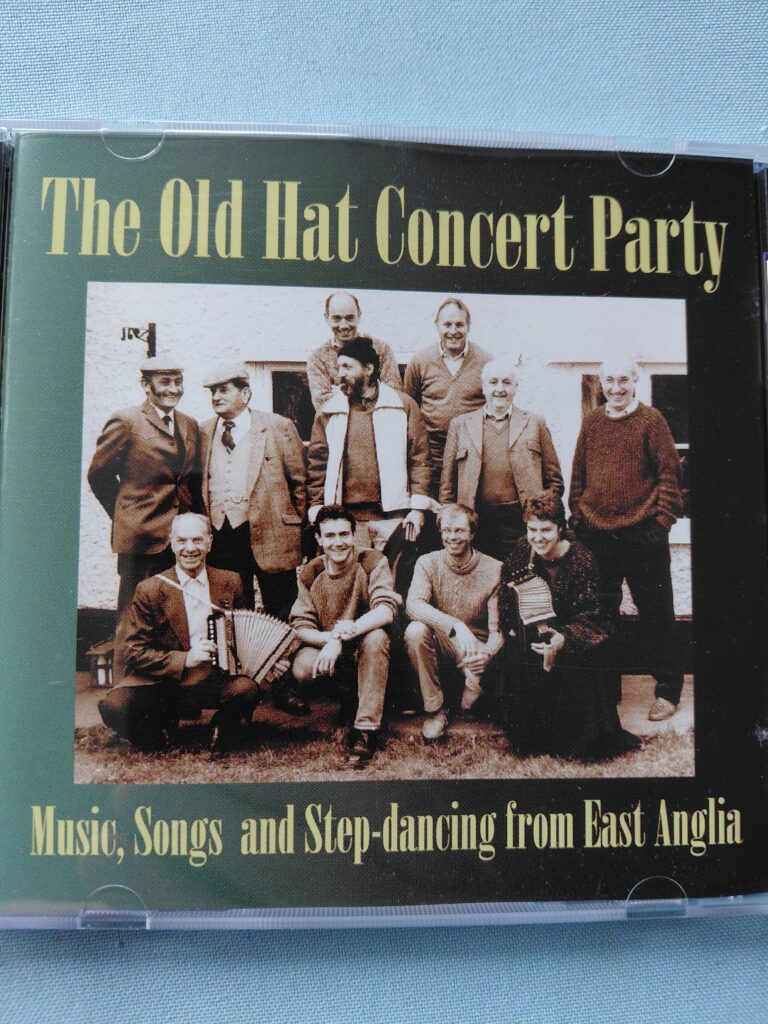
More recently, and of more direct relevance to present happenings, is the fact that John and Katie Howson put together the “Old Hat Concert Party” in Suffolk in the early 1980s. This brought together older generation, traditional performers for a varied evening’s entertainment in various venues in the county and further afield. They have given information about the Concert Party’s activities in one of the Portraits series of articles, on the EATMT website (4), and I don’t propose to reproduce that here. However, Barry Callaghan, reviewing the CD reissue of the Old Hat Concert Party recording, for Musical Traditions magazine, summarised the outfit and its activities very well. Writing of 1986, when the album was originally released on cassette, he comments: “The Concert Party had coalesced into a recognisable entity and was travelling widely, bringing the flavour of old-time East Anglian rural social music to wider audiences.” He adds that there was “a wide network of musicians and step-dancers spreading their congenial brand of music, singing and backchat round the pubs of central Suffolk” and that the CD, and Concert Party nights in general, comprised “ensemble instrumental pieces – with varying combinations of participants – framing a selection of songs, stories and step-dances to solo instrumentals.” (5) A wonderful opportunity to entertain, whilst giving great exposure to these older performers and their music.
The Old Hat Concert Party continued into the 1990s, until there was a hiatus towards the end of the decade, after several key performers had passed away. It was then revitalised for a few more years by “the addition of Reg’s (Reader) grandson Tom Knights, David Chilvers and his granddaughters Jessica and Amy, Steven Matthews, Ray Hubbard and steppers Lenny Whiting and Percy and Doreen West.” (6)
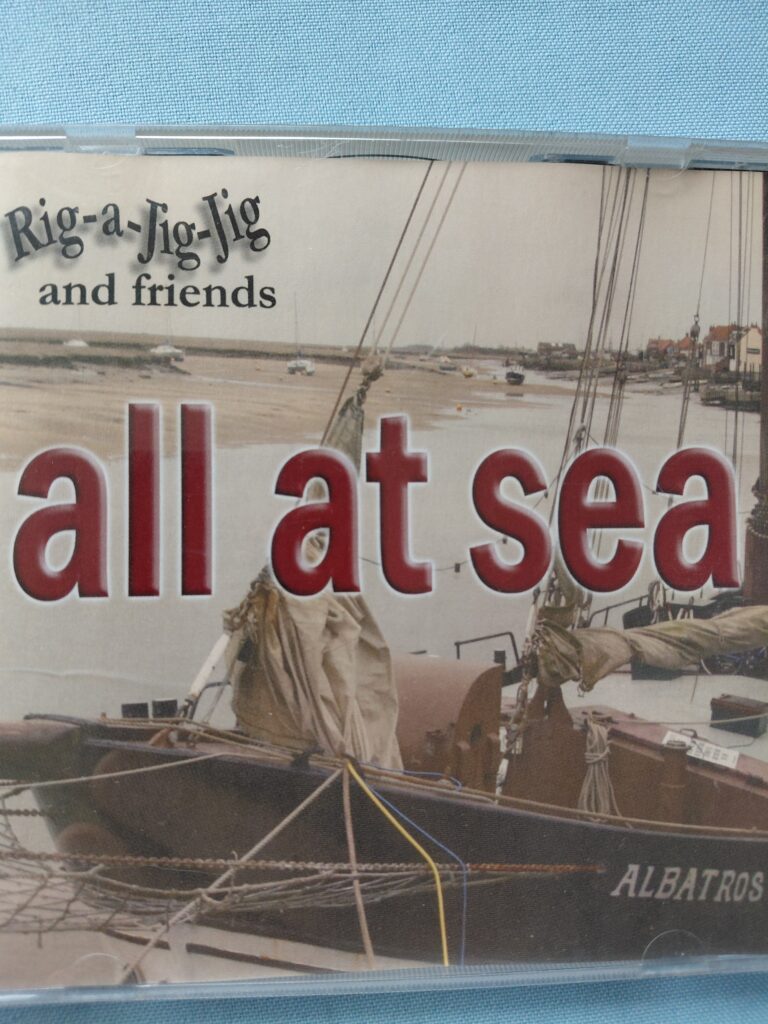
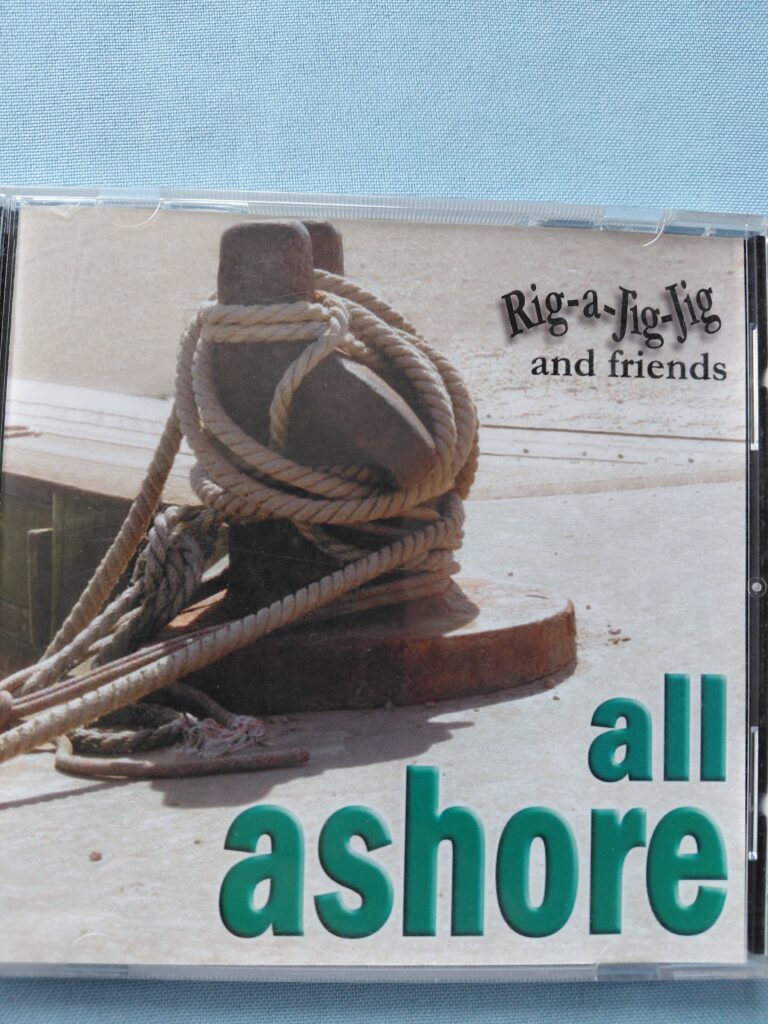
In Norfolk, and about the same time as the revitalised Concert Party above, various of us in the band “Rig-Jig-Jig” – formed to promote and play the traditional music of the county – put in place similar events, in the same kind of way, and featuring largely the same traditional performers, as well as regular contributions from former Cromer lifeboat coxswain – and step dancer and singer Richard Davies and his daughter Fiona. For the best part of a decade we had a great many wonderful afternoons and evenings in a wide variety of locations across the county, and occasionally further afield. The venture yielded two CDs of live performances, All at Sea and All Ashore, both recorded in Wells-next-the-Sea, the former on the Albatros ship and the latter in the Granary Theatre – hence the names of the discs. (7)
So, the idea of a “concert party” in this traditional, rural context is a forum by which tradition bearers can perform, in a varied evening, held together by a band playing tunes with a local provenance. It has proven to be very successful and enjoyable in equal measure. Even though most of the older generation traditional performers have now passed away, it is hoped that the “concert party” aspect of the “Norfolk Tune-Up” events will continue in this vein, offering people the chance to perform as part of a vibrant event, which also showcases the region’s rich musical tradition for the wider public. Another aspect of the “Tune-Up” shows is to give people the opportunity to play along with the tunes, as played by the band, to enable those to have wider currency too. In all, the emphasis is on the entertainment value of this music, and hopefully this is fully in keeping with the former Old Hat Concert Party events in Suffolk and the Rig-a-Jig-Jig shows in Norfolk, as well as retaining the spirit of rural concert parties and similar events in years gone by.
Chris Holderness February 2026
Notes:
Who Owns the Game? Traditional Songs and Melodeon Tunes from Central Suffolk Home-Made Music HMM LP302. Reissued as Veteran VT130CD. Reviewed in the last newsletter.
Given in the sleeve notes to the Topic reissue of English Country Music. 12T296. Reviewed in December’s newsletter.
Ray Hubbard Norfolk Bred Veteran VT155CD. Reviewed in an earlier newsletter. The quote at the top of this article is the title of one of his comic monologues, a regular feature of his repertoire, and included on the album. With reference to the two different spellings of ‘accordion’: the older performers rarely used the term ‘melodeon’; ‘accordion’ refers to a piano accordion and ‘accordeon’ to a melodeon.