Saturday 24 January 2026 – Ely, Cambridgeshire
A colourful and joyous occasion, as it’s always been whenever I’ve attended, either as a participant or as a spectator.
I had the pleasure of dancing Cotswold Morris with Mark Jones when I first started with Golden Star in Norwich around about the year 2000, which coincidentally was the first year Ouse Washes hosted a day of dance focussed on the East Anglian tradition of Molly dancing. Mark also danced with Ouse Washes over in West Norfolk, and tragically died in a road accident on the way home from a practice session in 2005. Mark was a great character, never had a bad word for anyone, he absolutely loved dancing, and it’s fitting that Ouse Washes chose to dedicate their own Molly day to Mark’s memory.
Although the day no longer includes coach tours taking the dancers and musicians to Little Downham and other nearby villages, Ely has several good dances spots in the city centre and alongside the river, the day starting and ending at The Cutter Inn.
Molly dancing was “revived”, I think I am right in saying in the 1970s, firstly by Cambridge Morris Men at a local level, and then taken up by the newly formed Seven Champions group based in Kent, who soon became popular with audiences at folk festivals and dance events around the country. Numerous Molly dance groups subsequently sprang up across East Anglia, some taking their influence from the Seven Champions and others developing their own dance styles and distinctive costumes. These range from the bright colours and flamboyant dance style of Gog Magog through to the corduroys, tweed jackets and smudged faces of the steadier Mepal Molly Men.
Elaine Bradtke’s * book “Truculent Rustics – Molly Dancing in East Anglia before 1940“ contains extensive historic references, mainly but not exclusively taken from Cambridgeshire, often linking the dancing and other activities with Plough Monday. As happened then and still happens today, men often dance in women’s attire. Ribbons and tall hats were features in some villages, as were brooms and collecting boxes. Funnily enough these also still feature today, with many variations and alternatives. *(The Folklore Society, 1999 reprinted 2000, ISBN 0 903515 18 0)
There are possibly more people dancing Molly now than ever before, and not just in East Anglia. This year’s event saw groups from The Vale of Evesham (Asum Gras), Bristol (Molly No Mates), Kent (Seven Champions and Madder Mill) and Leicestershire (Black Annis) alongside groups based in Norfolk, Essex and of course Cambridgeshire. The furthest travelled were, however, Green River Tap and Dye from Massachusetts, USA, appearing for a second year in succession. Quite a journey!
The day began with each group dancing once in turn, followed by all dancing together in a massed dance to “Rolling Home”, a song Mark particularly enjoyed.
The day’s dancing ended with a broom dance competition. Broom dancing seems to be on an upward trend ! This year, and not for the first time, the trophy was won by Nancy the dancing dog and her handler, representing Black Annis. Hopefully they’ll be back to defend the trophy next year.
Here are a few of my photos. For some better photos and for some video clips I suggest the Facebook pages of Ouse Washes Molly Dancers, Belchamp Morris, Gog Magog Molly and Sas Astro. I am sure there are many more too. Ten out of Ten to Ouse Washes for their hosting of the event.
Maybe see you in Ely next January?!
Eammon Andrews
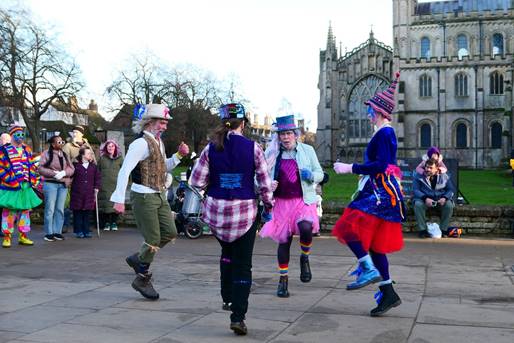
Ouse Washes Molly Dancers
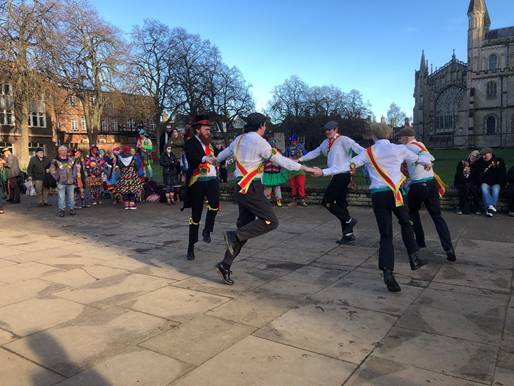
Cambridge Morris Men
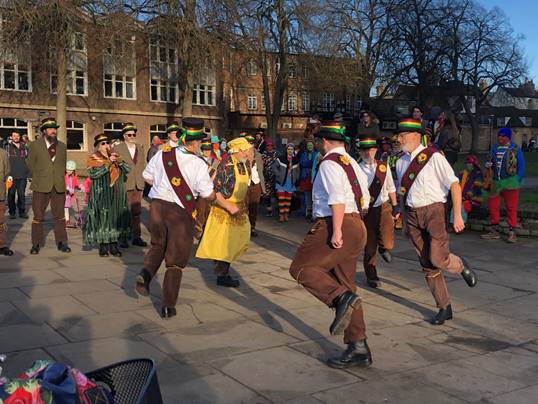
The Seven Champions
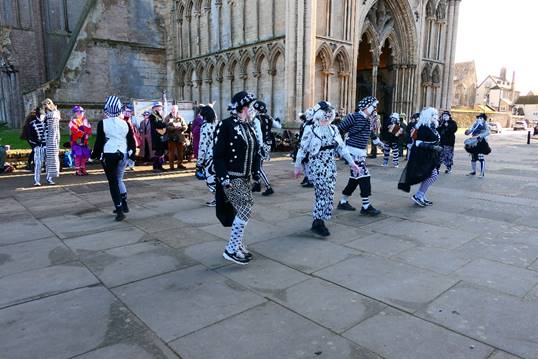
Pig Dyke Molly
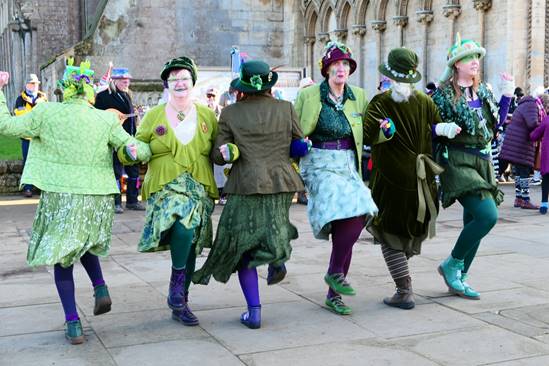
Asum Gras
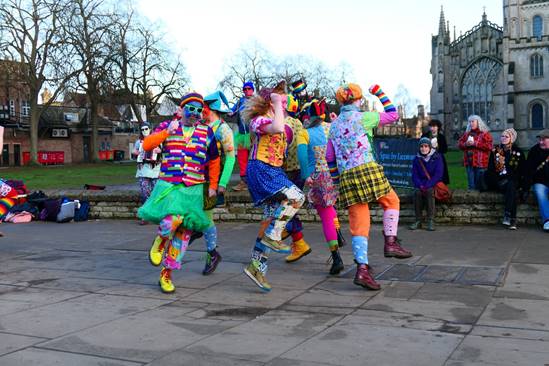
Gog Magog Molly
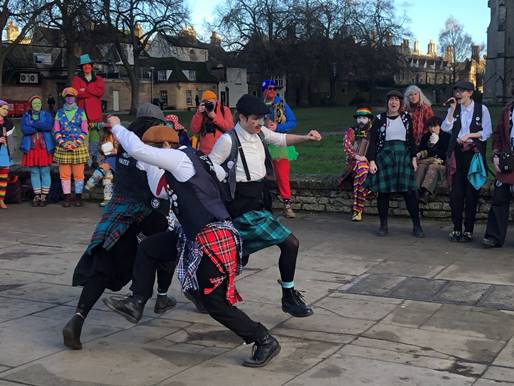
Molly No Mates
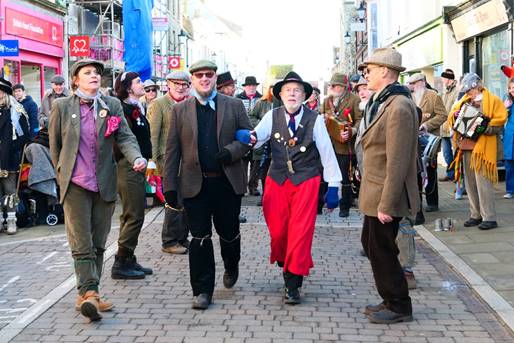
Belchamp
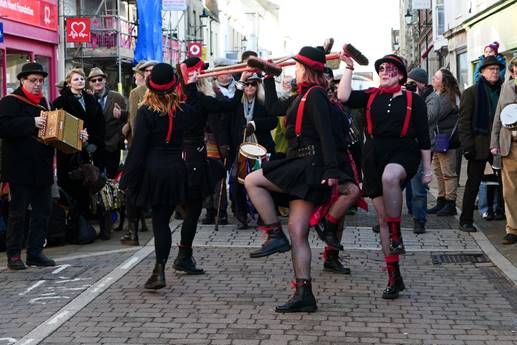
Madder Mill
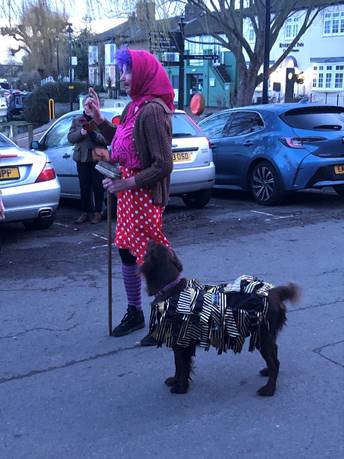
Nancy and Handler (Black Annis)