A short history of the rural concert party in East Anglia
As I have recently described the “Norfolk Tune-Up” events as a cross between a concert party and a ‘led session’, it is perhaps time to investigate the history of concert parties in the region, and to see how it fits in with what’s happening today.
The idea of a ‘concert party’ in rural England seems to have evolved from localised music gatherings in the eighteenth century, with various organising bodies presiding over them. Originally they were probably heavily dependent on the patronage, and possible involvement, of the local gentry – such as music clubs run by the more well-heeled members of the community – but there also seem to have been a plethora of more informal gatherings, utilising local working people, with the fiddle to the fore. These probably existed at the same time as travelling troupes brought music and theatre to remote areas, and performances seem to have blended traditional material with social, cultural or political expression, as was deemed necessary or noteworthy at the time. As well as what went on in villages, towns acted as social and musical hubs, with frequent music and dance assemblies, although presumably largely intended for those a little way up the social scale. There is much evidence of varied types of music making and other entertainment, put together in programmes, as “concert parties”, very often tied to calendar festivals and to raise money for local institutions. Unsurprisingly, central to these occasions were the contributions of those who sang in the pubs and played music for the local dancing.
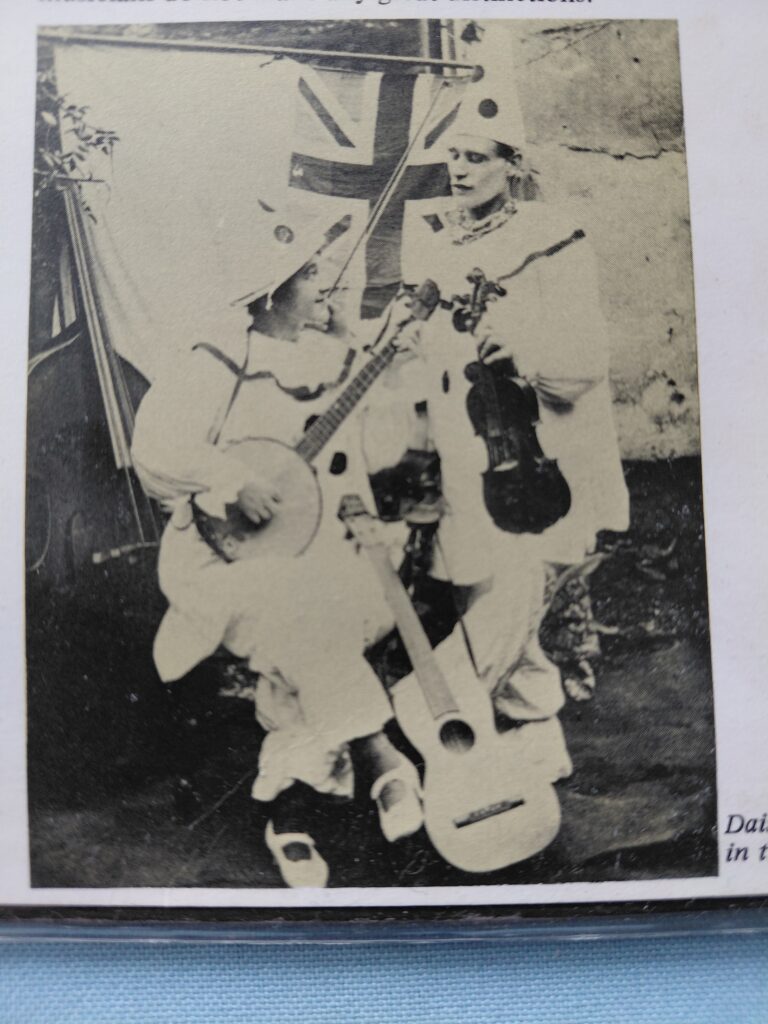
An example of this is Charlie Stringer, of Wickham Skeith, Suffolk, whose singing appears on the Who Owns the Game? album (1). The LP notes comment that “Apart from pub singing, he also used to sing in a concert party, and has a photograph of himself and a friend wearing dresses and singing Two Little Girls in Blue!” Many concert parties seem to have been purely village affairs, although some did travel to neighbouring places to put on shows. The emphasis was on variety of material – music, song and dance, coupled with humour, monologues and presumably whatever local people had to offer. In the early twentieth century there was quite a craze for “Pierrot shows”. These took their inspiration from the Italian Commedia dell’arte, which flourished across Europe between the sixteenth and eighteenth centuries. The emphasis here was on sentimental or melancholic songs about love, or lighthearted skits of comic song or dance, the performers having whitened faces and distinctive, oversized clothes, often as a ‘pierrot’ costume. There is a wonderful photograph of musicians Walter and Daisy Bulwer of Shipdham in Norfolk wearing such costumes, sometime in the 1930s. (2)
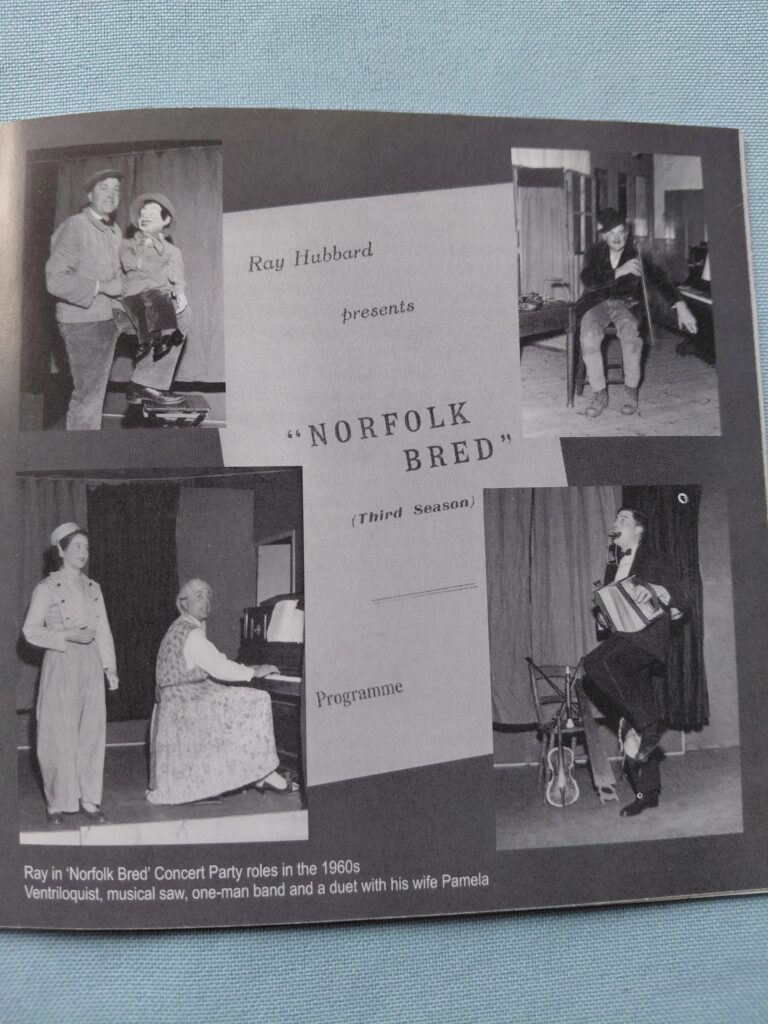
Norfolk musician and horseman Ray Hubbard, who lived for much of his life in Dickleburgh, organised concert parties with his wife Pamela, in the late 1950s onwards, which seem to have been very successful – as mentioned in the notes to his Norfolk Bred CD: “Ray and Pamela started the Concert Party that was known as “Norfolk Bred”…Ray came up with the idea of a concert party (to raise money for bell renovation in the church), with choir members performing. The news of the concert party spread and soon they were being asked to perform in other villages, sometimes going out two or three times a week. The Concert Party was a variety show with a changing cast, depending on where they were travelling to, but regulars included Ray Leader on accordion and Revis Leader on drums. There would be anything from a skiffle group to a lady who did monologues. Ray wrote sketches and performed in a number of roles, including ventriloquist, one-man band and soloist on the musical saw – not forgetting his accordeon playing, which often knitted the proceedings together.” (3)
More recently, and of more direct relevance to present happenings, is the fact that John and Katie Howson put together the “Old Hat Concert Party” in Suffolk in the early 1980s. This
brought together older generation, traditional performers for a varied evening’s entertainment in various venues in the county and further afield. They have given information about the Concert Party’s activities in one of the Portraits series of articles, on the EATMT website (4), and I don’t propose to reproduce that here. However, Barry Callaghan, reviewing the CD reissue of the Old Hat Concert Party recording, for Musical Traditions magazine, summarised the outfit and its activities very well. Writing of 1986, when the album was originally released on cassette, he comments: “The Concert Party had coalesced into a recognisable entity and was travelling widely, bringing the flavour of old-time East Anglian rural social music to wider audiences.” He adds that there was “a wide network of musicians and step-dancers spreading their congenial brand of music, singing and backchat round the pubs of central Suffolk” and that the CD, and Concert Party nights in general, comprised “ensemble instrumental pieces – with varying combinations of participants – framing a selection of songs, stories and step-dances to solo instrumentals.” (5) A wonderful opportunity to entertain, whilst giving great exposure to these
older performers and their music.
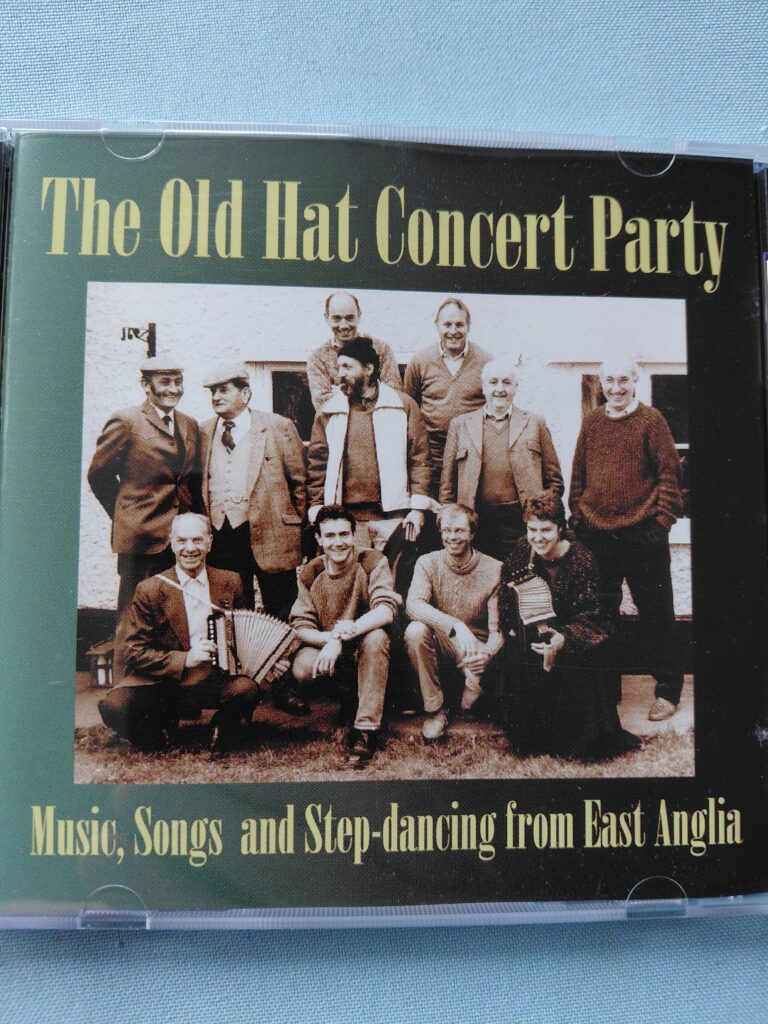
The Old Hat Concert Party continued into the 1990s, until there was a hiatus towards the end of the decade, after several key performers had passed away. It was then revitalised for a few more years by “the addition of Reg’s (Reader) grandson Tom Knights, David Chilvers and his granddaughters Jessica and Amy, Steven Matthews, Ray Hubbard and steppers Lenny Whiting and Percy and Doreen West.” (6)
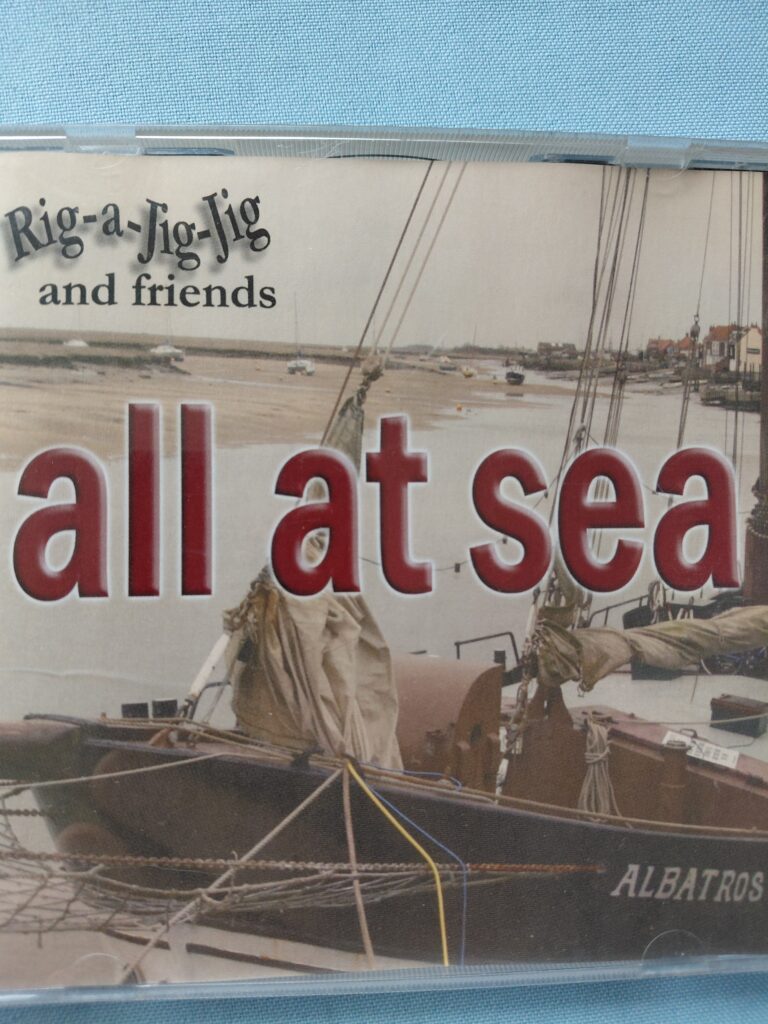
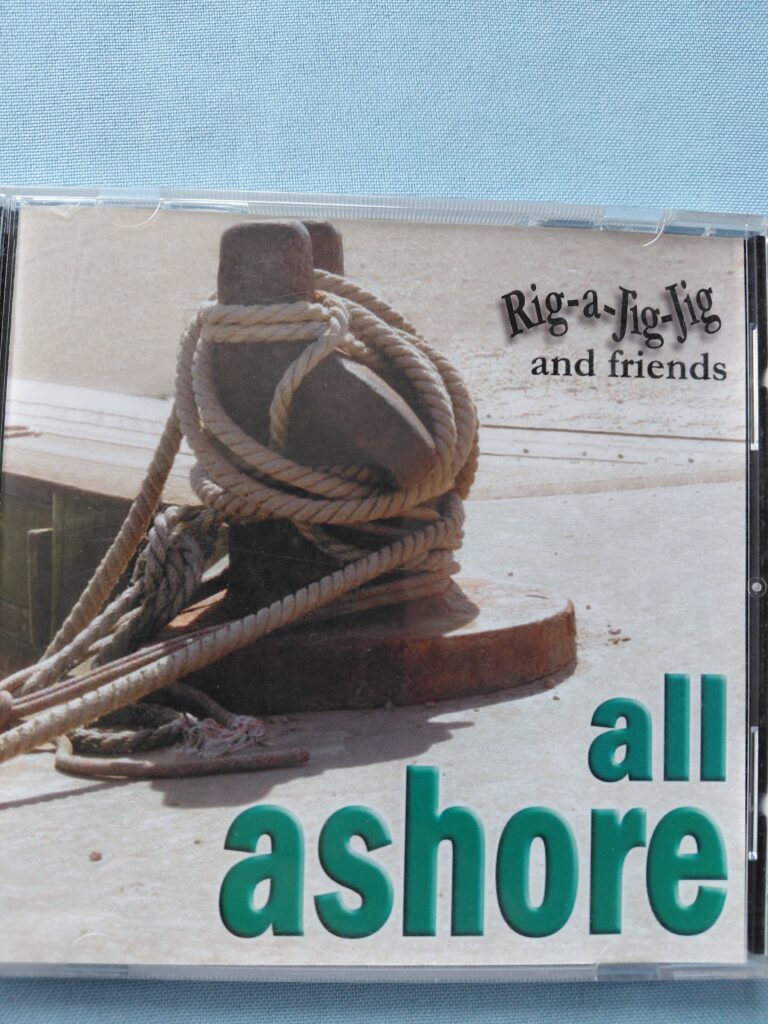
In Norfolk, and about the same time as the revitalised Concert Party above, various of us in the band “Rig-Jig-Jig” – formed to promote and play the traditional music of the county – put in place similar events, in the same kind of way, and featuring largely the same traditional performers, as well as regular contributions from former Cromer lifeboat coxswain – and step dancer and singer Richard Davies and his daughter Fiona. For the best part of a decade we had a great many wonderful afternoons and evenings in a wide variety of locations across the county, and occasionally further afield. The venture yielded two CDs of live performances, All at Sea and All Ashore, both recorded in Wells-next-the-Sea, the former on the Albatros ship and the latter in the Granary Theatre – hence the names of the discs. (7)
So, the idea of a “concert party” in this traditional, rural context is a forum by which tradition bearers can perform, in a varied evening, held together by a band playing tunes with a local provenance. It has proven to be very successful and enjoyable in equal measure. Even though most of the older generation traditional performers have now passed away, it is hoped that the “concert party” aspect of the “Norfolk Tune-Up” events will continue in this vein, offering people the chance to perform as part of a vibrant event, which also showcases the region’s rich musical tradition for the wider public. Another aspect of the “Tune-Up” shows is to give people the opportunity to play along with the tunes, as played by the band, to enable those to have wider currency too. In all, the emphasis is on the entertainment value of this music, and hopefully this is fully in keeping with the former Old Hat Concert Party events in Suffolk and the Rig-a-Jig-Jig shows in Norfolk, as well as retaining the spirit of rural concert parties and similar events in years gone by.
Chris Holderness
February 2026
Notes:
- Who Owns the Game? Traditional Songs and Melodeon Tunes from Central Suffolk Home-Made Music HMM LP302. Reissued as Veteran VT130CD. Reviewed in the last newsletter.
- Given in the sleeve notes to the Topic reissue of English Country Music. 12T296. Reviewed in December’s newsletter.
- Ray Hubbard Norfolk Bred Veteran VT155CD. Reviewed in an earlier newsletter. The quote at the top of this article is the title of one of his comic monologues, a regular feature of his repertoire, and included on the album. With reference to the two different spellings of ‘accordion’: the older performers rarely used the term ‘melodeon’; ‘accordion’ refers to a piano accordion and ‘accordeon’ to a melodeon.
- Much information is given at eatmt.org.uk/old-hat-concert-party/
- The Old Hat Concert Party OH1CD (CD reissue; 1999) The review was published on 02/02/2000
- John and Katie Howson, as (4) above
- Rig-a-Jig-Jig and Friends: All at Sea (SEA002) and All Ashore (SEA003)