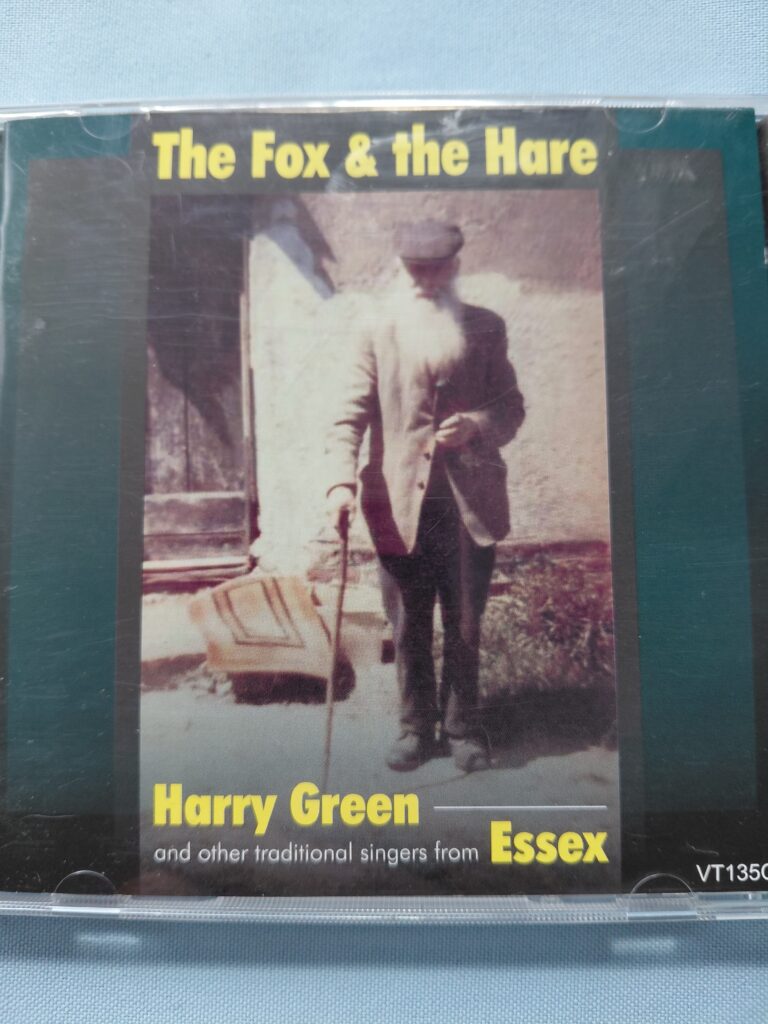
Veteran VT135CD (2010)
Essex is a county with a rich history of traditional song. It was, after all, the first place that Vaughan Williams noted down a song, Bushes and Briars from Charles Potiphar in December 1903, the first of 115 taken down by the composer in the county, mainly between December 1903 and October 1904. (1) It is surprising then, and somewhat saddening, that so little audio material has been made available of traditional song collected in the county, particularly given the riches available from Suffolk and Norfolk, to the north. Aside from the material under review, the only songs released seem to be four songs each by Kitty Harvey and Cliff Yeldham, recorded by Peter Kennedy in Thaxted in 1958 (2) and Sam Steele’s tracks of Reg Bacon of Radwinter, as well as, more extensively, Neil Lanham’s recordings of the same singer and others in the 1960s.(3)
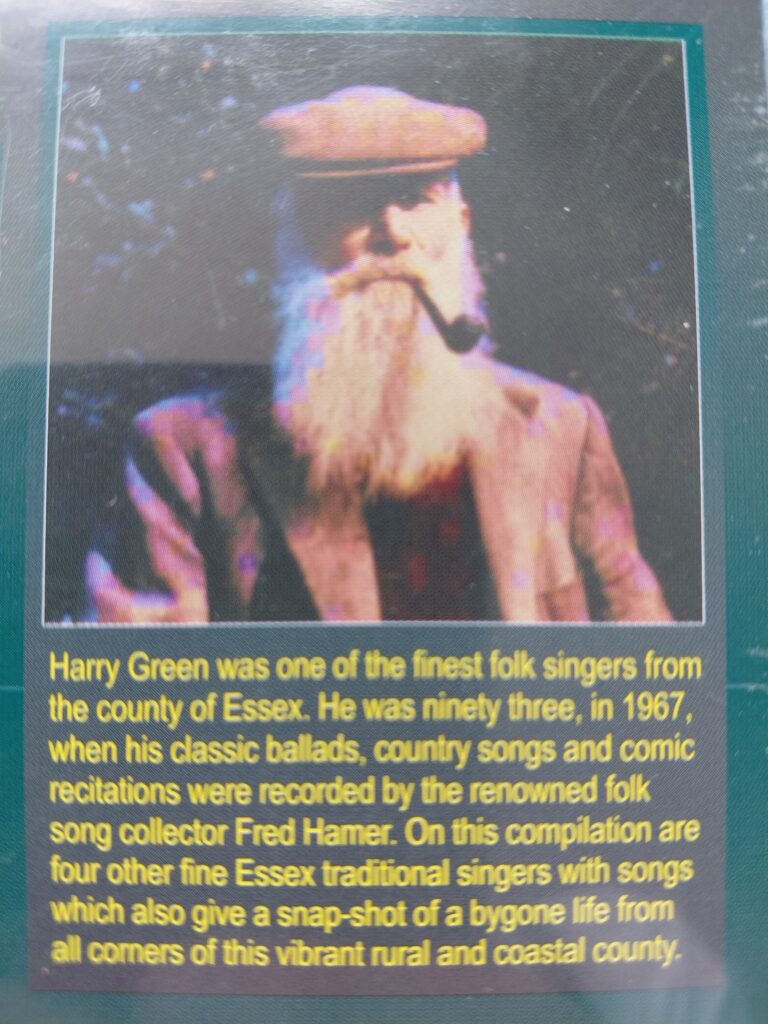
In 1998 the Veteran label released a cassette album of Harry Green (1874-1968) entitled Harry Green – Old Songs and Folk Songs from Essex (VT135). It contained seventeen tracks recorded by Fred Hamer in 1967 who, despite being blind, collected much material from different areas of the country in the 1960s. (4) Rod Stradling reviewed the release for Musical Traditions in March 1998, in which he wrote: “I am aware of very little Essex song or music on record, so this must be considered an important historical document. Furthermore, that a man of 93 years of age – after a life of hard physical toil in the open air – should be able to sing like this, is quite extraordinary…Not only is he a splendid performer, but there is some interesting material here as well. Harry Green is a man for unlikely couplings of tunes and texts…He is also a dab hand at dealing with odd-length lines…” (5)
In 2010, Veteran reissued the material on CD, now as The Fox and the Hare – Harry Green and Other Traditional Singers from Essex (VT135CD), adding more tracks from other sources, as John Howson explained in the booklet notes: “There are, in all, just forty minutes of recordings of Harry, so on this CD we have been able to include four other fine Essex traditional singers: Ernest Austin (Great Bentley), ‘Sugar’ Bailey (Shellow Bowells), Stan Walters (Stanstead Mountfitchet) and Lorna Tarran (West Mersea).” (6) What we have here, then, is the complete recorded output of Harry Green, as well as a smattering of songs, of varying styles, from others across the county.
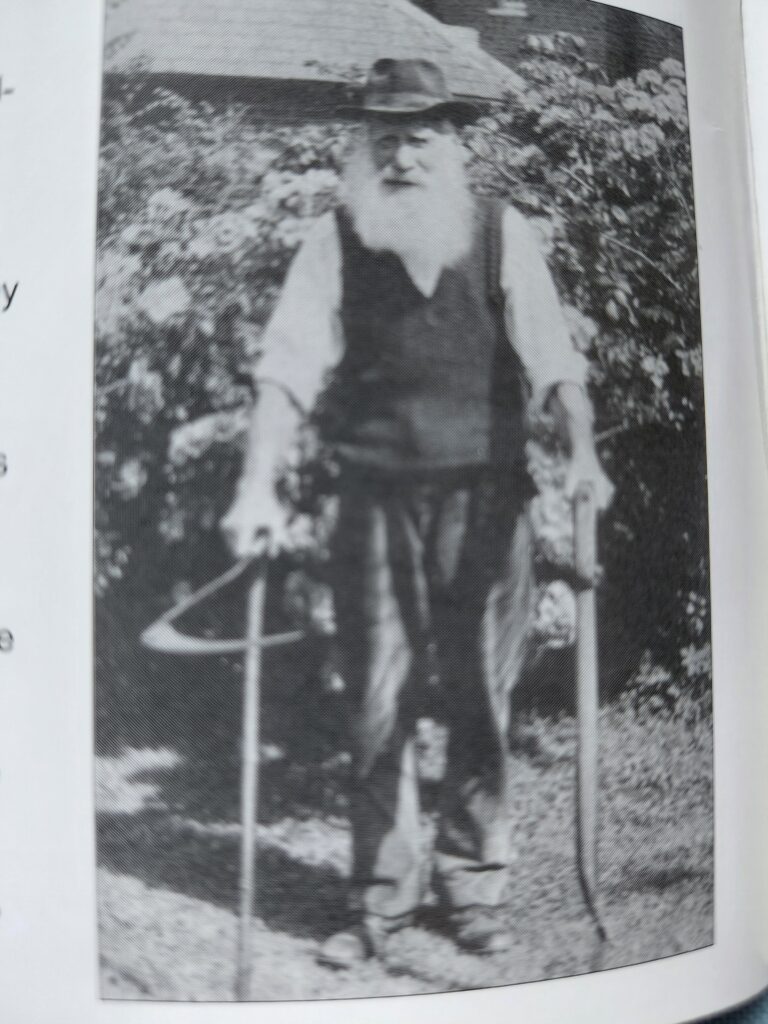
Despite his advanced age, Harry Green was a marvellous singer. John Howson comments that “Harry Green was obviously a real old character, and you can almost see the sparkle in his eye when he recites The Pear Tree or the epilogue to Down in the Fields and Ladies Won’t You Marry.” (7) The seventeen tracks are presented here in three batches of five or six, interspersed with the other singers. The CD kicks off with a magnificent version of The Merchant’s Daughter and the Highwayman, of which Rod Stradling wrote: “here we find an unusually full text paired with a version of the Fagan the Cobbler tune. What is particularly intriguing is that the usual tune
turns up later on…carrying the verses of She was a Stranger in London. Both examples work very well in their new situations. He is also a dab hand at dealing with odd-length lines, and this example from The Merchant’s Daughter is particularly enjoyable.” (8) This tour-de-force is followed by the memory-testing recitation The Pear Tree, which gives a very good contrast of material. Space precludes a track-by-track appraisal, but suffice to say that thereafter Harry Green delivers a wide selection of material in a clear and assured way, without the breathlessness one might expect with a man of his age. Rural favourites such as When Jones’ Ale was New and Down in the Fields Where the Buttercups All Grow rub shoulders with staunchly old, traditional fare such as As I Walked Out One May Morning and Banks of the Sweet Primroses, the latter sadly only a fragment. There is the equally fragmentary Thaxted Bells and The Blackguard Gypsies, the rare (in Britain) The Fox and the Hare, in full, and such popular and stage favourites from the late nineteenth century as Two Sweethearts and Treat My Daughter Kindly. It’s also great to hear the words to the local favourite polka tune Oh Joe the Boat is Going Over and a sprightly Ladies Won’t You Marry to the tune of In and Out the Windows. Occasional spoken asides and epilogues show an infectious enthusiasm, evident throughout the forty minutes of Harry Green’s singing.
Another twenty minutes or so is taken up with the other four singers, with two tracks from each. Ernest Austin gives us John Barleycorn and Hares on the Mountain / Knife in the Window. He has a somewhat light delivery – he sounds rather subdued after Harry Green, but I don’t mean that as a criticism – but an assured style nonetheless. These two tracks were included on the Topic LP Flash Company in 1974, an album which I reviewed in the previous newsletter. (9) Herbert ‘Sugar’ Bailey, from Shellow Bowells, near Chelmsford, had a cassette album of his songs released in 1989: Who’s Going to Hold My Horse? The two tracks here are taken from that release. The comic and pacy music-hall song The Photo of the Girl I Left Behind is contrasted with the well-known traditional Bunch of Thyme, given in an unhurried, deliberate manner, letting the – admittedly slender – story unfold.
Stan Walters gives us a version of Died for Love, called here A Girl Who Led a Life so Straight. John Howson, in the notes, comments that “In England the song was sung by many Gypsy singers” and to my ears Stan Walters sounds rather similar in style, with his rather slow, stately delivery. By contrast we have When Irish Eggs are Frying, a parody of When Irish Eyes are Smiling, of course, here just a fragment really. The only female singer, Lorna Tarran, gives us The Herring Song, with its cumulative cast, a popular song in East Anglia, collected several times prior in Essex. Finally we have the unusual The Flash Girl, a combination of recitation and song fragments, of which John Howson comments: “Lorna Tarran learned this intriguing piece from her grandmother and there is a hand-written transcript of it in the Mersea Island Museum collection, at the top of which it states ‘by Grannie French 1885 to 1938’. The piece is a combination of texts from several sources, with the story set on Mersea Island. The opening four lines are very similar to those which start Never Been to Colchester, which is included in Charles Benham’s Essex Ballads (1897), while the chorus and song verses are based on the song The Knickerbocker Line, which usually tells the story of a lady of the night stealing a watch.” (10) Intriguing indeed!
The Fox and the Hare is, to the best of my knowledge, the only full length album of Essex traditional music and song (leaving aside its previous cassette incarnation) in existence. That is of course a great shame, in an area which has generally been very well represented indeed over the decades by recordings of such material – although it has to be said that the same situation applies to Cambridgeshire. I am here referring to the concept of ‘traditional’ in a narrow sense – that of performers or ‘bearers’ who learned and performed within their communities, as opposed to the ‘revival’ of enthusiasts who have come to the music by choice and interest, from outside a community-based music situation (which hardly exists anymore, anyway, at least in England). It is fortuitous that there are the printed texts available from which singers and enthusiasts can learn so much, and that recordings have been produced of such material over the years, by bands such as Potiphar’s Apprentices. (11) It is, however, a shame that there is such a paucity of sound recordings of ‘source’ singers, to continue to act as inspiration, as well as to enjoy in their own right.
Judging by these seventeen tracks given here, Harry Green stands up there with the best of the East Anglian singers, those lauded for style, repertoire and authenticity. It is easy to fall into musing on the ‘what ifs’ – what if he had been recorded when much younger? What if he had been recorded more extensively? What if other members of his community had been available to sing, or even to comment? But ultimately this is pointless. We have what we have, and we should of course be grateful for that. He was a fine singer and this CD stands as a great testament to that. Harry was a pub singer. He didn’t sing much at home. His daughter Chrissie Andrews told John Howson in 1987: “Well he used to sing in the pubs. He used to have a sing-song with his old friends in the pubs…There used to be accordion players and somebody would get up and stepdance…When we went on coach outings and that sort of thing, he’d sing. Nobody else in our family used to sing. Father was the only one, but I can’t remember him singing in the house, not for any length of time. He might just sing the verse of a song or something like that. Not like he did when Fred Hamer came along and he’d sing a whole song.” (12)
Thankfully Fred Hamer did record him singing – whole songs. This CD is essential for the collection of anyone interested in East Anglian traditional song. The obvious reason is that it’s the only one from Essex, but there’s much more to it than that – particularly the quality of Harry Green’s singing and his unusual repertoire. The other singers who augment the original release all acquit themselves very well – a brief aural snapshot of each one – and demonstrate that more material could have been released from this county. The sound quality of the disc is generally very clear – only the Lorna Tarran tracks have a bit of noise, but this doesn’t impair enjoyment. As is usual with Veteran releases, the CD package is well presented, with performer biographies, photographs and extensive track notes. At the time of writing the recording is available from Veteran as both CD and download, so there isn’t really any excuse, if you haven’t got it already.
Chris Holderness July 2026
Notes:
1. See ‘The Essex Researchers’ for information about what has been printed, with reference to the work of Sue Cubbin, David Occomore and Phil Heath-Coleman, at eatmt.org.uk/the-essex-researchers as part of the information on the site about Vaughan Williams collecting in East Anglia
2. Released as The Foggy Dew: Suffolk and Essex Singers (Folktrax FTX 040) as a cassette and later CDR. It has long been unavailable. The Essex material comprised Kitty Harvey singing Sylvia, Mary Across the Wild Moor, The Young British Waterman and The Squire of Tamworth and Cliff Yeldham singing The Cobbler and the Butcher, Down in Cimred’s Garden, The Nobleman’s Lady, The Sailor Boy and The Tree in the Wood
3. Veteran VT150CD Heel and Toe: Reg Bacon sings Banks of the Sweet Dundee, John Barleycorn, Nothing to Do With Me and The Barley Mow – this CD was reviewed in a previous newsletter; NLCD 5 / 6 Stour Valley: Reg Bacon sings The Banks of Sweet Dundee, She Promised to Meet Me at the Gate at Eight, The Dark-Eyed Sailor, The Spotted Cow, The Barley Mow and John Barleycorn. The CD set also includes Ernest Austin: The Nutting Girl and Hares on a Mountain, Tom Bush: His Day’s Work Was Done, John Carter: Harvest Home Largess Song, George Cowle: We’ll Call for the Grog and My Boy Billy, Bob Manning: Treat My Daughter Kindly, Riding on a Free Train and McCafferty, Beryl Cowan: The Barley Mow, Essex Hawkey Encore, The Fox and the Hare, The Herrings’ Heads, The Oyster Girl, Treat My Daughter Kindly and I Wonder When I Shall Be Married? David Francis: The Dunmow Flitch of Bacon and With My Navvy Boots On, Buster Brown: Why is Bacon So Tough?, My Meatless Day and The Photo of the Girl I Left Behind Me, Leonard Woodley: Old Ingatestone Hall and Charlie Cutmore: Joby Cutmore’s Hornpipe – as well as some performers from outside the county. This is probably the largest collection of Essex material outside the album under review
4. Some of Fred Hamer’s field recordings have also been released on Garners Gay (EFDSS LP 1006) and The Leaves of Life (VWML 003 – cassette)
5. Review of the cassette by Rod Stradling: Musical Traditions, 08/03/98 mustrad.mainlynorfolk.info
6. Introduction section of CD booklet notes
7. Harry Green biography section of booklet notes
8. The Musical Traditions review, as 05, above
9. Topic 12TS243 Flash Company – reviewed in July’s newsletter
10. ‘The Flash Girl’ notes in CD booklet. The Knickerbocker Line was a New York streetcar route from the mid-nineteenth century until the early twentieth, before being replaced by the subway. The song had reached England by the early twentieth century and was noted by collectors several times. Sam Larner’s The Dogger Bank uses the same tune and mentions the line in the final chorus.
11. See note 01, above, for more information
12. Quoted inthereview-note05, above-fromthecassette inlaynotes, not included in thoseoftheCD